

CCLCJ Seminar: Under Scrutiny: Universal Jurisdiction in England and Wales within a Fragmented Western Landscape
6 May 2026 - 6 May 2026
11:00AM - 12:00PM
Hybrid Event: Durham Law School (room TBC) and Online via Teams
-
N/A
The Centre for Criminal Law and Criminal Justice at Durham Law School warmly invites you to our next hybrid seminar. You may join us in person in the Palatine Centre or register to attend online.
/prod01/prodbucket01/media/durham-university/central-news-and-events-images/news/Durham-University-greenery.jpg)
Durham University with Cathedral and River
Over the past decade, universal jurisdiction has been quietly but significantly reshaped through the practice of Western states. The United Kingdom now finds itself under particular scrutiny, as peers, NGOs and professional bodies call for substantial reform of the International Criminal Court Act 2001 (ICCA) to close what they describe as a “justice gap” that risks turning the UK into a safe haven for suspects of genocide, crimes against humanity and war crimes who are neither British nationals nor residents but are present on UK territory. Proposed amendments to the Crime and Policing Bill would align England and Wales with states such as Germany, France and Sweden by establishing presence based jurisdiction over all core international crimes, bringing the ICCA closer to the “no safe haven” model already applied to torture and grave breaches.
Drawing on my broader research, this paper situates the UK debate within a wider spectrum of Western approaches, ranging from the abandoned “global enforcer” as exercised by Belgium and Spain to the more institutionally embedded frameworks of Germany, France, Sweden and other Nordic states. It argues that universal jurisdiction has been “juridified” through nationally tailored combinations of constraints that both enable and restrict prosecutions, and that collectively shape what “universal” jurisdiction means in practice. The paper concludes by bringing these Western trajectories into dialogue with critiques from Asian states and the wider Global South, asking whether a reformed, presence based ICCA in England and Wales can genuinely move beyond patterns of selectivity and perceived judicial neo colonialism, or whether it risks reproducing them in a more sophisticated form.
Speakers
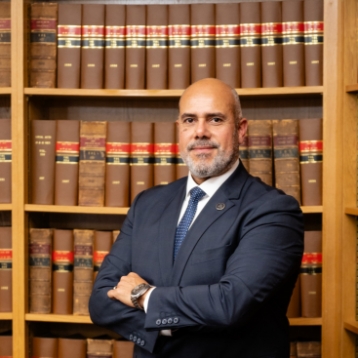
Speaker Biography
Mohamed Badar
Professor Badar previously held a position as a Senior Lecturer and Director of Undergraduate Studies at Brunel Law School, London (2007-2013). He has also taught and acted as a convenor of International Law & Islamic Law module at Durham Law School (2011-2013). Prof Badar served as Senior Prosecutor and Judge in Egypt from 1997-2006. He was a member (investigator) of the Bahrain Independent Commission of Inquiry to investigate and report on allegations of human rights violations during the civil unrest in Bahrain in February/March 2011. He has participated in the judicial reform of Afghanistan. Professor Badar is a leading scholar of comparative and international criminal law and Islamic law, with over 70 academic publications. His research has appeared in top journals including the Leiden Journal of International Law, the Nordic Journal of Human Rights, and the Texas International Law Journal. He was recently appointed to the Distinguished Advisory Board of the International Criminal Law Review.