

Blog post by Mengyi Mei
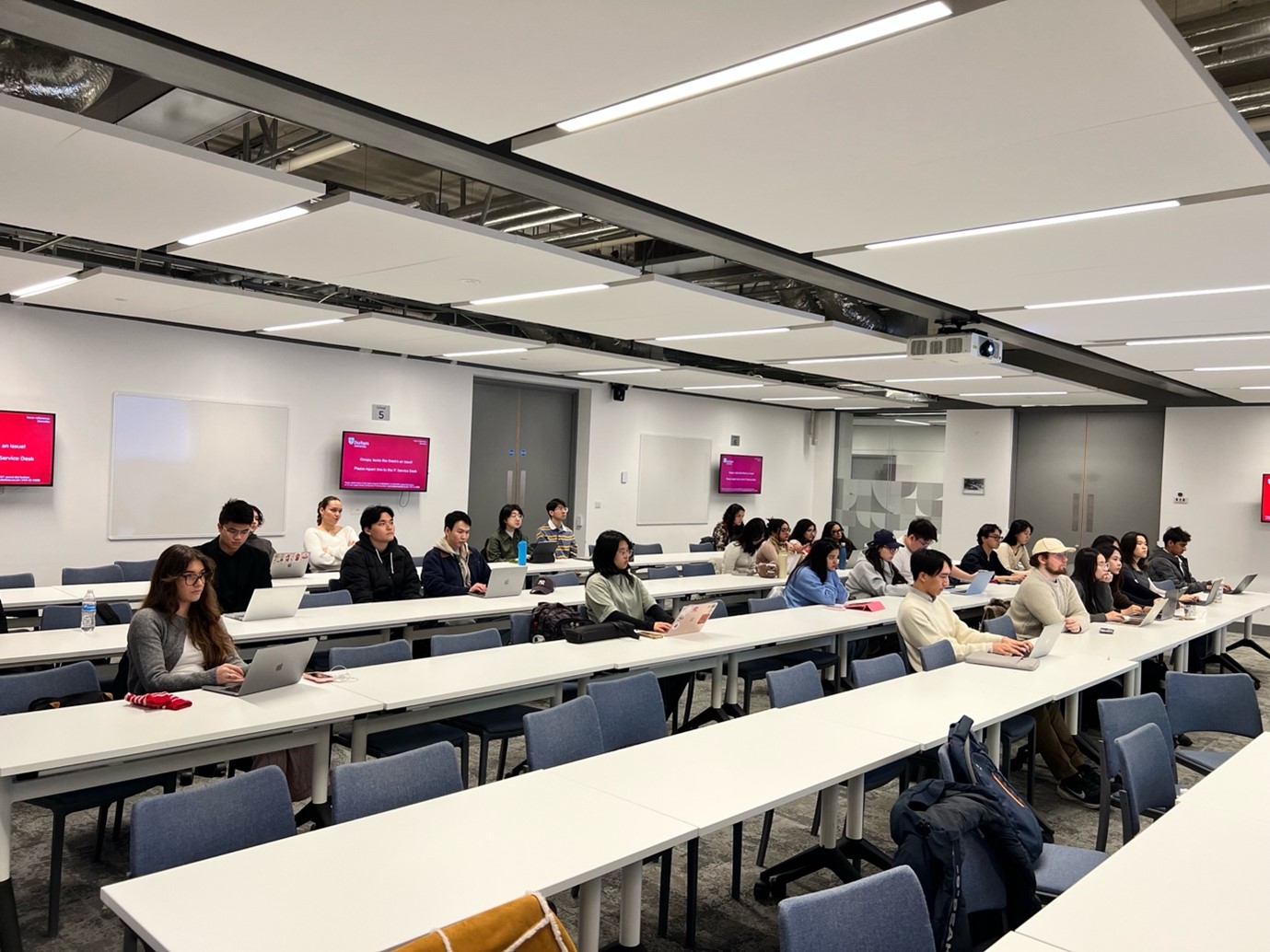
The first session of the Innovation and Ownership series brought together students and academics from across disciplines to explore one of the most pressing questions in contemporary intellectual property (IP) law: who owns knowledge created by artificial intelligence?
The session was organised by Dr Van Anh Le (Assistant Professor in Intellectual Property Law), in collaboration with Dr Cuong V. Nguyen (Assistant Professor, Department of Mathematical Sciences) and Dr Mengyi Mei (Career Development Fellow in IP Law). It attracted 30 attendees, including LLB and LLM students from diverse academic backgrounds, as well as participants from other disciplines such as Finance, School of Education, Modern Languages, Computer Science and Leverhulme Centre for the Future of Intelligence (University of Cambridge) with an interest in AI, creativity, and authorship.
Bridging technical and legal perspectives
As AI systems increasingly generate text, images, data, and even mathematical proofs, traditional legal concepts such as authorship, originality, and ownership are coming under strain. This session aimed to bridge the gap between technical understandings of how AI systems generate outputs and the legal assumptions embedded in IP law.
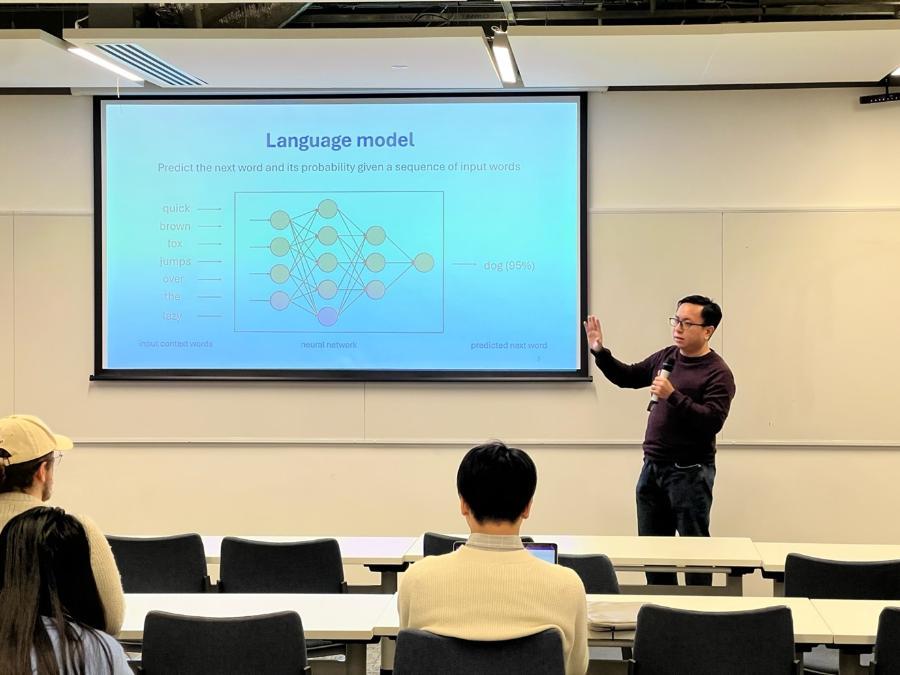
The session began with a presentation by Dr Nguyen, who provided an accessible introduction to AI and large language models for a non-technical audience. He explained how such models generate outputs by predicting the next word in a sequence based on probabilities learned during training. He outlined three key stages in the development of modern AI systems:
- Training a base model, using vast quantities of data sourced from the internet and licensed third-party materials. This stage is computationally expensive and may involve data of uneven quality.
- Fine-tuning through Reinforcement Learning from Human Feedback (RLHF), in which human evaluators rank outputs to improve model performance and alignment.
- Tool integration, where models are combined with other systems such as image generators, code interpreters, or search engines.
Dr Nguyen also highlighted important limitations of current AI systems, including hallucinations, reasoning errors, and broader safety concerns, noting that many of these issues can be mitigated through careful training and evaluation.
AI, creativity, and knowledge production
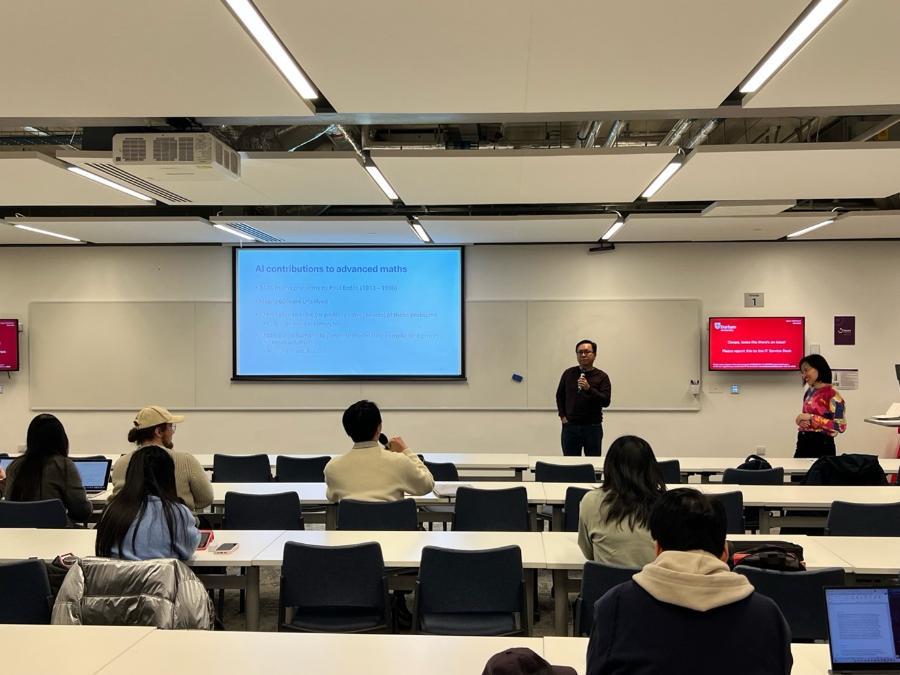
In closing, Dr Nguyen discussed AI’s growing role in advanced mathematics. Of the 1,136 mathematical problems left by Paul Erdős, nearly 60% remain unsolved. AI systems have already contributed to solving some of these problems, either autonomously or in collaboration with human mathematicians. This demonstrates how AI can assist in generating novel proofs and solutions, while also raising deeper questions about creativity, contribution, and authorship.
Translating AI into IP law
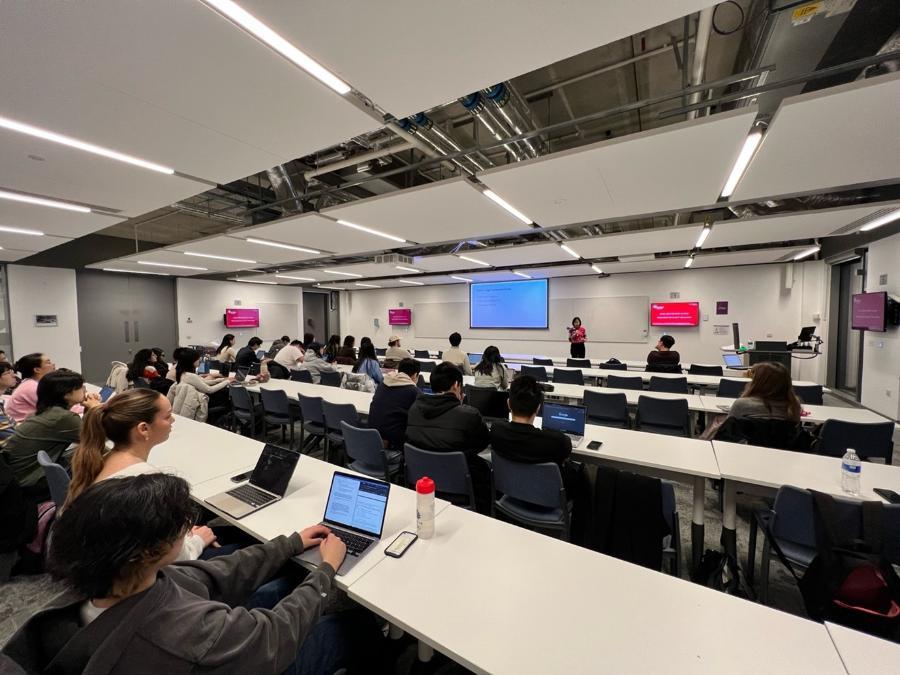
Following the technical presentation, Dr Le led an interactive discussion that translated these insights into the language of IP law. The discussion focused on making explicit the assumptions that IP law often takes for granted — in particular, that authorship presupposes intention, originality presupposes identifiable human contribution, and ownership presupposes control over the production of a work.
During the Q&A, participants raised questions about whether AI could be said to possess consciousness, and whether AI creativity extends beyond its training data. Dr Nguyen emphasised that AI systems do not have consciousness and operate by following programmed optimisation processes. While AI can generate genuinely new outputs, including solutions to previously unsolved problems, this form of creativity remains fundamentally different from human creativity.
Interactive exercises and student engagement
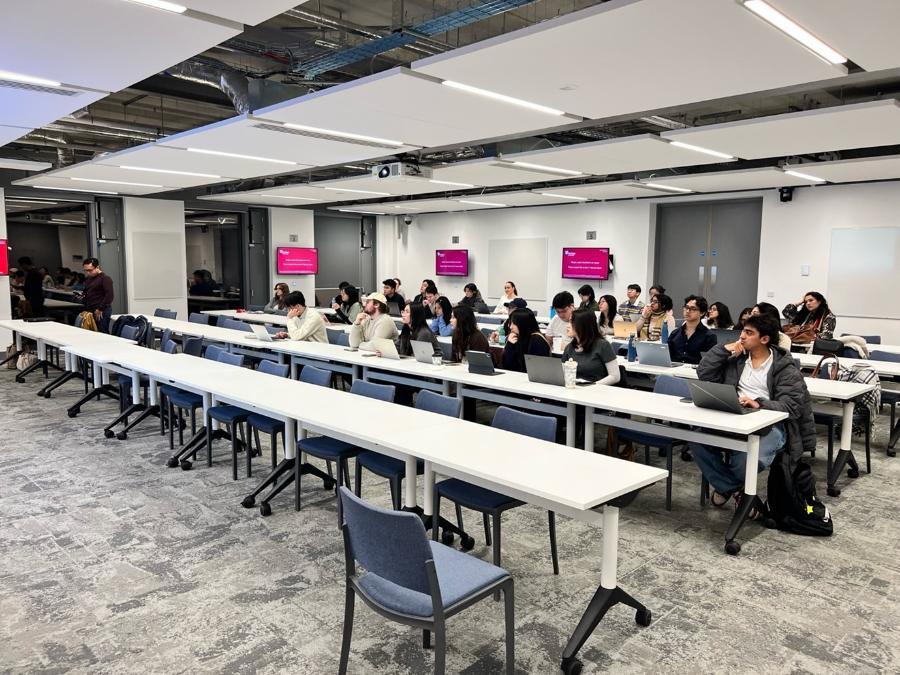
In the final part of the session, participants took part in two short interactive exercises designed to encourage critical reflection.
Exercise 1 asked participants which description best fits AI-generated outputs. The results were as follows:
- 56% viewed them as a collective product
- 24% viewed them as a statistical artefact
- 16% viewed them as a tool-mediated human work
- 4% viewed them as a creative work
Exercise 2 asked which concept — authorship, originality, or ownership — would be easiest to adapt when discussing AI-generated outputs, and why. Some participants pointed to authorship or originality, citing AI’s ability to generate outputs that resemble creative achievements. Others argued that because AI depends on human prompts and training, it lacks genuine innovation and should not qualify for authorship or originality.
These exercises revealed both the diversity of perspectives in the room and the conceptual difficulty of applying existing IP frameworks to AI-generated outputs.
Looking ahead
Following the formal discussion, many participants continued these conversations during the networking session, engaging further with the speakers on questions that particularly interested them.
AI and authorship remain contested and rapidly evolving topics, with no single correct answer. However, discussions like this are essential in encouraging us to rethink the conceptual and ethical foundations of intellectual property law in response to emerging technologies. The session also highlighted the value of interdisciplinary dialogue in addressing complex legal questions raised by AI.

This series forms part of the IP and Innovation Initiative at Durham Law School, an emerging interdisciplinary platform exploring IP, AI, innovation and research impact.