

/prod01/prodbucket01/media/durham-university/research-/research-institutes/durham-energy-institute/landscapes-cityscapes-montages-etc/Walney-sunset-2000X800.jpg)
SOAS Student Explores Community-Centred Energy Transitions at Durham Energy Institute’s Energy Day 2025
8 April 2026
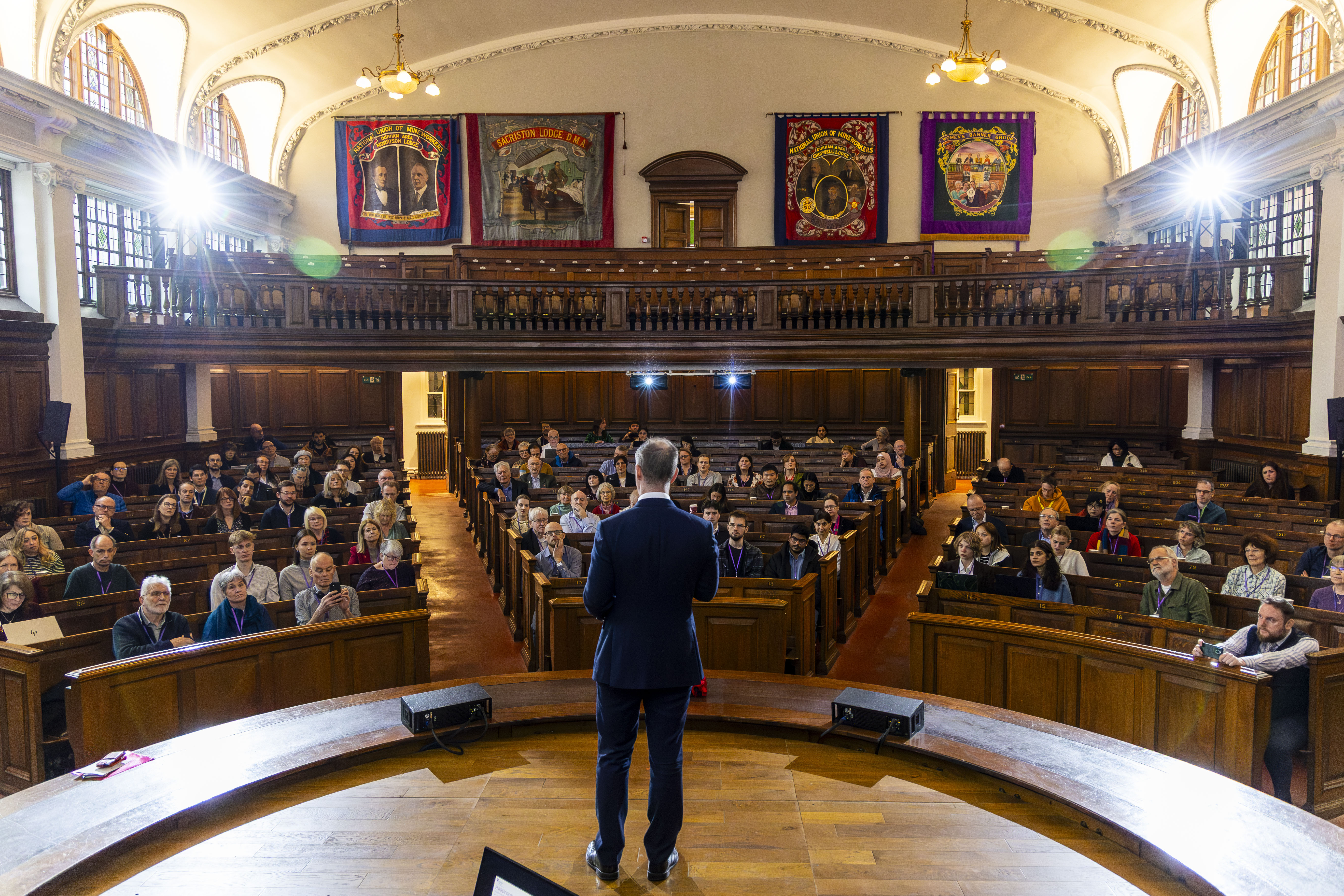
A postgraduate student from SOAS University of London travelled to Durham in November 2025 to take part in DEI's annual Energy Day Conference. The visit offered the student, Carlos Lucas Mateo, an opportunity to engage with researchers, practitioners, and community partners focused on building a more socially inclusive energy future.
Following his visit, Carlos published a reflective blog article on the SOAS website titled “Energy transitions, social frictions and the need for community inclusion.” In his piece, he highlights how the UK’s shift toward net zero cannot be understood as merely a technical transformation of infrastructure but must be recognised as a deeply social process that reshapes communities, labour relations, and regional identities.
Drawing on discussions sparked at DEI’s Energy Day and his own anthropological research, Carlos points to historical lessons from the Durham coalfield—once a powerhouse of Britain’s industrial economy—as a reminder that major energy shifts carry profound human consequences. He emphasises that ignoring these social dimensions risks repeating past mistakes where communities were left disempowered or displaced by large‑scale structural change.
Carlos' reflections also connect UK debates to global contexts, noting that frictions around renewable energy development often emerge when planners prioritise land and resources over local people. By amplifying the need for genuine community engagement, his work reinforces DEI’s long‑standing commitment to socially just and inclusive energy transitions.
Carlos stated: 'Taking part in the Energy Days organised by the DEI allowed me to immerse myself in the conversation around the Renewable Energy Transition and Net Zero Goal. This gave me a comprehensive overview of the UK's ongoing achievements, challenges and debates around its energy landscape. The event in Durham provided an opportunity to discuss energy not only from technical and economic perspectives, but also from ethical and political ones. Walking around the former collieries in the Durham landscape and being in the Redhill Building was a reminder that energy has always relied on communities and people, and that its ultimate goal should be to power them.'
The collaboration showcases how DEI’s outreach and support for early‑career researchers can help shape new, interdisciplinary perspectives on the future of energy—highlighting the vital role of social science in creating fair and sustainable pathways toward net zero.
To read Carlos' full blog post, click here: Energy transitions, social frictions and the need for community inclusion | SOAS