Welcome to the Department of Psychology

We are delighted to maintain our position as one of the TOP 100 psychology departments in the world, a distinction we have proudly held since 2022.

The 2025 rankings assess over 55 subjects from over 5,200 institutions across the world, based on academic and employer reputation, citations per academic paper, impact and quality of research and international research collaboration factors.

Recent research carried out by colleagues in our department includes work on fetal taste perception, promoting sustainable diets, children’s body image, and neuromodulation therapy for depression and much more.

Durham is a world-leading university. Our academic excellence and impact is reflected in our global rankings and this is a true credit to the outstanding teaching and research carried out at our University.

Find out more about us
Top 3 in Graduate Prospects in The Times UK University Rankings 2026
12th
12th in the Complete University Guide 2026
15th
15th in the Guardian University Guide 2026
Athena SWAN Silver Award winner in 2013 and retained in 2017 & 2022, for promoting gender equality

Why study Psychology at Durham?

Play video 1

Study with us

Undergraduate Study

You will receive a genuinely research-led education. As well as learning the core principles of psychology, you will participate in research through seminars, conferences and research assistantship schemes. You will also have access to our world-leading clinical and experimental facilities, including motion capture, eye tracking and biophysical recording laboratories.

Postgraduate Study

We offer both taught postgraduate and postgraduate research degree programmes. Our MSc programmes provide students with core skills, ideal for continuing on to complete a PhD, taking a research position, or entering the workplace. Our postgraduate students are supervised by academics with expertise in their fields and have the opportunity to engage with the local vibrant research community.

Undergraduate

Find out more about our undergraduate courses

Postgraduate

Find out more about our postgraduate taught courses and research

What's new?

Filter:

Study reveals remarkable adaptability of children’s brains to upper limb difference

A unique study of brain activity in children born with upper limb difference has revealed the brain’s remarkable adaptability to compensate and to support daily life.
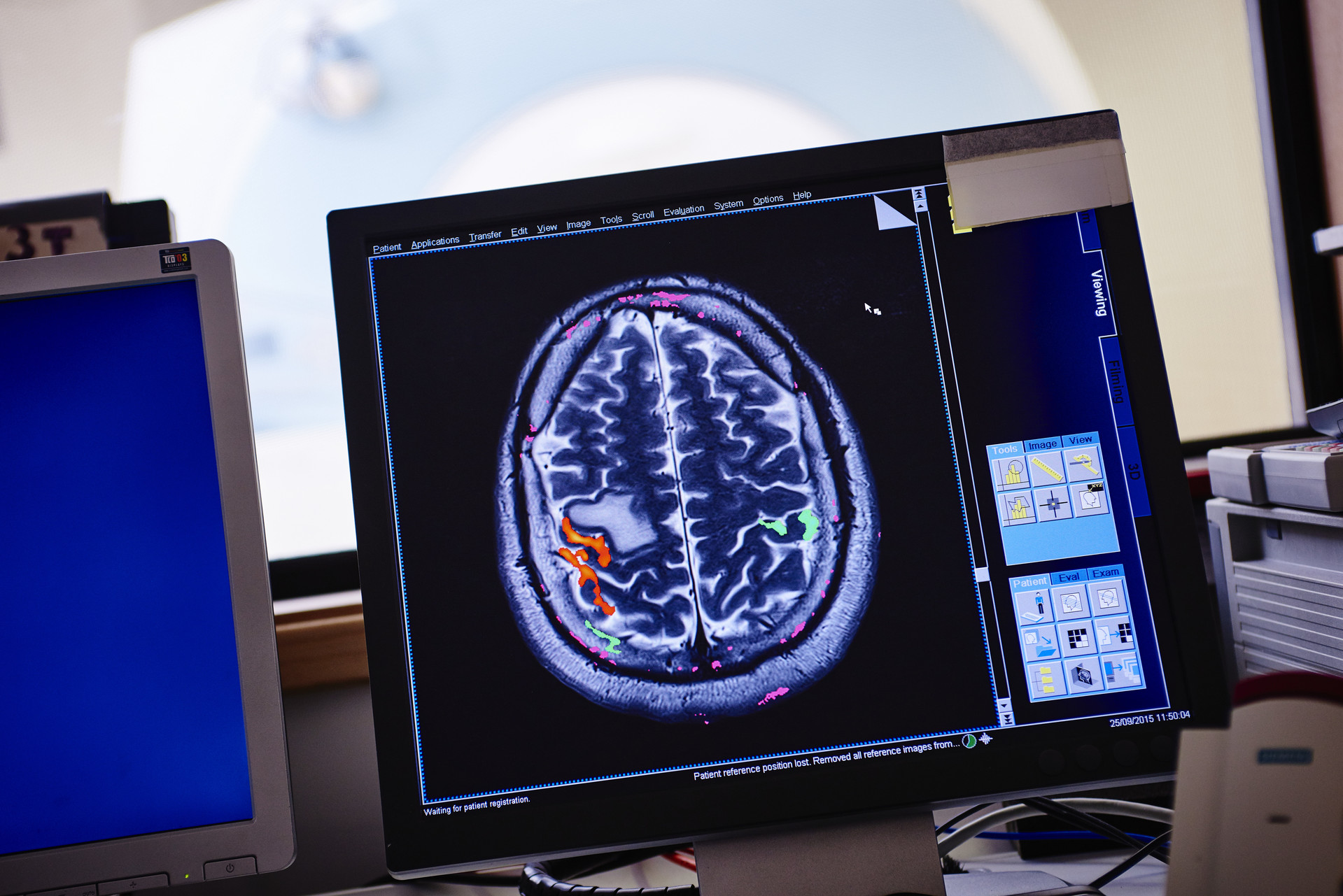
Images from the study, left hand side shows study participant Noah Lonnen undertaking a practical challenge, centre image shows study participant Noah Lonnen standing in front of a medical scanner, smiling and giving a thumb up to camera, during the research study, right hand image shows a brain scan from the study

Are we on ‘autopilot’ when we (do not) engage across social divides?

Stefania Paolini and Patrick Kotzur are thrilled to share a new Nature Reviews Psychology article together with a team of world-class international intergroup contact scholars.
A photo of two people sat at a table in a meeting room looking at the camera.

Spotlight on Professor Lynda Boothroyd: Reshaping body image across cultures

Our ‘Spotlight On’ series showcases the world-leading work of our academics. Professor Lynda Boothroyd is a cross-cultural psychologist who explores how appearance ideals form and why they matter.
Professor Lynda Boothroyd smiling to camera, against a light background

Durham researchers awarded a major grant to study teenagers’ use of social media

Scientists from our Psychology Department have been awarded a major funding of £764,947 to investigate how and why teenagers use social media.
User browsing instagram on their phone

Public prefer pretty looking wild spaces over perfectly mown lawns

A new study from our Psychology Department has found that people want grass to be mown less often and would like to see more wild green spaces but only if they look attractive.
Mowing

What autistic people – and those with ADHD and dyslexia – really think about the word ‘neurodiversity’

Dr Amy Pearson from our Department of Psychology is part of a team exploring terminology associated with different forms of neurodivergence. Here, the researchers discuss their findings into what autistic people, and those with ADHD and dyslexia really think about the word ‘neurodiversity’.
Black slate outline of a head on a pale blue background  with small people shaped figurines inside in a range of colours.
  • What we’ve learned about narcissism over the past 30 years

    You’ve probably seen the word “narcissist” thrown around online in headlines, on dating apps or in therapy-themed TikToks. But the label that people often unthinkingly slap on toxic bosses or reality TV villains hides a much more complicated psychological picture. Here our Assistant Professor of Educational Psychology, Sarah Walker, explores the evolution of our knowledge of narcissism over the last three decades.
    A man wearing a smart blue shirt and waistcoat poses for a selfie using a selfie stick
  • Leading Forensic Psychologist appointed chair of regional research network

    Congratulations to Professor Graham Towl who has been appointed the new Chair of a regional network of experts in prison and offender health and social care.
    Graham Towl smiling wearing a suit and leaning against railings
  • Why a social media detox may not be as good for you as you think

    Associate Professor Niklas Ihssen and PhD student Michael Wadsley from our Department of Psychology explain how cutting your social media use dramatically or even avoiding it completely can reduce the positive effects of social media just as much as the negative ones.
    Person looking at a smartphone

Leading Forensic Psychologist appointed chair of regional research network

Congratulations to Professor Graham Towl who has been appointed the new Chair of a regional network of experts in prison and offender health and social care.
Graham Towl smiling wearing a suit and leaning against railings

Why a social media detox may not be as good for you as you think

Associate Professor Niklas Ihssen and PhD student Michael Wadsley from our Department of Psychology explain how cutting your social media use dramatically or even avoiding it completely can reduce the positive effects of social media just as much as the negative ones.
Person looking at a smartphone

Are we on ‘autopilot’ when we (do not) engage across social divides?

Stefania Paolini and Patrick Kotzur are thrilled to share a new Nature Reviews Psychology article together with a team of world-class international intergroup contact scholars.
A photo of two people sat at a table in a meeting room looking at the camera.

Durham researchers awarded a major grant to study teenagers’ use of social media

Scientists from our Psychology Department have been awarded a major funding of £764,947 to investigate how and why teenagers use social media.
User browsing instagram on their phone

Our facilities

One of our department highlights is the dedicated laboratory space with equipment linked to teaching on our programmes.

We have outstanding facilities for training in eye-movement recording, motion capture and psychophysics. 
Find out more about our facilities

Equality and Diversity

Our department has an "Equality, Diversity & Inclusion Committee (EDI)" which oversees EDI issues across the department. This committee addresses 5 core issues, namely Raising awareness and supporting members of staff in relation to all protected characteristics; Equality issues; Supporting Diversity and Inclusion; Supporting Wellbeing & the Athena Swan charter.
Find out more about our diversity initiatives
Group of colourful wooden people

Staff

At Durham we focus on you. We are energised teachers, who love our subject and want to share that passion with you.

'What I think makes Durham's Psychology course truly excellent is the contagious passion and excitement each of the staff have for Psychology.'

Liam
Level 1 
Find out more about our staff

Blogs and social media

See what our staff and students get up to during their time at Durham University.

Highlights

Being an international student studying at Durham University

Psychology student, Alan from Hong Kong tells us what it's like being an international student in Durham.
/media/durham-university/departments-/psychology/59913.jpg

Day in the life of a second-year Psychology student

Psychology student, Amelia takes us through her day-to-day life at Durham University.
Group of postgraduate students discussing their work in a seminar room

Get in touch

Contact us to find out more about our courses and research. For current student enquiries please use "All other enquiries" button below

Department of Psychology

Durham University
South Road
Durham
DH1 3LE 


Phone: +44 (0) 191 334 3240  

Fax:  +44 (0) 191 334 3241

Questions about studying here?

Check out our list of FAQs or submit an enquiry form.

Your Durham prospectus

Order your personalised prospectus and College guide here.