


Honouring Black Communities in Sport Beyond October
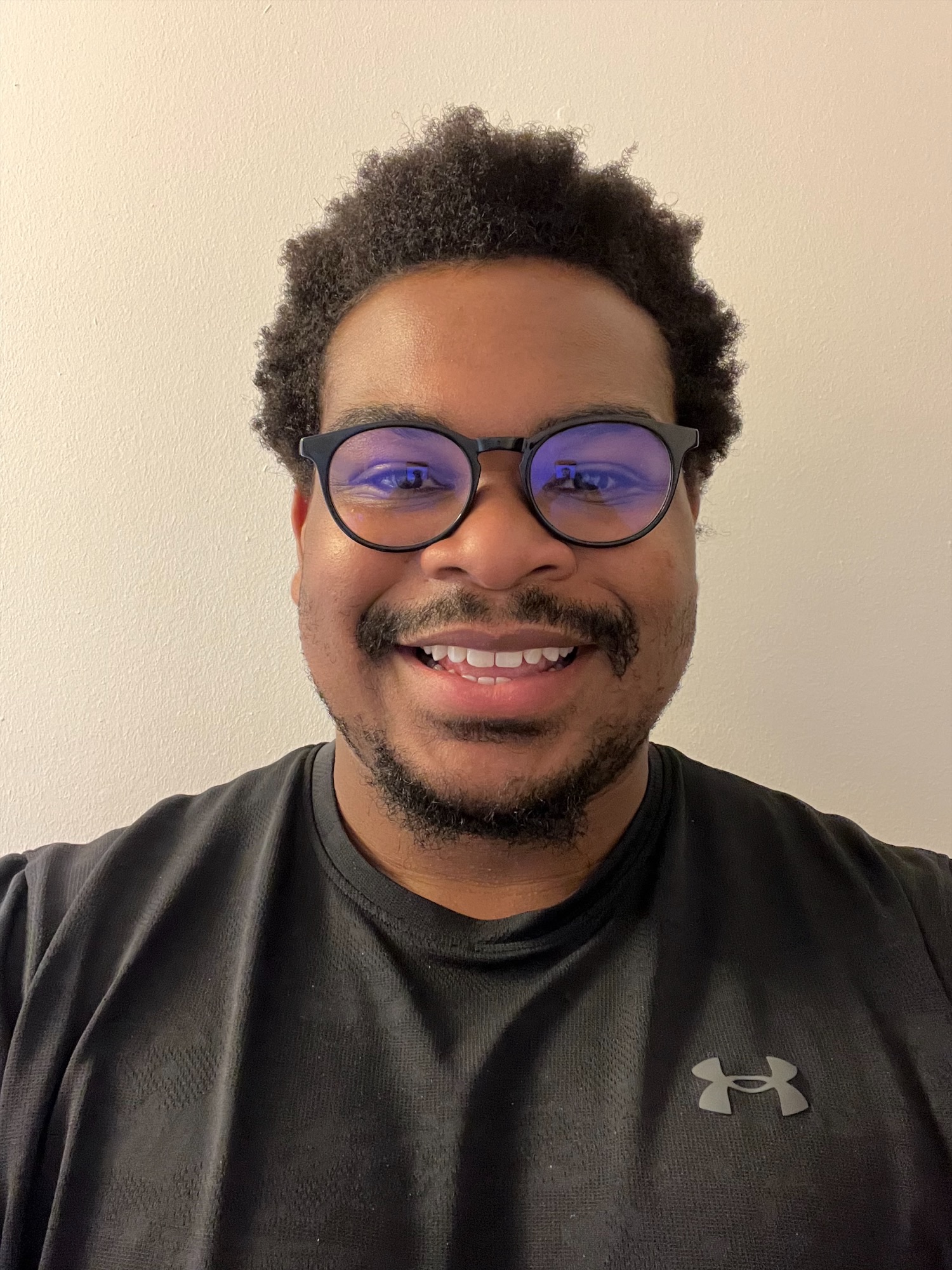
Read our latest EDI-focused blog post, “Honouring Black Communities in Sport Beyond October,” by Dr Jamal McKenzie, exploring the importance of recognising and supporting Black communities in sport beyond Black History Month.
This past month, organisations across the country have celebrated the historical and contemporary contributions of Black people to British society, which is one of the things that makes Black History Month so special. The theme of Black History Month 2026 (BHM26) was “honouring our communities”, bringing greater visibility to the everyday contributions Black people make across society. I applaud the organisations that have wholeheartedly embraced the spirit of BHM26, hopefully bringing us one step closer to the true mission of Black History Month: not to celebrate Black contributions for one month each year, but to recognise and celebrate Black history every day, with Black people’s contributions to society valued equally alongside everyone else’s.
Sport has a relationship with ‘race’ unlike that of any other industry. Over the centuries, Black people have been portrayed as exceptionally athletic: from Bill Richmond, widely regarded as the first Black professional athlete, to Muhammad Ali, Caster Semenya, Usain Bolt, John Barnes, Simone Biles, and Venus and Serena Williams, across different sports and eras. Sport is one of the few industries in which Black people can be seen as exceptional in one regard (as athletes) yet vastly inadequate in almost every other, including management, leadership, coaching, policy, and ownership. Meanwhile, Black culture, experience, and expression have continually been marginalised in how we understand the structure of sport and how it should be experienced. This is why my own research focuses on the people and organisations working every day to make sport and physical activity more accessible and inclusive for Black communities.
The very theme of honouring our communities and celebrating the people who make great contributions to society every day sits at the heart of my PhD research. It also speaks to a gap in our understanding of Black communities in sport and exercise. My doctoral research investigates Black sport volunteering and the social conditions that shape it according to ‘race’ and social class. Part of the thesis examines Black-led sport organisations in England, why Black people create and sustain sport organisations outside traditional sport structures, and what these spaces offer the communities they serve. Drawing on the African philosophy of Ubuntu, ‘I am because we are’, I show how Black volunteering in sport, and the voluntary organisations created by and for Black communities, are rooted in collective responsibility. In this context, volunteering is less a moral choice than a necessity for those positioned to drive change. Here, I want to pay homage to these organisations and to the community leaders who volunteer to help make sport and physical activity a safer place for Black communities.
These community leaders’ activities range from coaching and leading to founding organisations and events, as well as serving on boards. They are involved in a wide range of sports, including swimming, football, rugby, triathlon and running, as well as more adventurous activities such as mountaineering, hiking, trail running and snowboarding. Across these sports and the wider sporting landscape, however, inequalities in access and belonging persist for Black communities across the UK. What unites these leaders is their active challenge to the systems that continually reproduce inequality in British society.
Honouring those who continue this work day in and day out requires more than a post of recognition or a once-a-year round of applause. Many of the leaders I refer to have full-time jobs and family commitments, while working within a system of limited funding and receiving little recognition for their wider contributions to sport and society. In my thesis, I argue for the notion of Racialised Necessity: “the social condition under which Black communities must continually create and sustain their own means of support, legitimacy, and recognition within racially unequal social orders” (McKenzie, 2026, p. 219). Black communities need to build their own infrastructure to participate in sport and physical activity safely and on their own terms, while navigating, and sometimes avoiding, uncomfortable truths about mainstream sport and physical activity structures. Raising a glass to these organisations in October year after year, while these issues go unmarked and unquestioned the rest of the year, puts efforts to build a more equitable society at risk. This work should therefore be valued year-round for the exceptional contribution it makes to society. Universities, sport organisations, and those of us who research and teach in sport all have a role to play, and our department is no exception: carrying this work into our teaching of the next generation of sport leaders and ensuring the voices of these communities shape our fundamental understanding of sport and physical activity.
I’m writing this blog in November. Black History Month events have ended, displays have been taken down, and social media posts have long since disappeared into the algorithm. Yet November is the first month in which we can show that honouring Black communities isn’t just for October. Black history doesn’t stop, and those who make sport happen for Black communities certainly don’t take a break from their mission. If BHM26 asked us to make their contributions more visible, November is our first opportunity to keep recognising and supporting them. Every month we do so brings us one step closer to the true mission of Black History Month: a time when Black history is recognised every month, and Black British history is understood as British history every day.
-
McKenzie, J. A., Lee Ludvigsen, J. A., Scott-Bell, A., & Hayton, J. W. (2024). The framed and contested meanings of sport mega-event ‘legacies’: A case study of the Birmingham 2022 Commonwealth Games. International Review for the Sociology of Sport, 59(6), 921-940. https://doi.org/10.1177/10126902241246145