

/filters:quality(70)/prod01/prodbucket01/media/durham-university/homepage/headers/Global-Research-Draft.png)

Durham COP31 Delegation
| Image | Name | Profile |
|---|---|---|
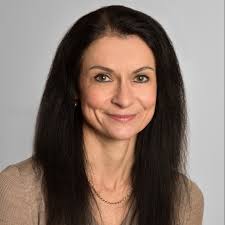 |
Prof Petra Minnerop Durham University |
Prof Petra Minnerop researches the intersection of law and science, focusing on sustainability, climate change, and environmental protection. Her work explores how law can respond to scientific evidence to tackle global environmental crises. She uses comparative and interdisciplinary approaches and has published widely in climate, environmental, and international law. Petra is Associate Pro-Vice-Chancellor (Sustainability) and Chair of the University’s UN SDG Group, leading sustainability reporting, SDG implementation, and UNFCCC engagement. She also leads major research initiatives on just transitions, net zero, and evidence-informed climate policymaking. |
 |
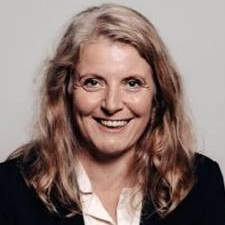
Prof Elisa Morgera Durham University |
Prof Elisa Morgera is a scholar of international law whose work focuses on human rights and the environment, especially the climate-nature and climate-ocean nexus, equity, and the rights of small-scale fishers, Indigenous Peoples, and children. From 2019 to 2024, she directed the One Ocean Hub, a Global North/South collaboration supporting inclusive ocean decision-making. She is part-time Professor in International and EU Environmental Law at the University of Eastern Finland, and has also worked with leading universities, the FAO, UNDP, governments, civil society, and international organizations worldwide. |
 |
Prof Harriet Bulkeley Durham University |
Professor Harriet Bulkeley is a Professor of Geography whose research focuses on climate governance, environmental politics, and urban sustainability. Her work explores how cities, businesses, communities, and other non-state actors respond to climate change and environmental challenges, with particular interests in decarbonisation, nature-based solutions, biodiversity, and environmental justice. She has led major international research initiatives and has undertaken research for governments, international organisations, and policy bodies including the UK Government, European Commission, UN-Habitat, the World Bank and the OECD. Harriet is also a Senior Fellow in the Global Policy Institute and is internationally recognised for her contributions to climate governance and sustainability transitions. |
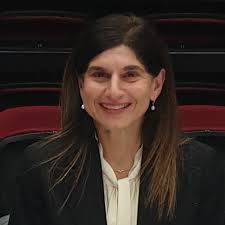 |
Prof Laura Marsiliani Durham University |
Professor Laura Marsiliani is an economist whose research lies at the intersection of public economics and environmental economics. Her work examines environmental policy, energy transitions, taxation, responsible investment, and the economic dimensions of environmental protection. She is Professor in Economics at Durham University Business School and a member of the Centre for Environmental and Energy Economics. Laura has organised international conferences on environmental policy and teaches Environmental Economics and Policy, contributing to research and education on the economic challenges of sustainability and decarbonisation. |
 |
Prof Chris Stokes Durham University |
Professor Chris Stokes is an internationally recognised glaciologist whose research focuses on glaciers, ice sheets, and their response to climate change. Using satellite remote sensing, field observations, and numerical modelling, he studies how changing ice conditions in Greenland and Antarctica contribute to sea-level rise and reshape the global climate system. His work has informed international climate discussions and been presented at United Nations climate negotiations, including COP meetings. Chris is Professor of Geography at Durham University and has published extensively on polar ice sheets, glacier retreat, and climate impacts, helping to improve understanding of the risks associated with a warming world. |
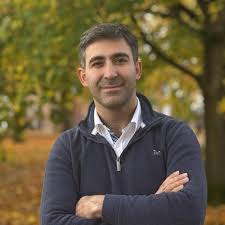 |
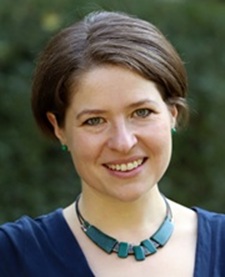
Dr Milad Kazemi Durham University |
Dr Milad Kazemi is an Assistant Professor in Computer Science at Durham University and a member of the JusTN0W programme. His research operates at the intersection of reinforcement learning, causal reasoning, uncertainty quantification, and AI safety. He develops methods to ensure advanced AI systems are verifiable, uncertainty-aware, and safe for deployment in high-stakes settings. His work focuses on trustworthy artificial intelligence, including safety monitoring for large language models and autonomous systems, with the goal of creating AI systems that are transparent, reliable, and scientifically rigorous. |
 |
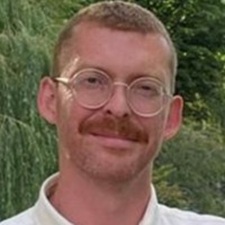
Dr Katalin Sulyok Durham University |
Dr Katalin Sulyok is Associate Professor in International Law and Sustainability at Durham University. Dr Sulyok holds a Ph.D. in international law, a B.Sc. in Biology and an LL.M. degree from Harvard Law School. Her research areas include environmental adjudication, the law-science interface in climate law and environmental law, intergenerational equity, and climate litigation. Dr Sulyok has been legal advisor in domestic and international climate litigation cases, including for the European Network of National Human Rights Institutions, which was an oral intervener in the landmark KlimaSeniorinnen v Switzerland case before the European Court of Human Rights. She has been appointed to the IPCC during the 7th Assessment period (2025-2029). |
 |
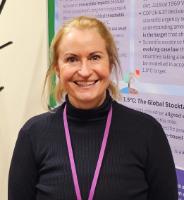
Dr Owen Boyle |
Dr Owen Boyle is Project Manager for the JusTN0W initiative at Durham University. He has a background in human rights law, with a particular focus on business responsibility for human rights. Before joining Durham University in 2024, he worked in academia, the private sector, and for international organisations including the United Nations and the Red Cross. Owen has significant project management experience and has previously managed large multidisciplinary academic projects funded by the British Academy and the Economic and Social Research Council (ESRC). Within JusTN0W, he supports the coordination and delivery of interdisciplinary research addressing the challenges of achieving a just transition to net zero. He has also been active as a researcher contributing to the British Academy funded project ELEVATE-ProClima and represented this project last year at COP30. |
 |
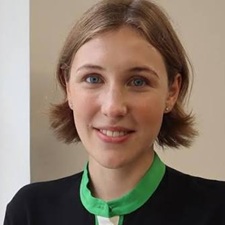
Kate Morris |
Kate Morris is Senior Business Development Manager for the JusTN0W initiative at Durham University and works at the interface between research, policy, and external engagement. She leads activities that support partnership development, stakeholder engagement, grant capture, and the growth of interdisciplinary programmes focused on climate action, sustainability, and just transitions. Working closely with academic, governmental, industry, and international partners, Kate helps translate research into collaborative projects with regional, national, and global impact. |
 |
Dr Franka Pues Durham University |
Franka Pues is a Postdoctoral Research Associate at Durham University whose research focuses on climate litigation and the role of law in addressing climate-related harms. She currently works on a Leverhulme-funded project examining everyday climate litigation and previously researched youth-focused climate litigation and climate accountability at King’s College London. Franka’s expertise spans international law, digital evidence, climate litigation, and children’s rights-based claims. Her work explores how legal processes and strategic litigation can contribute to climate action, accountability, and remedies for climate-related harms. |
 |
Dr Grant Macdonald Durham University
|
Dr Grant Macdonald is a Postdoctoral Research Associate in Geography at Durham University whose research focuses on polar environments, sea ice, and the impacts of climate change on Antarctic ecosystems. Using satellite remote sensing and Earth observation technologies, he investigates how changing ice conditions affect emperor penguin populations and wider polar environments. His work also examines the stability of sea ice and ice shelves in both Antarctica and the Arctic, contributing to understanding of climate-driven changes in the cryosphere. Grant has presented research at United Nations Climate Change Conferences and is committed to communicating the implications of polar change for conservation, sea-level rise, and global climate systems. |