


Prof Elisa Morgera Champions Human Rights-Centred Climate Action at COP31
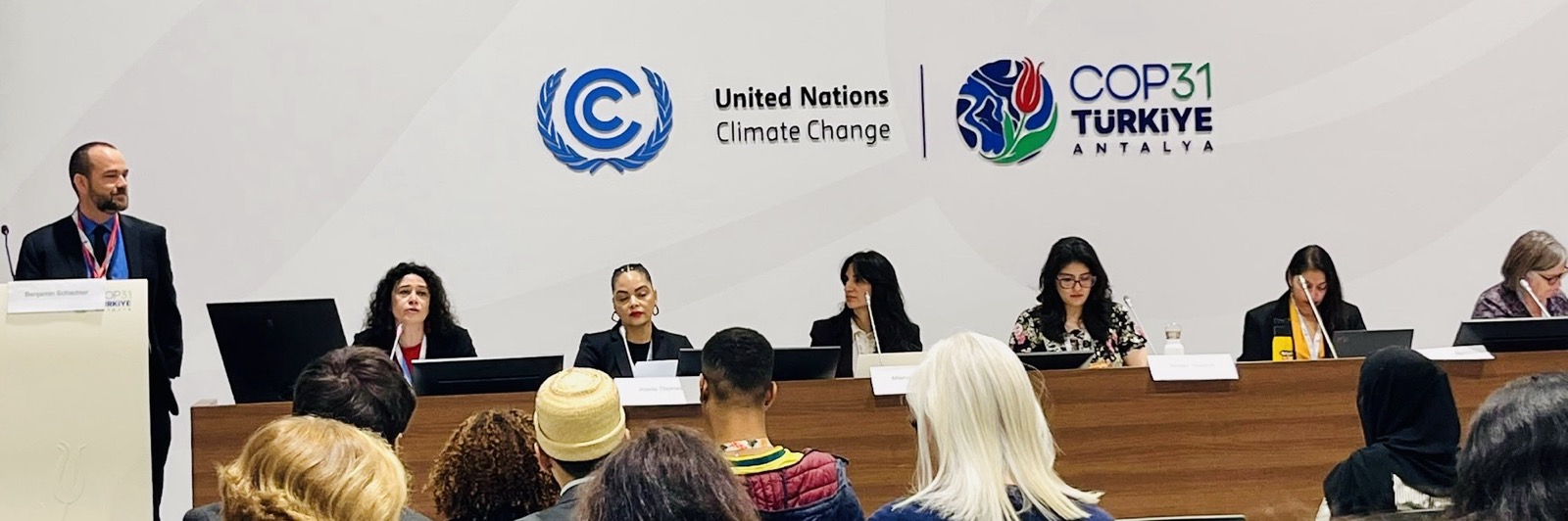
Professor Elisa Morgera, UN Special Rapporteur on Climate Change and Human Rights and Professor of Global Environmental Law at Durham University, has been highlighting the connections between climate change, human rights, health and inequality during COP31 in Antalya, Türkiye.
Professor Elisa Morgera has been contributing to discussions at COP31 in Antalya, bringing a human rights perspective to some of the most pressing issues facing international climate negotiations.
As UN Special Rapporteur on Climate Change and Human Rights, Professor Morgera has emphasised the need for ambitious action on fossil fuels and a transition to renewable energy that addresses not only climate change, but also its far-reaching impacts on health, food security, inequality and human rights.
On 11 November, Professor Morgera joined BBC World News live from Antalya to discuss the COP31 negotiations and the role of the fossil fuel industry in the climate crisis.
During the interview, she stressed that the impacts of climate change are increasingly being felt both physically and economically, including through rising living costs. She also highlighted the close relationship between fossil fuels, pollution and public health, arguing that moving towards renewable energy can deliver benefits extending well beyond reducing greenhouse gas emissions.
Reflecting on the way forward, Professor Morgera emphasised the need for several strands of action to happen together: phasing out fossil fuels, accelerating the uptake of renewable energy, addressing dependence on petrochemicals and plastics within food systems, and ensuring adequate funding for climate action and climate reparations.
Her contribution at COP31 builds on CSDLP's wider work examining how law, policy and international cooperation can support effective and equitable responses to climate change.
Watch Professor Elisa Morgera's BBC World News interview from COP31 (below).
Professor Morgera's work at COP31 forms part of a wider Durham University presence at the summit, with researchers contributing expertise across climate law, policy, science and sustainable development.
