

Staff profile

| Affiliation | Telephone |
|---|---|
| Leverhulme Trust Early Career Fellow in the Department of English Studies |
Biography
My research considers the social and political dimensions of eighteenth-century and Romantic-era literature, focusing specifically on British labouring-class poetry and its intersection with issues of slavery and resource extraction. Drawn to both literary and historical questions, I am also interested in the emergence of ecological and animal rights thinking during this period.
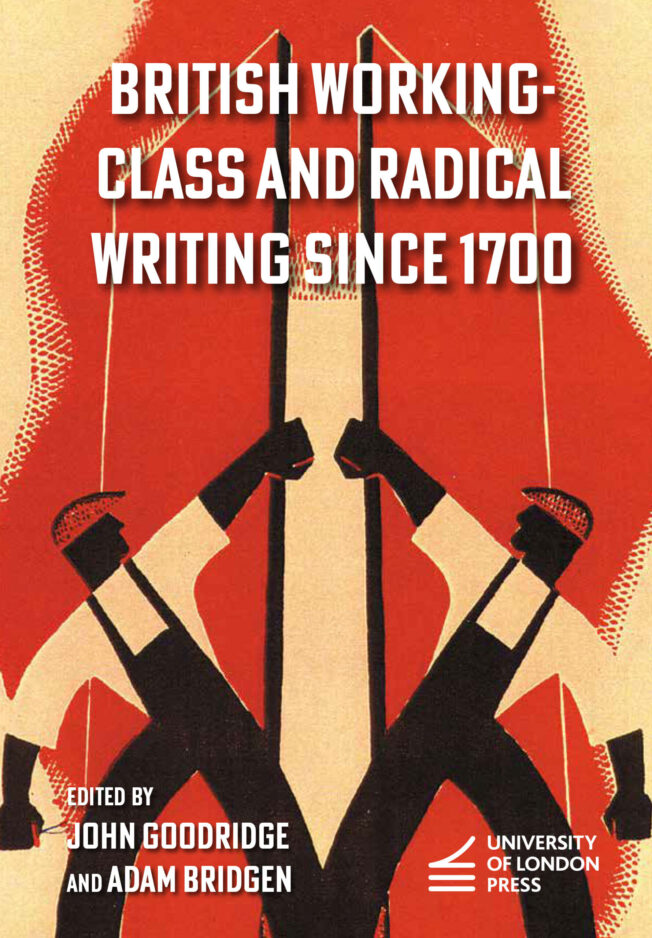
I recently brought out a book of essays, British Working-Class and Radical Writing Since 1700 (University of London Press, 2025), co-edited with John Goodridge. It was published open-access thanks to the 2024 Arcadia Open Access Publishing Award.
As part of my Leverhulme Trust Early Career Fellowship, I've been researching how British labouring-class writers during the Romantic era and Industrial Revolution responded to extractive industries and their impacts. For more about the project - ‘From below: natural resource extraction and working-class resistance, 1767–1842’ - please see this featured article for the Leverhulme Trust, this blog post for the Brotherton Library, or this podcast I recorded for the ‘Imperial Minerals’ research project.
My doctoral thesis examined at the University of Oxford explored how labouring-class poets from the sixteenth to the eighteenth centuries wrote about slavery as it rose to economic and political prominence in Britain, specifically by adapting contemporary imperial forms and tropes to reimagine the violence of slavery and to forefront the perspectives of its victims. More recently, I've been writing on the naval surgeon, poet, and abolitionist Thomas Trotter (1760-1832). I intend to further illustrate working-class contributions to abolitionism in the run up to the bicentenary of the Empancipation Act in 2033.
I've also published on women's writing and the Bluestocking movement, alongside abolitionism, environmental protest, and animal ethics, contributing essays to Hannah More in Context (2022), Romantic Environmental Sensibility: Nature, Class and Empire (2022), Animal Theologians (2023), and The Ethics of Fur: Religious, Cultural, and Legal Perspectives (2023), and most recently co-wrote an essay for Bluestockings and Landscape in Eighteenth-Century Britain: Prospects of Improvement (2025) with Steve Van-Hagen.
I've served as a reviewer for the Journal of Working-Class Studies and has been an Associate Fellow of the Oxford University Centre for Animal Ethics since 2020. My academic memberships include the Interdisciplinary Dialogues in Industry and Literature network, the Arts of Place network at the University of Birmingham, the British Society for Eighteenth-Century Studies, and the British Association for Romantic Studies. Before coming to Durham I held a Brotherton Fellowship at the University of Leeds’ Arts and Humanities Research Institute, and from 2021-23 was Fellow in Eighteenth-Century Literature and Culture at the University of St Andrews.
Research Interests
- late 17th-, 18th-century, and Romantic poetry and prose
- class; politics; british empire; slavery and abolition
- animal studies; ecocriticism; environmental humanities; extractivism
- working-class literature; women's writing; balladry and popular forms
Publications
Book review
- Literature, learning, and social hierarchy in early modern Europe: edited by Neil Kenny, Oxford, Oxford University Press (Proceedings of the British Academy, 246), 2022, 312 pp., £75.00 (hardback), ISBN 9780197267332Bridgen, A. (2023). Literature, learning, and social hierarchy in early modern Europe: edited by Neil Kenny, Oxford, Oxford University Press (Proceedings of the British Academy, 246), 2022, 312 pp., £75.00 (hardback), ISBN 9780197267332. The Seventeenth Century, 38(4), 722-724. https://doi.org/10.1080/0268117x.2023.2218233
Chapter in book
- Religious Faith, Class Politics, and Equitable Progress: James Woodhouse and Elizabeth Montagu’s Contending Visions of ImprovementBridgen, A., & Van Hagen, S. (in press). Religious Faith, Class Politics, and Equitable Progress: James Woodhouse and Elizabeth Montagu’s Contending Visions of Improvement. In J. Orchard & M. Ellis (Eds.), Bluestockings and Landscape in Eighteenth-Century Britain. Boydell and Brewer.
- Other Realms of Labouring-Class Antislavery: The Early Verse and Medical Writing of Thomas TrotterBridgen, A. (in press). Other Realms of Labouring-Class Antislavery: The Early Verse and Medical Writing of Thomas Trotter. In J. Goodridge & A. Bridgen (Eds.), British Working-Class and Radical Writing Since 1700. University of London Press.
- "Thou Shalt Not Use the Skins of Any Living Creature" : the original anti-fur activist, Thomas Tryon (1634-1703)Bridgen, A. (2023). "Thou Shalt Not Use the Skins of Any Living Creature" : the original anti-fur activist, Thomas Tryon (1634-1703). In A. Linzey & C. Linzey (Eds.), The Ethics of Fur: Religious, Cultural, and Legal Perspectives. Lexington Books.
- From the Pleistocene to COVID-19: A Brief History of FurBridgen, A. (2023). From the Pleistocene to COVID-19: A Brief History of Fur. In A. Linzey & C. Linzey (Eds.), The Ethics of Fur: Religious, Cultural, and Legal Perspectives (pp. 15-27). Lexington Books.
- Humphry Primatt (1735–1777): Animal Protection and Its Revolutionary ContextsBridgen, A. (2023). Humphry Primatt (1735–1777): Animal Protection and Its Revolutionary Contexts. In A. Linzey & C. Linzey (Eds.), Animal Theologians (pp. 96-123). Oxford University Press. https://doi.org/10.1093/oso/9780197655542.003.0006
- Thomas Tryon (1634–1703): A Theology of Animal EnslavementBridgen, A. (2023). Thomas Tryon (1634–1703): A Theology of Animal Enslavement. In A. Linzey & C. Linzey (Eds.), Animal Theologians (pp. 53-75). Oxford University Press. https://doi.org/10.1093/oso/9780197655542.003.0004
- A World of Fire and Drought: Ecosocialism, Improvement and Apocalypse in James Woodhouse’s Crispinus ScriblerusBridgen, A. (2022). A World of Fire and Drought: Ecosocialism, Improvement and Apocalypse in James Woodhouse’s Crispinus Scriblerus. In V. Tee (Ed.), Romantic Environmental Sensibility: Nature, Class and Empire (pp. 172-194). Edinburgh University Press. https://doi.org/10.1515/9781474456494-013
- Defending “Reason's rein”: Rationalism as Persuasive Strategy in Hannah More's Slavery: A Poem (1788)Bridgen, A. (2022). Defending “Reason’s rein”: Rationalism as Persuasive Strategy in Hannah More’s Slavery: A Poem (1788). In K. Andrews & S. Edney (Eds.), Hannah More in Context (pp. 50-67). Routledge. https://doi.org/10.4324/9781003092971-3
Journal Article
- Patronage, Punch-Ups, and Polite Correspondence: The Radical Background of James Woodhouse’s Early PoetryBridgen, A. J. (2017). Patronage, Punch-Ups, and Polite Correspondence: The Radical Background of James Woodhouse’s Early Poetry. Huntington Library Quarterly, 80(1), 99-134. https://doi.org/10.1353/hlq.2017.0004