

Staff profile
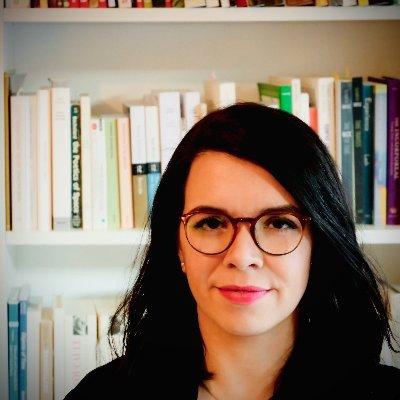
Dr Angela Marques Filipe
Associate Professor
(Lic. MRes PhD FHEA)
| Affiliation | Telephone |
|---|---|
| Associate Professor in the Department of Sociology | |
| Affiliate Member in the International Centre for Moral Injury | |
| Fellow of the Institute for Medical Humanities | |
| Fellow of the Wolfson Research Institute for Health and Wellbeing |
Biography
I am Associate Professor in the Department of Sociology at Durham University, where I am developing the project Reframing Eco-anxiety and Climate Emotion: A Cultural and Political History, funded by the Leverhulme Trust. I am on research leave in 2026–27 and visiting the University of Edinburgh. Previously, I was Co-Director of the Durham Institute for Medical Humanities and, in 2025, I launched its research cluster at the nexus of health and environmental humanities and social sciences, which I currently co-lead as Weather, Climate and Health with colleagues in Anthropology and Geography.
Before joining Durham, I held a post at McGill University, where I co-led two major programmes of work on eco-social determinants of well-being in childhood neurodisability and on mental health vulnerability. I was also member of the international UCL network on biosocial research. During this period, I was awarded the Rising Star Prize from Fonds de recherche du Québec (Canada) and distinguished in the 3rd edition of Women in Science (Portugal, Ciência Viva). Prior to that, my long-term study of ADHD was the first to examine the global histories and social lives of its diagnosis, treatment, and advocacy beyond the English-speaking world and in Southern Europe. This research received a KCL Elsevier Prize for Outstanding PhD and a Wenner-Gren Foundation award (U.S.). This work has in informed, in turn, the book Global Perspectives on ADHD (Johns Hopkins U. Press), my advisory work to establish the Portuguese Mental Health Observatory in 2022, and recent working and writing synergies with colleagues in the UK, Latin America, and East Asia.
I bring this international impact – and my interdisciplinary training from LSHTM (postdoc), LSE and King’s College London (PhD), and the University of Coimbra (Lic., MRes) – into my approach to inclusive research culture, student supervision, and staff mentoring. Externally, I serve on the editorial board of Sociology of Health & Illness and the Wellcome Trust’s Early-Career Awards and Interviews Panel. I am also convenor of a British Sociological Association stream, on which I led a strategic refresh of its vision and team in 2026, resulting in its renaming as Environment, Society, and Changing Climates study group. I speak and have had my work published in English, Portuguese, French, and Spanish.
Research areas and awards
I am a sociologist of science, medicine, and mental health interested in how contested conditions (and ideas) are defined and negotiated in contemporary social life. I explore this question through a combination of global historical perspectives and ethnographically grounded case studies, which illuminate how understandings and experiences of care, vulnerability, and wellbeing are embodied and situated in living environments, mobilised in social struggles, and translated into policy, practice, and value. Breaking disciplinary silos, and crossing institutional and national boundaries, my research projects and awards reflect three main areas of interest:
1. Eco-anxiety, climate feelings, and mental health. My current work develops a sociology of climate mental health and explores the ethics and politics of eco-anxiety and climate emotion among scientific, therapeutic, and activist communities. More broadly, this project reconnects conceptual strands and fundamental questions concerning knowledge, care, and agency which run across sociology, philosophy, and psychology. My long-term aim is to set a critical research agenda on the changing climates of our environ/mental health. This work has received funding from the Leverhulme Trust and British Academy ECRN.
2. Knowledge co-production and interdisciplinary collaboration at the nexus of science/society. I study how knowledge is co-produced at the nexus of science and society, focusing on how translational scientific models bear on healthcare practice and public policy and how experts by experience strategically mobilise to shape research and governance agendas. This research area includes collaborative projects on health activism, co-production, and research engagement; on environmental adversity and exposure in epigenetics and biosocial research; and on ecosocial theories of health, disease risk, disability, and vulnerability. Funded by the European Commission, Canadian Institutes for Health Research, and Wellcome Trust.
3. The social lives of ADHD and youth mental health in global perspective. I examine the social lives of ADHD diagnosis, treatment, and history in Portugal and Southern Europe, as well as in the global context, charting wider cultural, ethical and digital reconfigurations of attention, care, and neurodivergent experience. You can read some of my work in Portuguese and French, and explore the book Global Perspectives on ADHD (Johns Hopkins U. Press). Funded by the Wenner-Gren and the Portuguese Science & Technology Foundations; awarded the Fonds de Recherche Quebec Rising Star Prize and the KCL Elsevier Prize for Outstanding PhD Thesis.
Supervision students and early-career research mentees
Emma Gratte, PhDc. Funded by ESCR NINE DTP; co-supervised with Kim Jamie.
Patricia Bartley, PGR. Funded by ESCR NINE DTP; co-supervised with Alice Nah and Stephen Ashe.
Andrea Olmos-Talonia, PhDc. Overseas funding from Mexico; co-supervised with Jana Bacevic and Jed Stevenson.
Ellen Richardson, PGR. Funded by Scottish Graduate School of Social Science ESRC studentship; co-supervised with Cath Montgomery and Chase Ledin at the University of Edinburgh.
Rhiannon Hawkins, PhDc (Geography at Glasgow); research assistant on the Leverhulme project (Reframing Eco-Anxiety and Climate Emotion).
Dr Daniel Jones, Early Career Fellow (Department of Sociology and IMH). Funded by the Wellcome Trust.
Publications
Book review
- Adams, V. (ed). Metrics: What Counts in Global Health. Durham: Duke University Press. 2016. 258pp. $24.95 (pbk) ISBN 978–0‐8223–6097–1Filipe, A. M. (2017). Adams, V. (ed). Metrics: What Counts in Global Health. Durham: Duke University Press. 2016. 258pp. $24.95 (pbk) ISBN 978–0‐8223–6097–1. Sociology of Health & Illness, 39(8), 1575-1577. https://doi.org/10.1111/1467-9566.12602
- Raising Generation Rx: Mothering Kids with Invisible Disabilities in an Age of Inequality. By Linda M. Blum. New York: New York University Press, 2015. Pp. viii+310. $79.00 (cloth); $27.00 (paper).Filipe, A. M., & Singh, I. (2016). Raising Generation Rx: Mothering Kids with Invisible Disabilities in an Age of Inequality. By Linda M. Blum. New York: New York University Press, 2015. Pp. viii+310. $79.00 (cloth); $27.00 (paper). American Journal of Sociology, 122(3), 985-987. https://doi.org/10.1086/688472
Chapter in book
- Situer la vie sociale des TDAH: Entre le médical, le local et le globalRojas Navarro, S., & Filipe, A. M. (2023). Situer la vie sociale des TDAH: Entre le médical, le local et le global. In C. L. Vieira, C. Yves, & P. M. M. Renata (Eds.), L’attention médicamentée: La Ritaline à l’école (pp. 57-76). PUR.
- Bioética [bioethics]Ferreira, P., & Filipe, A. M. (2019). Bioética [bioethics]. In ALICE Dictionary. CES/ALICE.
- ADHD in a global context: An introductionBergey, M., & Filipe, A. M. (2018). ADHD in a global context: An introduction. In M. R. Bergey, A. M. Filipe, P. Conrad, & I. Singh (Eds.), Global Perspectives on ADHD: Social Dimensions of Diagnosis and Treatment in Sixteen Countries (pp. 1-8). Johns Hopkins University Press. https://doi.org/10.1353/book.56717
- The emergence and shaping of ADHD in Portugal: Ambiguities of a diagnosis “In the making”Filipe, A. M. (2018). The emergence and shaping of ADHD in Portugal: Ambiguities of a diagnosis “In the making”. In M. R. Bergey, A. M. Filipe, P. Conrad, & I. Singh (Eds.), Global Perspectives on ADHD: Social Dimensions of Diagnosis and Treatment in Sixteen Countries (pp. 118-137). Johns Hopkins University Press.
- BiopoliticsFilipe, A. M. (2014). Biopolitics. In The Wiley-Blackwell Encyclopedia of Health, Illness, Behavior, and Society. Editors: W. C. Cockerham, R. Dingwall, S. Quah (pp. 142-145). Wiley. https://doi.org/10.1002/9781118410868.wbehibs255
- Coletivos sociais na saúde: o ativismo em torno das doenças raras e do parto em PortugalFilipe, A. M., Roriz, M., Neves, D., Matias, M., & Nunes, J. A. (2014). Coletivos sociais na saúde: o ativismo em torno das doenças raras e do parto em Portugal (pp. 175-194). CES Almedina.
Edited book
- Global Perspectives on ADHD: Social Dimensions of Diagnosis and Treatment in Sixteen CountriesBergey, M. R., Filipe, A. M., Conrad, P., & Singh, I. (Eds.). (2018). Global Perspectives on ADHD: Social Dimensions of Diagnosis and Treatment in Sixteen Countries. Johns Hopkins University Press. https://doi.org/10.1353/book.56717
- The dynamics of patient organizations in EuropeAkrich, M., Nunes, J., Patterson, F., & Rabeharisoa, V. (Eds.). (2008). The dynamics of patient organizations in Europe. Presses des Mines. https://doi.org/10.4000/books.pressesmines.1577
Journal Article
- Mapping the social studies of ADHD: From medicalization theory to neurodiversity in the digital age, and future directionsFilipe, A. M., & Holroyd, D. (2026). Mapping the social studies of ADHD: From medicalization theory to neurodiversity in the digital age, and future directions. Health: An Interdisciplinary Journal for the Social Study of Health, Illness and Medicine. Advance online publication. https://doi.org/10.1177/13634593261449197
- New frontiers for Biosocial Birth Cohort Research: interdisciplinary approaches to exposure, harmonisation and collaborationGibbon, S., Roberts, E., Hardy, R., Béhague, D., Téllez Rojo, M., Goncalves-Soares, A., Mathers, R., Penkler, M., Fraga, S., Wooyoung Kim, A., Pentecost, M., Tabor, E., Jeffries-Hein, R., Lappé, M., Borra, C., Rossmann, S., Lloyd, S., Filipe, A., & Silva, S. (2024). New frontiers for Biosocial Birth Cohort Research: interdisciplinary approaches to exposure, harmonisation and collaboration. Wellcome Open Research, 9, Article 355. https://doi.org/10.12688/wellcomeopenres.21734.1
- How and why to use ‘vulnerability’: an interdisciplinary analysis of disease risk, indeterminacy and normalityFord, A., De Togni, G., Erikainen, S., Filipe, A. M., Pickersgill, M., Sturdy, S., Swallow, J., & Young, I. (2024). How and why to use ‘vulnerability’: an interdisciplinary analysis of disease risk, indeterminacy and normality. Medical Humanities, 50(1), 125-134. https://doi.org/10.1136/medhum-2023-012683
- The other face of medical globalization? Pharmaceutical data, prescribing trends, and the social localization of psychostimulantsFilipe, A. M. (2023). The other face of medical globalization? Pharmaceutical data, prescribing trends, and the social localization of psychostimulants. BioSocieties, 18(2), 335-357. https://doi.org/10.1057/s41292-022-00271-x
- Mapping of Financial Support Programs for Children With Neurodisabilities Across Canada: Barriers and Discrepancies Within a Patchwork SystemSalvino, C., Spencer, C., Filipe, A. M., & Lach, L. M. (2022). Mapping of Financial Support Programs for Children With Neurodisabilities Across Canada: Barriers and Discrepancies Within a Patchwork System. Journal of Disability Policy Studies, 33(3), 168-177. https://doi.org/10.1177/10442073211066776
- The Allegory of "Navigation" as a Concept of Care: The Case of Child Neurodevelopmental DisabilitiesMcCrossin, J., Filipe, A. M., Nicholas, D., & Lach, L. M. (2022). The Allegory of "Navigation" as a Concept of Care: The Case of Child Neurodevelopmental Disabilities. Journal on Developmental Disabilities, 27(2), Online-first. https://doi.org/10.5281/zenodo.7017122
- Towards a feminist philosophy of engagements in health-related researchErikainen, S., Stewart, E., Filipe, A. M., Chan, S., Cunningham-Burley, S., Ilson, S., King, G., Porteous, C., Sinclair, S., & Webb, J. (2022). Towards a feminist philosophy of engagements in health-related research. Wellcome Open Research, 6, 58. https://doi.org/10.12688/wellcomeopenres.16535.2
- Developing a Canadian framework for social determinants of health and well-being among children with neurodisabilities and their families: an ecosocial perspectiveFilipe, A. M., Bogossian, A., Zulla, R., Nicholas, D., & Lach, L. M. (2021). Developing a Canadian framework for social determinants of health and well-being among children with neurodisabilities and their families: an ecosocial perspective. Disability and Rehabilitation, 43(26), 3856-3867. https://doi.org/10.1080/09638288.2020.1754926
- Troubling Neurobiological Vulnerability: Psychiatric Risk and the Adverse Milieu in Environmental Epigenetics ResearchFilipe, A. M., Lloyd, S., & Larivée, A. (2021). Troubling Neurobiological Vulnerability: Psychiatric Risk and the Adverse Milieu in Environmental Epigenetics Research. Frontiers in Sociology, 6, Article 635986. https://doi.org/10.3389/fsoc.2021.635986
- Situar a hiperatividade e déficit de atenção em Portugal: dimensões sociais, históricas e éticas de um tema emergente na saúde globalFilipe, A. M. (2020). Situar a hiperatividade e déficit de atenção em Portugal: dimensões sociais, históricas e éticas de um tema emergente na saúde global. Cadernos de Saúde Pública, 36(12), Article e00056420. https://doi.org/10.1590/0102-311x00056420
- Situated Interventions in Health Care? Refiguring the Normative Place and Experimental Practice of Social ScienceFilipe, A. M. (2017). Situated Interventions in Health Care? Refiguring the Normative Place and Experimental Practice of Social Science. Science As Culture, 26(3), 418-423. https://doi.org/10.1080/09505431.2017.1315930
- The co-production of what? Knowledge, values, and social relations in health careFilipe, A., Renedo, A., & Marston, C. (2017). The co-production of what? Knowledge, values, and social relations in health care. PLOS Biology, 15(5), e2001403. https://doi.org/10.1371/journal.pbio.2001403
- Collaborating for better health: the role of qualitative researchMarston, C., Renedo, A., Matthews, R., Filipe, A., & Reed, J. (2017). Collaborating for better health: the role of qualitative research. BMJ Open, 7(Suppl 2), bmjopen-2017-016492.2. https://doi.org/10.1136/bmjopen-2017-016492.2
- Making ADHD Evident: Data, Practices, and Diagnostic Protocols in PortugalFilipe, A. M. (2016). Making ADHD Evident: Data, Practices, and Diagnostic Protocols in Portugal. Medical Anthropology, 35(5), 390-403. https://doi.org/10.1080/01459740.2015.1101102
- From ‘politics of numbers’ to ‘politics of singularisation’: Patients’ activism and engagement in research on rare diseases in France and PortugalRabeharisoa, V., Callon, M., Filipe, A. M., Nunes, J. A., Paterson, F., & Vergnaud, F. (2014). From ‘politics of numbers’ to ‘politics of singularisation’: Patients’ activism and engagement in research on rare diseases in France and Portugal. BioSocieties, 9(2), 194-217. https://doi.org/10.1057/biosoc.2014.4
- The Rise of Child Psychiatry in Portugal: An Intimate Social and Political History, 1915-1959Filipe, A. M. (2014). The Rise of Child Psychiatry in Portugal: An Intimate Social and Political History, 1915-1959. Social History of Medicine, 27(2), 326-348. https://doi.org/10.1093/shm/hku006
- Globalization and Cognitive Enhancement: Emerging Social and Ethical Challenges for ADHD CliniciansSingh, I., Filipe, A. M., Bard, I., Bergey, M., & Baker, L. (2013). Globalization and Cognitive Enhancement: Emerging Social and Ethical Challenges for ADHD Clinicians. Current Psychiatry Reports, 15(9). https://doi.org/10.1007/s11920-013-0385-0
- Entre bios e polis? Debates contemporâneos sobre saúde, biomedicina e biocidadaniaFilipe, A. M. (2010). Entre bios e polis? Debates contemporâneos sobre saúde, biomedicina e biocidadania. Prisma Jurídico, 9(1), 75-89.
- Os novos actores colectivos no campo da saúde: o papel das famílias nas associações de doentesNunes, J., Filipe, A. M., & Matias, M. (2010). Os novos actores colectivos no campo da saúde: o papel das famílias nas associações de doentes. Alicerces, 3, 119-128.
- Actores colectivos e os seus projectos para a saúde: o caso das associações de doentes em PortugalFilipe, A. (2009). Actores colectivos e os seus projectos para a saúde: o caso das associações de doentes em Portugal. Eä: Revista de Humanidades Médicas Y Estudios Sociales de la Ciencia Y la Tecnología, 1(2), 1-48.
- Patient organizations as emerging actors in the health arena: the case of PortugalNunes, J. A., Matias, M., & Filipe, Â. M. (2007). Patient organizations as emerging actors in the health arena: the case of Portugal. Revista Eletrônica de Comunicação, Informação E Inovação Em Saúde, 1(1), 105-108. https://doi.org/10.29397/reciis.v1i1.894
Other (Digital/Visual Media)
- Paying attention: Diagnosis, values, and meaning-making in the ADHD clinicFilipe, A. (2020, October 12). Paying attention: Diagnosis, values, and meaning-making in the ADHD clinic. Somatosphere: Science, Medicine, and Anthropology [Academic blog].
- Epistemic and Temporal Disjunctions: (Re)Mapping "Suicide Risk" Epigenetics Through Birth CohortsLloyd, S., Filipe, A., & Larivée, A. (2020, June 26). Epistemic and Temporal Disjunctions: (Re)Mapping "Suicide Risk" Epigenetics Through Birth Cohorts [Academic Blog Post]. Somatosphere: Science, Medicine, and Anthropology.
Working Paper
- The dynamics of causes and conditions: the rareness of diseases in French and Portuguese patients’ organizations’ engagement in researchRabeharisoa, V., Callon, M., Filipe, A., Nunes, J. A., & Paterson, F. (2012). The dynamics of causes and conditions: the rareness of diseases in French and Portuguese patients’ organizations’ engagement in research (Nos. 26; pp. 1-39). Papiers De Recherche Du CSI - CSI Working Papers Series.
- A vida como política? Debates contemporâneos sobre saúde, (bio)medicina e cidadaniaFilipe, A. (2010). A vida como política? Debates contemporâneos sobre saúde, (bio)medicina e cidadania (Nos. 338). Oficinas do CES.