

Staff profile
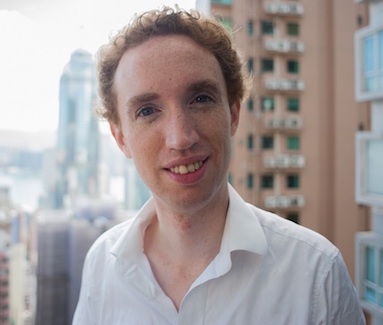
Professor Edmund Richardson
Professor
| Affiliation | Telephone |
|---|---|
| Professor in the Department of Classics and Ancient History | +44 (0) 191 33 41673 |
| Member of the Institute for Middle Eastern and Islamic Studies |
Biography
I’m a historian of ancient Greece and its afterlives: from Egyptian tales of Alexander the Great to ancient drama on Broadway. I'm fascinated by characters on the edges of many histories: the forgotten stories which change the way we see the world.
My most recent book, Alexander: God, King, Man was published in 2026. In 336 BCE, at the age of twenty, Alexander inherited a tumbledown kingdom, a pile of debts and an army which answered to nobody. Desperate to hold on to power, he led the army east, into the heart of the Persian Empire, and inadvertently began the greatest military campaign in history. The young man became a king, the king became a hero, the hero became a living god, and the god died aged thirty-two, broken-hearted in Babylon. Alexander is based on a decade of research on four continents, and includes new translations of sources from twelve ancient languages. It was reviewed in The Times, the Daily Mail, The Economist and The Wall Street Journal and shortlisted for the Baillie Gifford Prize; I wrote about my research for The Sunday Times, and was interviewed by the Spectator, Die Zeit and by BBC Radio 4's Today program.
Alexandria: The Quest for the Lost City, published in 2021, explored how the lost city of Alexandria Beneath the Mountains, in Afghanistan, was discovered by the most unlikely person imaginable: Charles Masson, an ordinary working-class boy from London, turned deserter, spy, doctor, archaeologist and scholar. On the way into one of history's most extraordinary stories, Masson would take tea with kings, travel with holy men and become the master of a hundred disguises. He would change the world, and the world would destroy him. Alexandria was reviewed by the New York Times, the Guardian, the Times, the Spectator and the Daily Telegraph. It was translated into German, Spanish, Dutch and Russian, and was named one of the books of the year for 2021 by the Spectator, the Daily Telegraph, Open Magazine (India) and the Sydney Morning Herald.
In 2016, I was named one of the AHRC/BBC New Generation Thinkers - one of ten academics selected to work with the BBC to develop programs based on their research. I've broadcast on everything from Victorian ghost-hunters to the search for Alexander the Great's tomb. You can read an interview about my work with the Guardian here.
Before joining the Department in 2013, I was Hannah Seeger Davis Postdoctoral Fellow at the University of Princeton, in the Program in Hellenic Studies (2009-10), Leverhulme Early Career Fellow at Durham (2010-12) and Lecturer at the University of Leeds (2012-13). I completed my Ph.D. at the University of Cambridge (2008).
My work explores, in different ways, how people form relationships with the past – and the fragile wonder of those relationships.
PhD Supervision: I'm delighted to receive enquiries from prospective PhD students and postdoctoral researchers interested in classical reception and the afterlives of the ancient world.
School Talks: it's always a joy to speak to school groups and classes - I can offer talks on topics within ancient Greek history (especially Alexander the Great) and the ancient world today.
Research interests
- Classical Reception Studies
- Alexander the Great
- Historiography
- Tragedy and Performance
Publications
Authored book
- Alexander: God, King, ManRichardson, E. (2026). Alexander: God, King, Man. Bloomsbury.
- Alexandria: The Quest for the Lost CityRichardson, E. (2021). Alexandria: The Quest for the Lost City. Bloomsbury.
- Classical Victorians: Scholars, Scoundrels and Generals in Pursuit of AntiquityRichardson, E. (2013). Classical Victorians: Scholars, Scoundrels and Generals in Pursuit of Antiquity. Cambridge University Press.
Chapter in book
- Classics and the VictoriansRichardson, E. (2017). Classics and the Victorians. In D. L. Clayman (Ed.), Oxford bibliographies. Classics. Oxford University Press. https://doi.org/10.1093/obo/9780195389661-0283
- The Emperor’s Caesar: Napoleon III, Karl Marx and the History of Julius CaesarRichardson, E. (2016). The Emperor’s Caesar: Napoleon III, Karl Marx and the History of Julius Caesar. In T. Fögen & R. Warren (Eds.), Graeco-Roman antiquity and the idea of nationalism in the 19th century : case studies. (pp. 113-130). De Gruyter. https://doi.org/10.1515/9783110473490-006
- Ghostwritten Classics.Richardson, E. (2016). Ghostwritten Classics. In S. Butler (Ed.), Deep Classics: Rethinking Classical Reception (pp. 221-238). Bloomsbury Academic.
- The Harmless Impudence of a Revolutionary: Radical Classics in 1850s LondonRichardson, E. (2015). The Harmless Impudence of a Revolutionary: Radical Classics in 1850s London. In H. Stead & E. Hall (Eds.), Greek and Roman classics in the British struggle for social reform. (pp. 79-98). Bloomsbury.
- Political Writing and Class.Richardson, E. (2015). Political Writing and Class. In N. Vance & J. Wallace (Eds.), The Oxford History of Classical Reception in English Literature, Volume 4: 1780-1880. (pp. 103-129). Oxford University Press.
- Of Doubtful AntiquityRichardson, E. (2013). Of Doubtful Antiquity. In A. Swenson & P. Mandler (Eds.), From Plunder to Preservation: Britain and the Heritage of Empire, c.1800-1940. Oxford University Press.
- Jude the Obscure: Oxford's Classical OutcastsRichardson, E. (2007). Jude the Obscure: Oxford’s Classical Outcasts. In C. Stray (Ed.), Oxford Classics. Duckworth.
Edited book
- Classics in Extremis: The Edges of Classical ReceptionRichardson, E. (Ed.). (2018). Classics in Extremis: The Edges of Classical Reception. Bloomsbury. https://doi.org/10.5040/9781350017283
Journal Article
- Mr Masson and the lost cities: a Victorian journey to the edges of remembranceRichardson, E. (2013). Mr Masson and the lost cities: a Victorian journey to the edges of remembrance. Classical Receptions Journal, 5(1), 84-105. https://doi.org/10.1093/crj/cls008
- Nothing’s Lost ForeverRichardson, E. (2012). Nothing’s Lost Forever. Arion: A Journal of Humanities and the Classics, 20(2), 19-48. https://doi.org/10.2307/arion.20.2.0019
- Re-living the apocalypse: Robinson Jeffers' MedeaRichardson, E. (2005). Re-living the apocalypse: Robinson Jeffers’ Medea. International Journal of the Classical Tradition, 11(3), 369-382. https://doi.org/10.1007/s12138-005-0003-6
- A Conjugal Lesson: Robert Brough’s Medea and the discourses of mid-Victorian BritainRichardson, E. (2003). A Conjugal Lesson: Robert Brough’s Medea and the discourses of mid-Victorian Britain. Ramus, 32(1), 57-83.