

Staff profile
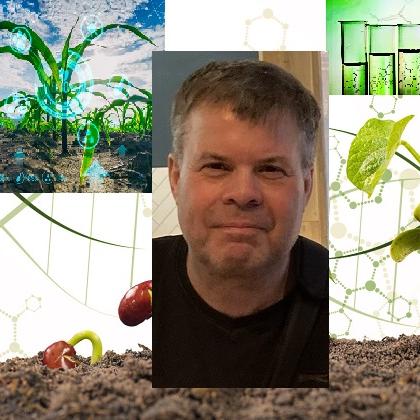
Dr Johannes Kroon
Senior Experimental Officer
| Affiliation | Telephone |
|---|---|
| Senior Experimental Officer in the Department of Biosciences | +44 (0) 191 33 41234 |
Biography
Biography and research interests.
Johan’s primary research, teaching base and work lie in the wet lab and intersects with modern tech through bio-engineering and synthetic biology applications such as biotechnology, genome editing and metabolic bioengineering in a range of plant- (model, crop & commercial) and microbial strain improvement programs.
He has experience in project design and management, including managing salaried technical staff and technical and instruction responsibilities in academic and private industry. The majority of (R & D) projects were aimed at gene discovery and characterisation, deciphering regulatory mechanisms or metabolic pathways in order to ultimately create sustainable solutions for food, phytochemical and industrial biochemical production through metabolic engineering . Johan holds a PhD degree from Durham University (2000), an undergraduate degree from the University of Amsterdam, a MSc. from the Free University Amsterdam and is an associate of the HEA. Four years up to 1993, he was research scientist in the private company Florigene Europe/Free University Amsterdam, studying phytochemical biosynthesis with special interest in key regulatory flavonoid and blue color genes for design of novel flowers using genetic engineering. Until 2011, as Senior Research Associate in the Lipid Molecular Biology group of Prof. Antoni Slabas in Biosciences Durham University, focus was on characterisation and metabolic engineering of lipid/oil pathways in plants and microbes. In 2011, Johan moved to industry again and joined a sustainability research division in a state of the art, multidisciplinary chemical industry Biotechnology R & D team, led by Dr. Adriana Botes, within Invista Intermediates, a subsidiary of privately owned Koch Industries Inc. His role was Bioscientist Molecular and Synthetic Biology, applying forefront approaches to develop sustainable solutions for polymer production through non-canonical industrial strain bio-engineering.
Johan re-joined Durham University Biosciences in 2014 as Senior Experimental Officer, lab- and core-facility manager in the Plant Cell Biology and Cytoskeleton group led by Pro Vice Chancellor (Science)/Prof. Patrick Hussey, and instructor involved with diverse internal- and external research programs, research led teaching in undergraduate and post graduate modules and consultation.
Research groups
- Durham Centre for Crop Improvement Technology
- Molecular Plant Sciences
- Biotechnology & Bioengineering
Research interests
- Genome- & metabolic bioengineering
- Biotechnology _ plant & microbial strain engineering
- Lipids and lipid homeostasis
- Secondary metabolites/phytochemicals
- Cytoskeleton associated proteins
Publications
Conference Paper
- Mutagenesis of squash (Cucurbita moschata) glycerol-3-phosphate acyltransferase (GPAT) to produce an enzyme with altered substrate selectivityHayman, M., Fawcett, T., Schierer, T., Simon, J., Kroon, J., Gilroy, J., Rice, D., Rafferty, J., Turnbull, A., Sedelnikova, S., & Slabas, A. (2000). Mutagenesis of squash (Cucurbita moschata) glycerol-3-phosphate acyltransferase (GPAT) to produce an enzyme with altered substrate selectivity. Biochemical Society Transactions, 28(6), 680-681. https://doi.org/10.1042/bst0280680
Journal Article
- Exo84c interacts with VAP27 to regulate exocytotic compartment degradation and stigma senescenceZhang, T., Li, Y., Li, C., Zang, J., Gao, E., Kroon, J. T., Qu, X., Hussey, P. J., & Wang, P. (2023). Exo84c interacts with VAP27 to regulate exocytotic compartment degradation and stigma senescence. Nature Communications, 14(1), Article 4888. https://doi.org/10.1038/s41467-023-40729-5
- NET4 and RabG3 link actin to the tonoplast and facilitate cytoskeletal remodelling during stomatal immunityHawkins, T. J., Kopischke, M., Duckney, P. J., Rybak, K., Mentlak, D. A., Kroon, J. T. M., Bui, M. T., Richardson, A. C., Casey, M., Alexander, A., De Jaeger, G., Kalde, M., Moore, I., Dagdas, Y., Hussey, P. J., & Robatzek, S. (2023). NET4 and RabG3 link actin to the tonoplast and facilitate cytoskeletal remodelling during stomatal immunity. Nature Communications, 14(1), Article 5848. https://doi.org/10.1038/s41467-023-41337-z
- Extracellular ATP targets Arabidopsis RIBONUCLEASE 1 to suppress mycotoxin stress-induced cell deathGoodman, H. L., Kroon, J. T., Tomé, D. F., Hamilton, J. M., Alqarni, A. O., & Chivasa, S. (2022). Extracellular ATP targets Arabidopsis RIBONUCLEASE 1 to suppress mycotoxin stress-induced cell death. New Phytologist, 235(4), 1531-1542. https://doi.org/10.1111/nph.18211
- TraB family proteins are components of ER-mitochondrial contact sites and regulate ER-mitochondrial interactions and mitophagyLi, C., Duckney, P., Zhang, T., Fu, Y., Li, X., Kroon, J., De Jaeger, G., Cheng, Y., Hussey, P. J., & Wang, P. (2022). TraB family proteins are components of ER-mitochondrial contact sites and regulate ER-mitochondrial interactions and mitophagy. Nature Communications, 13, Article 5658. https://doi.org/10.1038/s41467-022-33402-w
- Isolation of Arabidopsis extracellular ATP‐binding proteins by affinity proteomics and identification of PHOSPHOLIPASE C‐LIKE 1 as an extracellular protein essential for fumonisin B1 toxicitySmith, S. J., Goodman, H., Kroon, J. T., Brown, A. P., Simon, W. J., & Chivasa, S. (2021). Isolation of Arabidopsis extracellular ATP‐binding proteins by affinity proteomics and identification of PHOSPHOLIPASE C‐LIKE 1 as an extracellular protein essential for fumonisin B1 toxicity. Plant Journal, 106(5), 1387-1400. https://doi.org/10.1111/tpj.15243
- NETWORKED2‐Subfamily Proteins Regulate the Cortical Actin Cytoskeleton of Growing Pollen Tubes and Polarised Pollen Tube GrowthDuckney, P., Kroon, J. T., Dixon, M. R., Hawkins, T. J., Deeks, M. J., & Hussey, P. J. (2021). NETWORKED2‐Subfamily Proteins Regulate the Cortical Actin Cytoskeleton of Growing Pollen Tubes and Polarised Pollen Tube Growth. New Phytologist, 231(1), 152-164. https://doi.org/10.1111/nph.17391
- A PXY-Mediated Transcriptional Network Integrates Signaling Mechanisms to Control Vascular Development in ArabidopsisSmit, M., McGregor, S., Sun, H., Gough, C., Bågman, A., Soyars, C., Kroon, J., Gaudinier, A., Williams, C., Yang, X., Nimchuk, Z., Weijers, D., Turner, S., Brady, S., & Etchells, J. (2020). A PXY-Mediated Transcriptional Network Integrates Signaling Mechanisms to Control Vascular Development in Arabidopsis. Plant Cell, 32, 319-335. https://doi.org/10.1105/tpc.19.00562
- Organ-specific genetic interactions between paralogues of the PXY and ER receptor kinases enforce radial patterning in Arabidopsis vascular tissueWang, N., Bagdassarian, K., Doherty, R., Kroon, J., Connor, K., Wang, X., Wang, W., Jermyn, I., Turner, S., & Etchells, J. (2019). Organ-specific genetic interactions between paralogues of the PXY and ER receptor kinases enforce radial patterning in Arabidopsis vascular tissue. Development., 146(10), Article 177105. https://doi.org/10.1242/dev.177105
- Paralogues of the PXY and ER receptor kinases enforce radial patterning in plant vascular tissueWang, N., Bagdassarian, K. S., Doherty, R. E., Wang, X. Y., Kroon, J. T., Wang, W., Jermyn, I. H., Turner, S. R., & Etchells, J. P. (2018). Paralogues of the PXY and ER receptor kinases enforce radial patterning in plant vascular tissue. BioRxiv. https://doi.org/10.1101/357244
- Actin–membrane interactions mediated by NETWORKED2 in Arabidopsis pollen tubes through associations with Pollen Receptor-Like Kinase 4 and 5Duckney, P., Deeks, M., Dixon, M., Kroon, J., Hawkins, T., & Hussey, P. (2017). Actin–membrane interactions mediated by NETWORKED2 in Arabidopsis pollen tubes through associations with Pollen Receptor-Like Kinase 4 and 5. New Phytologist, 216(4), 1170-1180. https://doi.org/10.1111/nph.14745
- Cyclin-dependent kinase activity enhances phosphatidylcholine biosynthesis in Arabidopsis by repressing phosphatidic acid phosphohydrolase activityCraddock, C. P., Adams, N., Kroon, J. T., Bryant, F. M., Hussey, P. J., Kurup, S., & Eastmond, P. J. (2017). Cyclin-dependent kinase activity enhances phosphatidylcholine biosynthesis in Arabidopsis by repressing phosphatidic acid phosphohydrolase activity. Plant Journal, 89(1), 3-14. https://doi.org/10.1111/tpj.13321
- A Novel Function for Arabidopsis CYCLASE1 in Programmed Cell Death Revealed by Isobaric Tags for Relative and Absolute Quantitation (iTRAQ) Analysis of Extracellular Matrix ProteinsSmith, S. J., Kroon, J. T., Simon, W. J., Slabas, A. R., & Chivasa, S. (2015). A Novel Function for Arabidopsis CYCLASE1 in Programmed Cell Death Revealed by Isobaric Tags for Relative and Absolute Quantitation (iTRAQ) Analysis of Extracellular Matrix Proteins. Molecular and Cellular Proteomics, 14(6), 1556-1568. https://doi.org/10.1074/mcp.m114.045054
- Proteomics reveals new insights into the role of light in cadmium response in Arabidopsis cell suspension cultures.Wang, Y., Kroon, J., Slabas, A., & Chivasa, S. (2013). Proteomics reveals new insights into the role of light in cadmium response in Arabidopsis cell suspension cultures. Proteomics, 13(7), 1145-1158. https://doi.org/10.1002/pmic.201200321
- Tissue-specific whole transcriptome sequencing in castor, directed at understanding triacylglycerol lipid biosynthetic pathwaysBrown, A., Kroon, J., Swarbreck, D., Febrer, M., Larson, T., Graham, I., Caccamo, M., & Slabas, A. (2012). Tissue-specific whole transcriptome sequencing in castor, directed at understanding triacylglycerol lipid biosynthetic pathways. PLoS ONE, 7(2), Article e30100. https://doi.org/10.1371/journal.pone.0030100
- Components of Complex Lipid Biosynthetic Pathways in Developing Castor (Ricinus communis) Seeds Identified by MudPIT Analysis of Enriched Endoplasmic ReticulumBrown, A., Kroon, J., Topping, J., Robson, J., Simon, W., & Slabas, A. (2011). Components of Complex Lipid Biosynthetic Pathways in Developing Castor (Ricinus communis) Seeds Identified by MudPIT Analysis of Enriched Endoplasmic Reticulum. Journal of Proteome Research, 10(8), 3565-3577. https://doi.org/10.1021/pr2002066
- A phosphatidate phosphatase double mutant provides a new insight into plant membrane lipid homeostasisEastmond, P., Quettier, A., Kroon, J., Craddock, C., Adams, N., & Slabas, A. (2011). A phosphatidate phosphatase double mutant provides a new insight into plant membrane lipid homeostasis. Plant Signaling & Behavior, 6(4), 526-527. https://doi.org/10.4161/psb.6.4.14748
- PHOSPHATIDIC ACID PHOSPHOHYDROLASE1 and 2 Regulate Phospholipid Synthesis at the Endoplasmic Reticulum in ArabidopsisEastmond, P. J., Quettier, A., Kroon, J. T., Craddock, C., Adams, N., & Slabas, A. R. (2010). PHOSPHATIDIC ACID PHOSPHOHYDROLASE1 and 2 Regulate Phospholipid Synthesis at the Endoplasmic Reticulum in Arabidopsis. Plant Cell, 22(8), 2796-2811. https://doi.org/10.1105/tpc.109.071423
- Recessive mutations in the putative calcium-activated chloride channel Anoctamin 5 cause proximal LGMD2L and distal MMD3 muscular dystrophies.Bolduc, V., Marlow, G., Boycott, K., Saleki, K., Inoue, H., Kroon, J., Itakura, M., Robitaille, Y., Parent, L., Baas, F., Mizuta, K., Kamata, N., Richard, I., Linssen, W., Mahjneh, I., de Visser, M., Bashir, R., & Brais, B. (2010). Recessive mutations in the putative calcium-activated chloride channel Anoctamin 5 cause proximal LGMD2L and distal MMD3 muscular dystrophies. American Journal of Human Genetics, 86(2), 213-221. https://doi.org/10.1016/j.ajhg.2009.12.013
- Proof of function of a putative 3-hydroxyacyl-acyl carrier protein dehydratase from higher plants by mass spectrometry of product formation.Brown, A., Affleck, V., Kroon, J., & Slabas, A. (2009). Proof of function of a putative 3-hydroxyacyl-acyl carrier protein dehydratase from higher plants by mass spectrometry of product formation. FEBS Letters, 583(2), 363-368. https://doi.org/10.1016/j.febslet.2008.12.022
- Identification and functional expression of a type 2 acyl-CoA:diacylglycerol acyltransferase (DGAT2) in developing castor bean seeds which has high homology to the major triglyceride biosynthetic enzyme of fungi and animalsKroon, J. T., Wei, W., Simon, W. J., & Slabas, A. R. (2006). Identification and functional expression of a type 2 acyl-CoA:diacylglycerol acyltransferase (DGAT2) in developing castor bean seeds which has high homology to the major triglyceride biosynthetic enzyme of fungi and animals. Phytochemistry, 67(23), 2541-2549. https://doi.org/10.1016/j.phytochem.2006.09.020
- Identification and functional expression of a type 2 acyl-CoA :diacylglycerol acyltransferase (DGAT2) in developing castor bean seedswhich has high homology to the major triglyceride biosynthetic enzymeof fungi and animals.Kroon, J., Wei, W., Simon, J., & Slabas, A. (2006). Identification and functional expression of a type 2 acyl-CoA :diacylglycerol acyltransferase (DGAT2) in developing castor bean seedswhich has high homology to the major triglyceride biosynthetic enzymeof fungi and animals. Phytochemistry, 67(23), 2541-2549.
- Arabidopsis RecQsim, a plant-specific member of the RecQ helicase family, can suppress the MMS hypersensitivity of the yeast sgs1 mutant.Bagherieh-Najjar, M. B., de Vries, O. M., Kroon, J. T., Wright, E. L., Elborough, K. M., Hille, J., & Dijkwel, P. P. (2003). Arabidopsis RecQsim, a plant-specific member of the RecQ helicase family, can suppress the MMS hypersensitivity of the yeast sgs1 mutant. Plant Molecular Biology, 52(2), 273-284. https://doi.org/10.1023/a%3A1023968429220
- Squash glycerol-3-phosphate (1)-acyltransferase - Alteration of substrate selectivity and identification of arginine and lysineresidues important in catalytic activitySlabas, A., Kroon, J., Scheirer, T., Gilroy, J., Hayman, M., Rice, D., Turnbull, A., Rafferty, J., Fawcett, T., & Simon, W. (2002). Squash glycerol-3-phosphate (1)-acyltransferase - Alteration of substrate selectivity and identification of arginine and lysineresidues important in catalytic activity. Journal of Biological Chemistry, 277(46), 43918-43923. https://doi.org/10.1074/jbc.m206429200
- Analysis of the Structure, Substrate Specificity, and Mechanism of Squash Glycerol-3-Phosphate (1)-Acyltransferase.Turnbull, A., Rafferty, J., Sedelnikova, S., Slabas, A., Scheirer, T., Kroon, J., Simon, J., Fawcett, T., Nishida, I., Murata, N., & Rice, D. (2001). Analysis of the Structure, Substrate Specificity, and Mechanism of Squash Glycerol-3-Phosphate (1)-Acyltransferase. Structure, 9(5), 347-353. https://doi.org/10.1016/s0969-2126%2801%2900595-0
- Crystallization and preliminary X-ray analysis of theglycerol-3-phosphate 1-acyltransferase from squash (Cucurbita moschata)Turnbull, A., Rafferty, J., Sedelnikova, S., Slabas, A., Schierer, T., Kroon, J., Nishida, J., Murata, N., Simon, J., & Rice, D. (2001). Crystallization and preliminary X-ray analysis of theglycerol-3-phosphate 1-acyltransferase from squash (Cucurbita moschata). Acta Crystallographica . Section D, Biological Crystallography, 57, 451-453. https://doi.org/10.1107/s0907444901000257
- Mutagenesis of squash (Cucurbita moschata) glycerol-3-phosphateacyltransferase (GPAT) to produce an enzyme with altered substrateselectivityHayman, M. W., Fawcett, T., Schierer, T. F., Simon, J. W., Kroon, J. T. M., Gilroy, J. S., Rice, D. W., Rafferty, J., Turnbull, A. P., Sedelnikova, S. E., & Slabas, A. R. (2000). Mutagenesis of squash (Cucurbita moschata) glycerol-3-phosphateacyltransferase (GPAT) to produce an enzyme with altered substrateselectivity. Biochemical Society Transactions, 28, 680-681.
- Plant glycerol-3-phosphate-1-acyltransferase (GPAT): structure selectivity studiesSlabas, A., Simon, W., Schierer, T., Kroon, J., Fawcett, T., Hayman, M., Gilroy, J., Nishida, I., Murata, N., Rafferty, J., Turnbull, A., & Rice, D. (2000). Plant glycerol-3-phosphate-1-acyltransferase (GPAT): structure selectivity studies. Biochemical Society Transactions, 28, 677-679.
- The X-ray structure of Brassica napus β-keto acyl carrier protein reductase and its implications for substrate binding and catalysisFisher, M., Kroon, J. T., Martindale, W., Stuitje, A. R., Slabas, A. R., & Rafferty, J. B. (2000). The X-ray structure of Brassica napus β-keto acyl carrier protein reductase and its implications for substrate binding and catalysis. Structure, 8(4), 339-347. https://doi.org/10.1016/s0969-2126%2800%2900115-5
- The X-ray structure of Brassica napus beta-keto acyl carrier proteinreductase and its implications for substrate binding and catalysisFisher, M., Kroon, J., Martindale, W., Stuitje, A., Slabas, A., & Rafferty, J. (2000). The X-ray structure of Brassica napus beta-keto acyl carrier proteinreductase and its implications for substrate binding and catalysis. Structure, 8(4), 339-347.
- A Consensus Sequence for Long-chain Fatty-acid Alcohol Oxidases from Candida Identifies a Family of Genes Involved in Lipid ω-Oxidation in Yeast with Homologues in Plants and BacteriaVanhanen, S., West, M., Kroon, J. T., Lindner, N., Casey, J., Cheng, Q., Elborough, K. M., & Slabas, A. R. (2000). A Consensus Sequence for Long-chain Fatty-acid Alcohol Oxidases from Candida Identifies a Family of Genes Involved in Lipid ω-Oxidation in Yeast with Homologues in Plants and Bacteria. Journal of Biological Chemistry, 275(6), P4445-4452. https://doi.org/10.1074/jbc.275.6.4445
- Towards the genetic engineering of triacylglycerols of defined fatty acid composition: major changes in erucic acid content at the sn-2 position affected by the introduction of a 1-acyl-sn-glycerol-3-phosphate acyltransferase from Limnanthes douglasii into oil seed rapeBrough, C. L., Coventry, J. M., Christie, W. W., Kroon, J. T., Brown, A. P., Barsby, T. L., & Slabas, A. R. (1996). Towards the genetic engineering of triacylglycerols of defined fatty acid composition: major changes in erucic acid content at the sn-2 position affected by the introduction of a 1-acyl-sn-glycerol-3-phosphate acyltransferase from Limnanthes douglasii into oil seed rape. Molecular Breeding, 2(2), 133-142. https://doi.org/10.1007/bf00441428
- Towards the genetic engineering of triacylglycerols of defined fatty acid composition: Major changes in erucic acid content at the sn-2position affected by the introduction of a1-acyl-sn-glycerol-3-phosphate acyltransferase from Limnanthesdouglasii into oiBrough, C., Coventry, J., Christie, W., Kroon, J., Brown, A., Barsby, T., & Slabas, A. (1996). Towards the genetic engineering of triacylglycerols of defined fatty acid composition: Major changes in erucic acid content at the sn-2position affected by the introduction of a1-acyl-sn-glycerol-3-phosphate acyltransferase from Limnanthesdouglasii into oi. Molecular Breeding, 2(2), 133-142.
- Identification of a cDNA that encodes a 1-acyl-sn-glycerol-3-phosphate acyltransferase from Limnanthes douglasiiBrown, A. P., Brough, C. L., Kroon, J. T., & Slabas, A. R. (1995). Identification of a cDNA that encodes a 1-acyl-sn-glycerol-3-phosphate acyltransferase from Limnanthes douglasii. Plant Molecular Biology, 29(2), 267-278. https://doi.org/10.1007/bf00043651
- Identification of a cDNA that encodes a 1-acyl-sn-glycerol-3-phosphate acyltransferase from Limnanthes douglasii.Brown, A., Brough, C., KROON, J., & Slabas, A. (1995). Identification of a cDNA that encodes a 1-acyl-sn-glycerol-3-phosphate acyltransferase from Limnanthes douglasii. Plant Molecular Biology, 29(2), 267-278.
- Isolation of cDNAs from Brassica napus encoding the biotin-binding and transcarboxylase domains of acetyl-CoA carboxylase: assignment of the domain structure in a full-length Arabidopsis thaliana genomic clone.Elborough, K., Swinhoe, R., Winz, R., KROON, J., Farnsworth, L., Fawcett, T., Martinezrivas, J., & Slabas, A. (1994). Isolation of cDNAs from Brassica napus encoding the biotin-binding and transcarboxylase domains of acetyl-CoA carboxylase: assignment of the domain structure in a full-length Arabidopsis thaliana genomic clone. Biochemical Journal, 301(2), 599-605. https://doi.org/10.1042/bj3010599
- Cloning and structural analysis of the anthocyanin pigmentation locus Rt of Petunia hybrida: characterization of insertion sequences in two mutant allelesKroon, J., Souer, E., de Graaff, A., Xue, Y., Mol, J., & Koes, R. (1994). Cloning and structural analysis of the anthocyanin pigmentation locus Rt of Petunia hybrida: characterization of insertion sequences in two mutant alleles. Plant Journal, 5(1). https://doi.org/10.1046/j.1365-313x.1994.5010069.x
- The petunia homologue of the Antirrhinum majus candi and Zea mays A2 flavonoid genes; homology to flavanone 3-hydroxylase and ethylene-forming enzymeWeiss, D., van der Luit, A. H., Kroon, J. T., Mol, J. N., & Kooter, J. M. (1993). The petunia homologue of the Antirrhinum majus candi and Zea mays A2 flavonoid genes; homology to flavanone 3-hydroxylase and ethylene-forming enzyme. Plant Molecular Biology, 22(5), 893-897. https://doi.org/10.1007/bf00027374