

Staff profile
| Affiliation | Telephone |
|---|---|
| Professor in the Department of Geography | +44 (0) 191 33 41911 |
| Member of the Institute for Middle Eastern and Islamic Studies |
Biography
My research asks what happens to people and places that states choose to abandon. Working at the intersection of geography, political theory, and cultural history, I develop the concept of "sovereign uncaring," the deliberate withdrawal of state responsibility from defined populations and spaces, and trace its effects on lives and lands across the world.
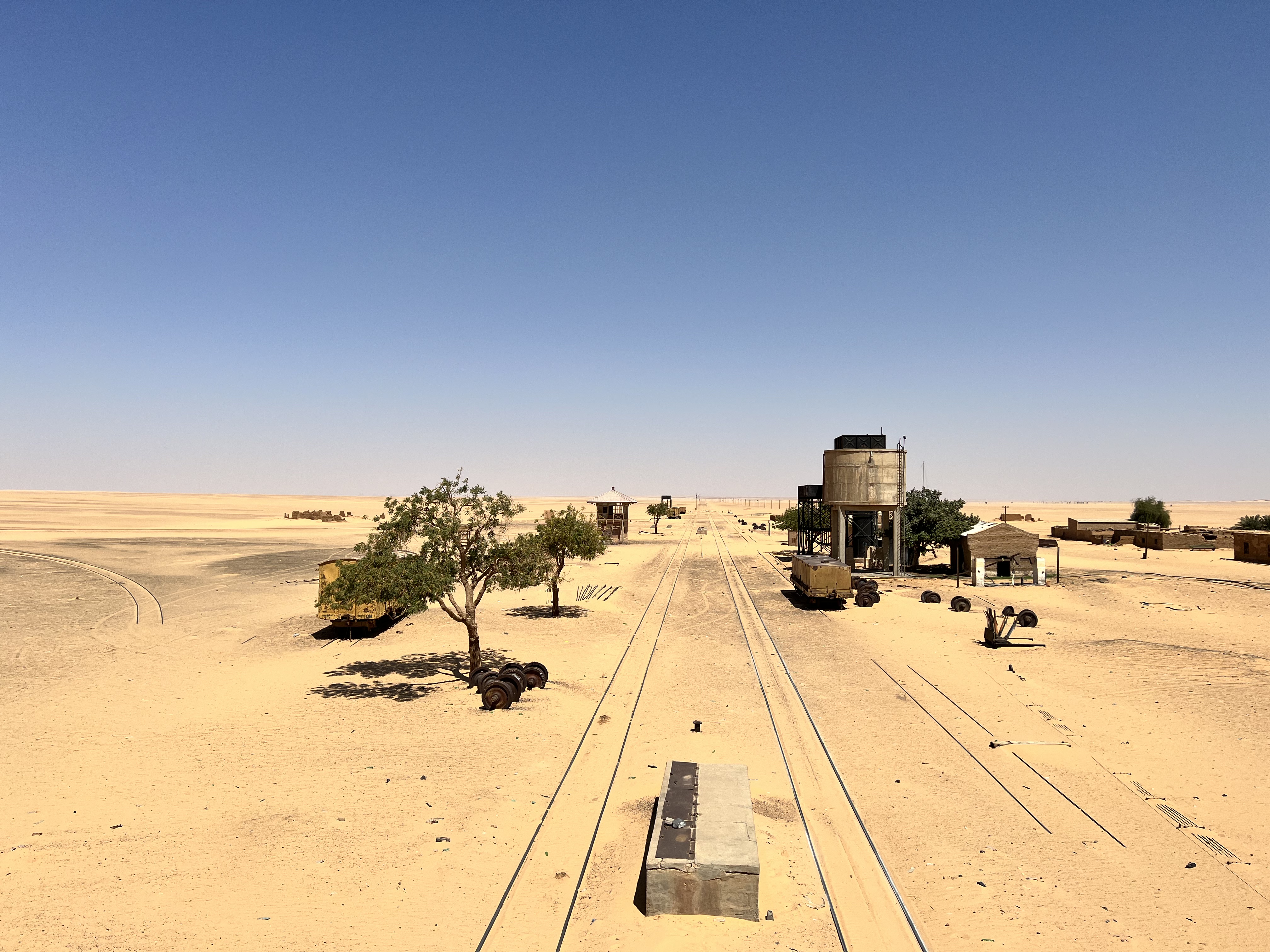
This thinking runs through my first two books. Life After Ruin: The Struggles over Israel's Depopulated Arab Spaces(Cambridge University Press, 2017) examined Arab urban space in Israel in the aftermath of the 1948 War. Edges of Care: Living and Dying in No Man's Land (University of Chicago Press, 2024) broadened the inquiry through nearly a decade of fieldwork in Cyprus, Colombia, France, Palestine, and Sudan, showing how no-man's lands are sites of active political abandonment rather than empty space.
Documenting harm and scrutinising power remain necessary, but they are not sufficient. My more recent work asks what communities organise, build and repair under conditions of abandonment, not only what is done to them. Occupation Debris (AHRC, 2024–2026) worked with Palestinian communities in Palestine and the diaspora to explore how displaced people assert the right to determine the fate of cultural heritage collections when they are denied access to ancestral land. That work, and the relationships it built, opened onto my current project, Planning without Hope, in which I work with three Palestinian communities struggling for planning rights under conditions of occupation and systematic obstruction, asking what political and ethical resources remain when hope itself becomes a tool of administrative control rather than a frame of resilience or optimism. The project is the basis for a forthcoming book.
Alongside this scholarly work, I am committed to making research accessible beyond the academy. Portraits of No Man's Land, the first academic research project to partner with Google Arts and Culture, combines visual storytelling, online resources, and immersive VR documentation, freely accessible on any device. The project has featured in international film festivals including One World (2020) and Aesthetica (2019), and reflects a broader commitment to creative collaborations with museums, galleries, NGOs and professional bodies.
Research interests
- Colonial & Settler Colonial Space
- Cultural and Political History
- War and Violent Conflict
- Cultural heritage
- State violence
- Middle East/North Africa History, Politics and Culture
Esteem Indicators
- 2024: Trustee, Council for British Research in the Levant:
- 2018: Editorial Board Member, Political Geography:
- 2015: Board Member, Royal Geographical Society Political Geography Research Group:
Publications
Authored book
- Life After RuinLeshem, N. (2016). Life After Ruin. Cambridge University Press. https://doi.org/10.1017/cbo9781316584545
Book review
- Review forum: Reading Edges of Care: Living and Dying in No Man’s LandRose, M., Belcher, O., Minca, C., Amir, M., & Leshem, N. (2026). Review forum: Reading Edges of Care: Living and Dying in No Man’s Land. Political Geography. https://doi.org/10.1016/j.polgeo.2026.103589
- Hagar Kotef. The Colonizing Self: Or, Home and Homelessness in Israel/Palestine.Leshem, N. (2022). Hagar Kotef. The Colonizing Self: Or, Home and Homelessness in Israel/Palestine. The American Historical Review, 127(2), 1062-1063. https://doi.org/10.1093/ahr/rhac089
- Bloodstains on the White City: Tel Aviv’s History of ViolenceLeshem, N. (2011). Bloodstains on the White City: Tel Aviv’s History of Violence. H-Net Reviews in the Humanities & Social Sciences, 1-3.
Chapter in book
- אנטי מחיקון : שרידות המרחב בין סלמה לכפר שלםLeshem, N. (2018). אנטי מחיקון : שרידות המרחב בין סלמה לכפר שלם. In Y. Schwartz & A. Dhamsha (Eds.), שמות מקומות וזהות מרחבית בישראל-פלסטין: יחסי רוב-מיעוט, השכחה וזכרון (Place Names And Spatial Identity In Israel-Palestine: Majority-minority relations, forgetting and memory) (pp. 141-165). Resling.
- A Rough and Charmless Place: Other Spaces of History in Tel AvivLeshem, N. (2011). A Rough and Charmless Place: Other Spaces of History in Tel Aviv. In M. Gandy (Ed.), Urban Constellations (pp. 163-167). Jovis.
- Towards a spatial history of IsraelLeshem, N., & Ronel, A. (2011). Towards a spatial history of Israel. In H. Yacobi & T. Fenster (Eds.), Memory Forgetfulness and the Construction of Space (pp. 81-105). Hakibutz Hameuchad and the Van Leer Jerusalem Institute.
- Memory Activism: reclaiming spatial histories in IsraelLeshem, N. (2010). Memory Activism: reclaiming spatial histories in Israel. In L. Burke, S. Faulkner, & J. Aulich (Eds.), The politics of cultural memory. (pp. 158-182). Cambridge Scholars Publishing.
- WitnessingLeshem, N., & Bagelman, J. (n.d.). Witnessing. In Routledge Handbook of Cultural Geographies [Contracted by publisher]. Routledge.
Journal Article
- Settler Toxicity: Contaminated Restitutions and the Contagion of HopeLeshem, N. (2026). Settler Toxicity: Contaminated Restitutions and the Contagion of Hope. Antipode, 58(6), Article e70209. https://doi.org/10.1111/anti.70209
- Rethinking expeditions: On critical expeditionary practiceLeshem, N., & Pinkerton, A. (2019). Rethinking expeditions: On critical expeditionary practice. Progress in Human Geography, 43(3), 496-514. https://doi.org/10.1177/0309132518768413
- Spaces of Abandonment: Genealogies, Lives and Critical HorizonsLeshem, N. (2017). Spaces of Abandonment: Genealogies, Lives and Critical Horizons. Environment and Planning D: Society and Space, 35(4), 620-636. https://doi.org/10.1177/0263775816683189
- Re-inhabiting no-man's land: genealogies, political life and critical agendasLeshem, N., & Pinkerton, A. (2016). Re-inhabiting no-man’s land: genealogies, political life and critical agendas. Transactions of the Institute of British Geographers, 41(1), 41-53. https://doi.org/10.1111/tran.12102
- “Over our dead bodies”: Placing necropolitical activismLeshem, N. (2015). “Over our dead bodies”: Placing necropolitical activism. Political Geography, 45, 34-44. https://doi.org/10.1016/j.polgeo.2014.09.003
- Repopulating the emptiness: a spatial critique of ruination in Israel/PalestineLeshem, N. (2013). Repopulating the emptiness: a spatial critique of ruination in Israel/Palestine. Environment and Planning D: Society and Space, 31(3), 522-537. https://doi.org/10.1068/d15711
- Between Art and CatastropheLeshem, N., & Wright, L. A. (2009). Between Art and Catastrophe. Critical Quarterly, 51(2). https://doi.org/10.1111/j.1467-8705.2009.01868.x
- Drive Beirut: The work of Richard Mosse and the iconography of war in LebanonLeshem, N. (2006). Drive Beirut: The work of Richard Mosse and the iconography of war in Lebanon. Static, 3.
Monograph
- Edges of Care: Living and Dying in No Man's LandLeshem, N. (2025). Edges of Care: Living and Dying in No Man’s Land. University of Chicago Press. https://doi.org/10.7208/chicago/9780226835969.001.0001
Other (Digital/Visual Media)
- States of Uncaring, Abandoned LivesLeshem, N. (2024, March 1). States of Uncaring, Abandoned Lives [Antipode Online].
- Unsettling 'The Settler'Leshem, N., & Bagelman, J. (2023, January 23). Unsettling ’The Settler’ [Essay]. Society and Space.