

Staff profile
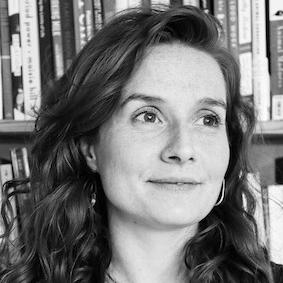
| Affiliation | Telephone |
|---|---|
| Assistant Professor in the Department of Anthropology | |
| Fellow of the Institute for Medical Humanities | |
| Fellow of the Wolfson Research Institute for Health and Wellbeing |
Biography
I joined Durham University's Anthropology Department as Assistant Professor in 2020 (ESRC funded PhD, 2019) after positions at the University of Edinburgh's Social Anthropology department, and the Centre for Biomedcine, Self and Society.
I lead the international Hormones Hub that emerged out of collaborations with colleagues at the University of Edinburgh, University of Aberdeen and Australian National University. I co-founded and co-lead the Gender, Affective Injustice and Health research strand within the world leading Institute for Medical Humanities (IMH). I hold Fellowships within the IMH, the Wolfson Institute (both Durham University) and an Associate Fellowship within the Social Dimensions of Biomedicine Lab, Centre for Biomedicine, Self and Socity (CBSS) at the University of Edinburgh.
Through three interlocking research areas I seek to understand the stories we tell about selves, persons, bodies and environments, and the role biomedical knowledges play in models of functioning and flourishing across these scales.
The first focuses on autism, embodiment, empathy, neurodivergence, more-than-human sociality and sensory experience. My forthcoming monograph, Rhythms of Care: Autistic Embodiment and Empathy in Equine Therapy (2027, University of Minnesota Press), explores autistic embodiment, more-than-human sociality and care emerging through affective environments and sympathetic embodiments of horses and humans in the context of autism-specific equine therapy and natural horsemanship practices in the UK and USA. Delving deep into the anthropological question of what makes us human, the book puts forward what I call limbic sociality as a way to articulate very contemporary ways of thinking about environmentally situated bodies and persons through the medium of 'the stress response' and hormones.
The second strand is motivated by a fascination with the social lives of hormones. I have led the extension of existing research into the social lives of non-sex hormones like oxytocin and cortisol and in so doing broader examples of hormonalization. My co-edited book on the topic entitled Hormonal Theory: A Rebellious Glossary is now available with Bloomsbury (A 2024 Choice Outstanding Academic Title) alongside articles in BioSocieties and Medical Anthropology.
Nonhuman animals are the third strand of my research, including more-than-human sociality and health, with a particular emphasis on non-verbal and multispecies communication and animal assisted therapies (see the following in Anthropology and Medicine).
Scoring through these strands is a focus on bodily substance (brains, hormones, blood and milk) and kinship, material feminism and sex/gender and posthumanism (see Medical Humanities for more).
On-going research brings existing work on gender and autism into closer conversation. This includes the Arts and Humanities Faculty funded Gender, Affective Injustice and Autism (GAIA) project exploring affective experiences of missed and misdiagnosis on late diagnosed autistic women in the UK, as well an exploration of the social lives of Endocrine Disrupting Chemicals (EDCs) in narratives about autism and neurodivergence.
Recent Papers, Panels and Responses (selection)
2026 Royal Geographic Society Annual Conference (RGS-IBS), Imperial College London. Panel Discussant. Hormonal Geographies: Tracing the Endocrine through the Anthropocene 1 and 2 (convenors, Jay Sinclair and Rachel Colls)
Women's Marginalised Health Network (WOMAHN) Workshop: Feminist Futures (Oslo). Paper: Autism, Gender and Affective Injustice (with Katherine Puddifoot)
2025 Health, Environment and Anthropology (HEAT) (Royal Anthropological Institute, Durham University, Edinburgh University). Paper presentation: 'Endocrine Disupting Chemicals (EDCs) and moral panics beyond the sex binary'. For Intimate Pollution panel (convenor, Andrea Ford).
Society for Disability Studies (SDS) annual conference. Invited contribution to panel responding to Robert Chapman’s Empire of Normality. With Elizabeth Fein and Roy Richard Grinker.
2024 EASST-4S (Amsterdam University). Panel convenor 'Making and Doing Hormonal Theory' (with Celia Roberts, Sone Erikainen and Andrea Ford).
PeopleFest, Association of Social Anthropologists (ASA) (Manchester University). 'Hormonal Theory: A Rebellious Glossary' book launch and exhibition (with Andrea Ford, Sone Erikainen, Lisa Raeder).
New Theories and Methods for Working with ‘Developmental’ Neuromedical Difference and Health Symposium (organisers Anna Stenning and Cinzia Greco). Paper presentation 'Sensory rhythmic attention as neurodiverse attunement: disrupting normative communication and research methods'.
2023 Human-Animal Relationships and Wellbeing (Cambridge University). Invited paper for Leverhulme/British Academy project workshop (organiser Rosie Jones McVey).
Teaching and Supervision
I teach across social and medical anthropology including the anthropology of the body, anthropology of reproduction, kinship and relatedness, and the social lives of hormones.
Prospective PhD students in the research areas below are welcome to get in touch.
Research interests
- anthropology of autism and neurodivergence
- disability studies
- embodiment
- empathy
- gender and the body
- multispecies anthropology and ethnography
- posthumanism
- anthropology of the senses
- social lives of hormones
- substance and relatedness
Publications
Authored book
- Rhythms of Care: Autistic Embodiment and Empathy in Equine TherapyMalcolm, R. (in press). Rhythms of Care: Autistic Embodiment and Empathy in Equine Therapy. University of Minnesota Press.
Chapter in book
- CortisolMalcolm, R. (2024). Cortisol. In A. Ford, R. Malcolm, S. Erikainen, L. Raeder, & C. Roberts (Eds.), Hormonal Theory: A Rebellious Glossary (pp. 37-45). Bloomsbury.
- Hormonal Cascades: An IntroductionMalcolm, R., Erikainen, S., Ford, A., Raeder, L., & Roberts, C. (2024). Hormonal Cascades: An Introduction. In A. Ford, R. Malcolm, S. Erikainen, L. Raeder, & C. Roberts (Eds.), Hormonal Theory: A Rebellious Glossary (pp. 1-13). Bloomsbury Academic.
- 'Telling Hormonal Stories'.Erikainen, S., Ford, A., Malcolm, R., & Raeder, L. (n.d.). ’Telling Hormonal Stories’. In So Hormonal: Essays About Our Hormones. [Contracted by publisher] Monstrous Regiment.
Edited book
- Hormonal Theory: A Rebellious GlossaryFord, A., Malcolm, R., Erikainen, S., Raeder, L., & Roberts, C. (Eds.). (2024). Hormonal Theory: A Rebellious Glossary. Bloomsbury Academic.
Journal Article
- Hormonal stories: a new materialist exploration of hormonal emplotment in four case studiesErikainen, S., Ford, A., Malcolm, R., & Raeder, L. (2025). Hormonal stories: a new materialist exploration of hormonal emplotment in four case studies. BioSocieties, 20, 1-24. https://doi.org/10.1057/s41292-023-00317-8
- Milk’s Flows: Making and Transmitting Kinship, Health, and PersonhoodMalcolm, R. (2021). Milk’s Flows: Making and Transmitting Kinship, Health, and Personhood. Medical Humanities., 47(3), 375-379. https://doi.org/10.1136/medhum-2019-011829
- “There’s No Constant”: Oxytocin, Cortisol, and Balanced Proportionality in Hormonal Models of AutismMalcolm, R. (2021). “There’s No Constant”: Oxytocin, Cortisol, and Balanced Proportionality in Hormonal Models of Autism. Medical Anthropology, 40(4), 375-388. https://doi.org/10.1080/01459740.2021.1894558
- ‘It just opens up their world’: autism, empathy, and the therapeutic effects of equine interactionsMalcolm, R., Ecks, S., & Pickersgill, M. (2018). ‘It just opens up their world’: autism, empathy, and the therapeutic effects of equine interactions. Anthropology and Medicine, 25(2), 220-234. https://doi.org/10.1080/13648470.2017.1291115
Other (Digital/Visual Media)
- Sensory-Rhythmic Attention as Neurodiverse Attunement: Rupturing Normative Communication and MethodMalcolm, R. (2022, September 6). Sensory-Rhythmic Attention as Neurodiverse Attunement: Rupturing Normative Communication and Method [Cultural Anthropology]. Cultural Anthropology.
- "Our Bodies Electric." Theorizing the Contemporary.Malcolm, R., Gordon, T., & Slone, M. (2017, December 19). "Our Bodies Electric." Theorizing the Contemporary.