

Staff profile
Overview
https://apps.dur.ac.uk/biography/image/5668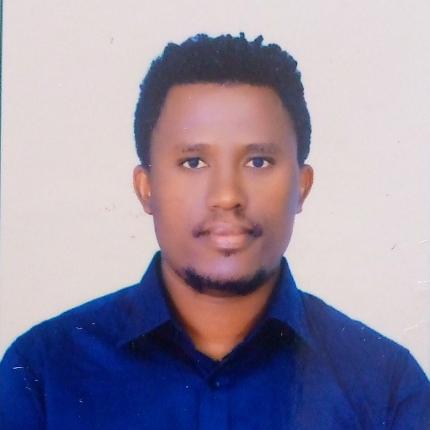
Dr Tagele M Aschale
Postdoctoral Research Associate
| Affiliation |
|---|
| Postdoctoral Research Associate in the Department of Geography |
| Fellow of the Institute of Hazard, Risk & Resilience in the Institute of Hazard, Risk and Resilience |
| Post-Doctoral Research Associate (Affiliated) in the Institute of Hazard, Risk and Resilience |
Research interests
- Dr Tagele Mossie Aschale is a Postdoctoral Research Associate at the Institute of Hazard, Risk and Resilience, Durham University, UK. His research focuses on hydroclimatic extremes such as droughts, floods, heatwaves, and storms and their impacts on energy infrastructure systems, ecosystems, and communities, with particular relevance to climate adaptation and resilience planning.
- Before joining Durham University, Dr Aschale was a postdoctoral fellow at the University of Catania, Italy, where he modelled hydroclimate extremes to support climate adaptation strategies and contributed to research aligned with the EU Floods Directive and the PRIN-funded I-MOSAIC project. He holds a PhD in Evaluation and Mitigation of Urban and Territorial Risks (Hydroclimatology) from the Department of Civil Engineering and Architecture (DICAR), University of Catania. His doctoral research examined the hydrological impacts of large-scale solar power systems, with a focus on evapotranspiration trends and soil water interactions in Mediterranean climates.
- Dr Aschale also holds two master’s degrees: an Erasmus Mundus Joint Master’s in Maritime Spatial Planning with GIS (completed across Italy, Spain, Portugal, and Germany), and a master’s degree in environmental and Land Resource Management from Debre Markos University, Ethiopia and a bachelor’s degree in Geography and Environmental Studies from Bahir Dar University, Ethiopia. He has over a decade of academic and applied research experience in Ethiopia and Europe, including work on climate resilience, urban green infrastructure, and sustainable water–energy–food systems.
- Dr Aschale’s work centres on understanding the impacts of climate extremes and long-term climate change on infrastructure, ecosystems, and society. His key research areas include:
- Climate risks to energy infrastructure, including the impacts of extreme weather on renewable energy systems and critical services.
- Urban climate resilience, focusing on hazards such as flooding and heat stress and their implications for infrastructure planning.
- Hydroclimatology and agriculture, examining how rainfall variability, evapotranspiration, and soil moisture influence agricultural productivity and drought monitoring.
- Integrated climate risk assessment, using climate data, remote sensing, and modelling approaches to support decision-making in vulnerable and data-scarce regions, including parts of Africa.