

Staff profile
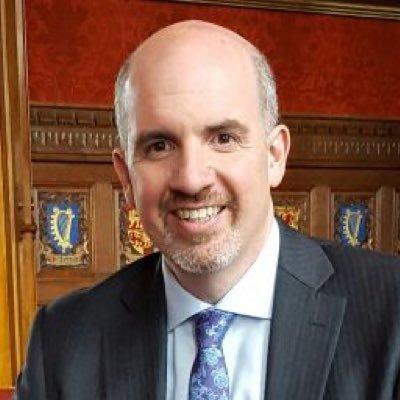
Professor Thom Brooks
Principal
| Affiliation | Telephone |
|---|---|
| Principal of Collingwood College | +44 (0) 191 33 44365 |
| Chair in Law, Ethics and Government in the Durham Law School | +44 (0) 191 33 44365 |
| Associate in the Department of Philosophy | |
| Member of the Durham Law School | |
| Associate in the School of Government and International Affairs |
Biography

THOM BROOKS is a scholar of law, philosophy and public policy whose work has made a sustained contribution to public life in the United Kingdom, particularly in the areas of citizenship, justice and democratic governance.
His research has informed parliamentary debates, contributed to House of Lords and select committee inquiries and shaped national discussion on immigration, integration and social cohesion. He is currently providing expert evidence to the UK Parliament on settlement, citizenship and integration policy. His work on the Life in the UK test — through reports, books and parliamentary engagement — has played a significant role in prompting review and reform of the UK citizenship process.
Leadership
Professor Brooks is Principal of Collingwood College and Chair in Law, Ethics and Government at Durham University. He previously served as the longest serving Dean of Durham Law School (2016–2021) where he led a period of sustained institutional advancement achieving the school's best ever QS World Ranking (40th) and best National Student Survey overall satisfaction (93%).
During his tenure, the Law School strengthened its research performance, enhanced its international reputation and deepened engagement with policy and professional communities. He advanced initiatives in equality, diversity and inclusion achieving an Athena Swan Bronze Award and embedded a stronger culture of public engagement and civic responsibility. His leadership was recognised in the House of Commons Early Day Motion 875.
As Principal of Collingwood College — the largest college at Durham University— he provides strategic leadership for one of the University’s most significant student communities, strengthening its role in leadership development, external engagement and innovation, including the launch of Collingwood Future focused on AI for impact, ethics and leadership.
Policy impact
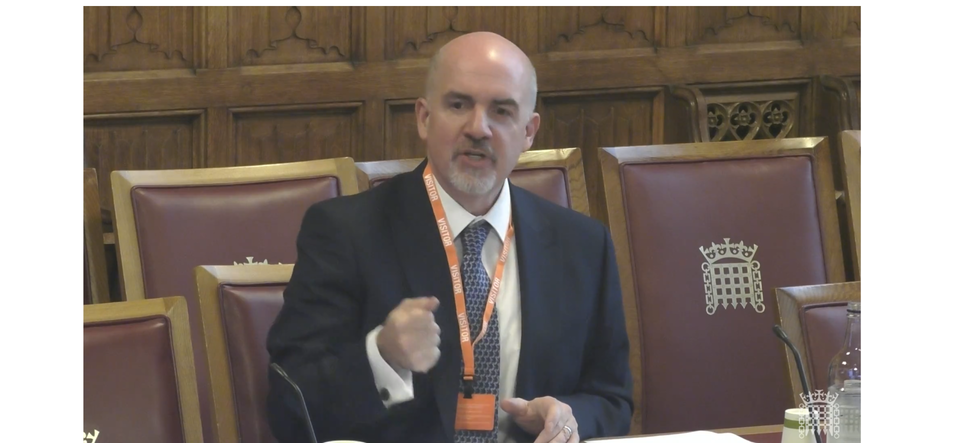
A recognised authority on citizenship and immigration, Professor Brooks’s work has contributed directly to the development and scrutiny of UK public policy. His research on the Life in the UK test identified issues of fairness and accuracy, informing parliamentary inquiry and government review.
More broadly, his work has contributed to debates on immigration policy, border control and criminal justice reform, supporting more transparent, effective and evidence-based approaches to governance. His research has been cited in parliamentary reports (here, here and here) and has informed the work of government departments and public bodies, including the Law Commission’s simplification review of the Immigration Rules and an inquiry into electronic border management.
Public engagement
Professor Brooks is a prominent public commentator on law and public policy, with over 2,000 broadcast appearances across BBC, ITV, Sky News and CNN, alongside regular contributions to national newspapers including The Times, The Guardian, The Telegraph and The Independent.
Through this work, he has helped to promote informed, accessible and balanced public debate, strengthening public understanding of legal and constitutional issues and the role of evidence in policymaking.
Brooks serves in his third stint as member of the Fabian Society executive committee. His pamphlet New Arrivals won the Jenny Jeger Prize and was described by POLITICO as'the first major pamphlet on Labour’s immigration policy for over a decade'.
Current work: AI, ethics and leadership
Professor Brooks is the founding Director of Collingwood Future, an interdisciplinary initiative focused on AI for impact, ethics and leadership, launching in 2026.
The initiative brings together expertise from academia, industry and public policy to prepare the next generation to lead in an era of rapid technological change. It supports the development of responsible and ethical approaches to innovation, aligned with the United Kingdom’s ambition to be a global leader in safe and effective use of artificial intelligence.
Research & scholarship
Professor Brooks’s research spans jurisprudence, political philosophy and public policy with a particular focus on citizenship, punishment and global justice.
His work has received international recognition. His theory of punishment was identified by UK Research Councils as one of the Top 100 Big Ideas for the Future, and his scholarship on capital punishment was cited by the Connecticut Supreme Court in its decision to abolish the death penalty in his native state.
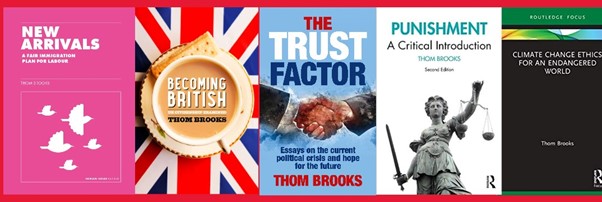
He is the author and editor of numerous books and articles addressing the ethical foundations of law and governance, including Becoming British (described by Prime Minister Keir Starmer as 'a very good and thought-provoking read'), Punishment, Reforming the UK’s Citizenship Test, Climate Change Ethics for an Endangered World, The Trust Factor (quoted in the House of Lords), Rawls's Political Liberalism (with Martha C. Nussbaum) and The Oxford Handbook of Global Justice. Brooks is the founding editor of the Journal of Moral Philosophy and serves on more than twenty editorial boards, including the Hegel Bulletin,Journal of Criminal Law, Journal of Global Ethics and New Political Science as well as ten academic book series.
Professional and public service
Professor Brooks has advised the Home Office, Ministry of Justice and Law Commission, and serves on expert groups including the Office for National Statistics Migration Statistics User Group. He is cited by the Electoral Commission on the EU Referendum recommending changed wording that was accepted by government and later described by ITV News as 'the man behind Leave and Remain'.
He has also advised the BBC on legal and immigration matters for Call the Midwife and Rip Off Britain, and supported the Home Office on the implementation of the National Security Act 2023, for which he was formally thanked in Parliament.
He served as President of the Society of Legal Scholars (2020–2021), the principal learned society for legal academics in the UK and Ireland, and only the second President in its history not British or Irish by birth. During his presidency, Brooks co-hosted a landmark cross-society conference with the Law Commission, contributing to its 14th Programme of Law Reform.
He has held visiting positions at leading universities including Chicago, Columbia, Harvard, LUISS, NYU, Oxford (St John's College), Penn, St Andrews, Uppsala and Yale , a former Senior Associate Research Fellow of the Institute of Advanced Legal Studies and previously taught at Newcastle.
He is a Fellow of the Academy of Social Sciences, Member of Academia Europaea and Academic Bencher of Inner Temple among other memberships.
Teaching
Asylum, Immigration and Nationality Law and Policy
Criminal Law
History of Ideas
Jurisprudence & Political Philosophy
Law and Public Policy
Punishment
UK Constitutional Law
Awards and Distinctions
- Named Fellow, Royal Statistical Society, 2024
- Jenny Jeger Prize, Fabian Society, 2022
- Principal Fellow, Higher Education Academy, 2022
- Elected Member, Academia Europaea, 2021
- Included in Who’s Who, 2018
- Distinguished Alumni Award, School of Politics and Global Studies, Arizona State University, 2017
- Included in Debrett’s People of Today, 2015
- Fellow, Higher Education Academy, 2014
- Named Fellow, Royal Society of Arts, 2012
- Named Fellow, Royal Historical Society, 2010
- Named Fellow, Academy of Social Sciences, 2009
- Graduate Essay Prize, Hegel Society of Great Britain, 2004
- Professor Magennis Prize, Department of Philosophy, University College Dublin, 2000
- Distinguished Student Award, William Paterson University of New Jersey, 1997
- Pi Sigma Alpha, National Political Science Honor Society (USA), 1997
- Third Place Prize, American Junior High School Mathematics Examination, American Mathematics Competitions, 1986
Durham University Awards
- Dean’s Award, Durham Law School, 2022
- Excellence in Teaching and Learning Award, Durham University, 2016
- Law Teacher of the Year, Durham Law School, 2015
- Lecturer of the Year, Faculty of Social Sciences and Health, 2014
- Outstanding Contributions to Media Award, Faculty of Social Sciences and Health, 2013
Education
- Ph.D. in Philosophy, University of Sheffield, Department of Philosophy
- M.A. in Philosophy, University College Dublin, School of Philosophy
- M.A. in Political Science, Arizona State University, School of Politics and Global Studies
- B.A. Music and Political Science (dual major), William Paterson University of New Jersey, Department of Music and Department of Political Science
Research interests
- British Politics
- Capabilities
- Citizenship
- Constitutional Law
- Criminal Law
- Global Justice & Human Rights
- Immigration Law & Policy
- Labour Party
- Law & Public Policy
- Penal Theory & Ethics
- Political & Legal Philosophy
- Restorative Justice
Esteem Indicators
- 2022: Jenny Jeger Prize:
- 2022: Principal Fellow, Higher Education Academy:
- 2022: Visiting Professor, LUISS Guido Carli:
- 2021: Executive Committee, Society of Labour Lawyers:
- 2021: Executive Committee, Fabian Society:
- 2021: Member, Committee on Public Philosophy, American Philosophical Association:
- 2021: Elected Member, Academia Europaea:
- 2021: Member, Office for National Statistics (ONS) cross-Government Statistical Service (GSS) Migration Expert Group:
- 2021: Member, European Law Institute:
- 2021: Chair, LNAT (National Admissions Test for Law) Consortium:
- 2021: Trustee, British Institute for International and Comparative Law (BIICL): Member, Finance and Audit Committee, BIICL
- 2020: Academic Visitor, University of Chicago Law School:
- 2020: Visiting Professor, LUISS Guido Carli:
- 2020: Director, Labour Academic Network:
- 2020: President, Society of Legal Scholars:
- 2020: President, Society of Legal Scholars:
- 2019: Visiting Professor, University of Nice (Cote d'Azur):
- 2019: Academic Visitor, University of Pennsylvania Law School:
- 2019: Visiting Scholar, Bioethics, New York University:
- 2019: Visiting Scholar, Columbia Law School, Columbia University:
- 2019: Vice President, Society of Legal Scholars:
- 2018: Academic Bencher, The Honourable Society of the Inner Temple:
- 2017: Distinguished Alumni Award, Arizona State University:
- 2015: Visitor, Harvard Law School, Harvard University:
- 2015: Visiting Fellow, Yale Law School, Yale University:
- 2012: Visiting Scholarship, St John's College, Oxford:
- 2012: Fellow, Royal Society of Arts:
- 2011: Visiting Fellow, Department of Government, Uppsala University:
- 2010: Fellow, Royal Historical Society:
- 2010: Academic Visitor, Faculty of Philosophy, University of Oxford:
- 2009: Academician of the Academy of Social Sciences:
- 2009: Chair, Committee on Philosophy and Law, American Philosophical Association: Served as Chair from 2009-2012
- 2008: Secretary, Association for Political Thought (UK): Secretary (2008-2012) of founding committee
- 2006: Member of the Council, Hegel Society of Great Britain:
- 2006: Executive Board Member, Political Studies Association: Executive Board Member (2006-2009)
- 2004: Visiting Fellow, CEPPA, Philosophy, University of St Andrews:
Publications
Authored book
- Political Philosophy: The FundamentalsBrooks, T. (2025). Political Philosophy: The Fundamentals. Blackwell.
- Global Justice: An IntroductionBrooks, T. (2023). Global Justice: An Introduction. Wiley.
- Reforming the UK's Citizenship Test: Building Barriers, Not BridgesBrooks, T. (2022). Reforming the UK’s Citizenship Test: Building Barriers, Not Bridges. Bristol University Press.
- New Arrivals: A Fair Immigration Plan for LabourBrooks, T. (2022). New Arrivals: A Fair Immigration Plan for Labour. Fabian Society.
- The Trust Factor: Essays on the Current Political Crisis and Hope for the FutureBrooks, T. (2022). The Trust Factor: Essays on the Current Political Crisis and Hope for the Future. Methuen.
- Punishment: A Critical IntroductionBrooks, T. (2021). Punishment: A Critical Introduction. Routledge. https://doi.org/10.4324/9781315527772
- Punishment: A Critical Introduction, Second EditionBrooks, T. (2021). Punishment: A Critical Introduction, Second Edition. Routledge.
- Climate Change Ethics for an Endangered WorldBrooks, T. (2020). Climate Change Ethics for an Endangered World. Routledge.
- Becoming British: UK Citizenship ExaminedBrooks, T. (2016). Becoming British: UK Citizenship Examined. Biteback Publishing.
- Hegel's Political Philosophy: A Systematic Reading of the Philosophy of Right, 2d editionBrooks, T. (2013). Hegel’s Political Philosophy: A Systematic Reading of the Philosophy of Right, 2d edition. Edinburgh University Press.
- Punishment.Brooks, T. (2012). Punishment. Routledge.
- Hegel's Political Philosophy: A Systematic Reading of the Philosophy of RightBrooks, T. (2007). Hegel’s Political Philosophy: A Systematic Reading of the Philosophy of Right. Edinburgh University Press.
Chapter in book
- The Problem of Hegel's Problem of PovertyBrooks, T. (2025). The Problem of Hegel’s Problem of Poverty. In M. Beech & K. Hickson (Eds.), Idea of the Good Society Essays in Honour of Raymond Plant (pp. 8-21). https://doi.org/10.1093/9780191983627.003.0002
- Citizenship TestsBrooks, T. (2025). Citizenship Tests. In The Routledge Handbook of the Ethics of Immigration (pp. 201-210). Routledge. https://doi.org/10.4324/9781003037309-22
- The Relevance of State Misconduct for Mitigating PunishmentBrooks, T. (2025). The Relevance of State Misconduct for Mitigating Punishment. In J. V. Roberts, J. Ryberg, & L. Zaibert (Eds.), Responding to the Culpable State: Is Sentence Mitigation Appropriate? (pp. 131-144). Hart.
- Philosophical Disagreement and Public Policy MakingBrooks, T. (2025). Philosophical Disagreement and Public Policy Making. In M. Baghramian, J. Adam Carter, & R. Cosker-Rowland (Eds.), The Routledge Handbook of Philosophy of Disagreement (pp. 459-468). Routledge.
- Cruel and Unusual PunishmentBrooks, T. (2024). Cruel and Unusual Punishment. In J. Ryberg (Ed.), The Oxford Handbook of the Philosophy of Punishment (pp. 275-286). Oxford University Press. https://doi.org/10.1093/oxfordhb/9780197750506.013.17
- Immigration and NationalityBrooks, T. (2024). Immigration and Nationality. In C. Atkinson, T. Brooks, & D. Drew (Eds.), British Legal Reform: An Agenda for Change (pp. 188-201). Policy Press.
- A “Global” Global Justice TheoryBrooks, T. (2024). A “Global” Global Justice Theory. In J. Salamon & H. Lee (Eds.), The Bloomsbury Handbook of Global Justice and East Asian Philosophy (pp. 15-28). Bloomsbury.
- Hegel’s Contextual Theory of Freedom: How “the Free Will Wills the Free Will”Brooks, T. (2024). Hegel’s Contextual Theory of Freedom: How “the Free Will Wills the Free Will”. In P. Diego Bubbio & A. Buchwalter (Eds.), Justice and Freedom in Hegel (pp. 29-39). Routledge.
- PunishmentBrooks, T. (2023). Punishment. In D. Pritchard (Ed.), Oxford Bibliographies in Philosophy. Oxford University Press.
- Punitive RestorationBrooks, T. (2023). Punitive Restoration. In M. C. Altman (Ed.), Palgrave Handbook on the Philosophy of Punishment (pp. 639-656). Palgrave Macmillan. https://doi.org/10.1007/978-3-031-11874-6_29
- Why Should Guilty Pleas Matter?Brooks, T. (2023). Why Should Guilty Pleas Matter? In J. V. Roberts & J. Ryberg (Eds.), Sentencing the Self-Convicted: The Ethics of Pleading Guilty (pp. 127-150). Hart Publishing.
- British IdealismBrooks, T. (2023). British Idealism. In D. Pritchard (Ed.), Oxford Bibliographies in Philosophy. Oxford University Press. https://doi.org/10.1093/obo/9780195396577-0015
- Taking the System Seriously: On the Importance of "Objective Spirit" for Hegel's Philosophy of RightBrooks, T. (2021). Taking the System Seriously: On the Importance of "Objective Spirit" for Hegel’s Philosophy of Right. In S. Stein & J. Wretzel (Eds.), Hegel’s Encyclopedia of the Philosophical Sciences: A Critical Guide (pp. 203-215). Cambridge University Press.
- Capabilities, Freedom and Severe PovertyBrooks, T. (2020). Capabilities, Freedom and Severe Poverty. In T. Brooks (Ed.), The Oxford Handbook of Global Justice (pp. 174-186). Oxford University Press.
- Saving Multiculturalism with Stakeholding: Hegel and the Challenges of PluralismBrooks, T. (2020). Saving Multiculturalism with Stakeholding: Hegel and the Challenges of Pluralism. In J. Gledhill & S. Stein (Eds.), Hegel and Contemporary Practical Philosophy: Beyond Kantian Constructivism (pp. 305-317). Routledge.
- RetributionBrooks, T. (2020). Retribution. In F. Focquaert, E. Shaw, & B. N. Waller (Eds.), The Routledge Handbook of the Philosophy and Science of Punishment (pp. 18-25). Routledge.
- Climate Change Ethics and the Problem of End-State SolutionsBrooks, T. (2020). Climate Change Ethics and the Problem of End-State Solutions. In T. Brooks (Ed.), Oxford Handbook of Global Justice (pp. 211-224). Oxford University Press.
- Shame on you, shame on me? Nussbaum on shame punishmentBrooks, T. (2019). Shame on you, shame on me? Nussbaum on shame punishment. In T. Brooks (Ed.), Shame Punishment (pp. 339-351). Routledge. https://doi.org/10.4324/9781315243290-9
- The Life in the UK citizenship test and the urgent need for its reformBrooks, T. (2019). The Life in the UK citizenship test and the urgent need for its reform. In Citizenship in Times of Turmoil?: Theory, Practice and Policy (pp. 22-60). https://doi.org/10.4337/9781788119207.00009
- The Life in the UK citizenship test and the urgent need for its reformBrooks, T. (2019). The Life in the UK citizenship test and the urgent need for its reform. In D. Prabhat (Ed.), Citizenship in Times of Turmoil?: Theory, Practice and Policy (pp. 22-60). Edward Elgar. https://doi.org/10.4337/9781788119214
- Hegel's Philosophy of LawBrooks, T. (2017). Hegel’s Philosophy of Law. In D. Moyar (Ed.), The Oxford handbook of Hegel. (pp. 453-474). Oxford University Press. https://doi.org/10.1093/oxfordhb/9780199355228.013.21
- Hegel on Crime and PunishmentBrooks, T. (2017). Hegel on Crime and Punishment. In T. Brooks & S. Stein (Eds.), Hegel’s political philosophy : on the normative significance of method and system. (pp. 202-221). Oxford University Press. https://doi.org/10.1093/oso/9780198778165.003.0011
- Beyond Reason: The Legal Importance of EmotionsBrooks, T., & Sankey, D. (2017). Beyond Reason: The Legal Importance of Emotions. In P. Capps & S. Pattinson (Eds.), Ethical rationalism and the law. (pp. 131-148). Hart Publishing.
- Punitive Restoration: Giving the Public a Say on SentencingBrooks, T. (2016). Punitive Restoration: Giving the Public a Say on Sentencing. In A. Dzur, I. Loader, & R. Sparks (Eds.), Democratic theory and mass incarceration. (pp. 140-161). Oxford University Press.
- Leadership and StakeholdingBrooks, T. (2015). Leadership and Stakeholding. In J. Boaks & M. Levine (Eds.), Leadership and ethics. (pp. 199-201). Bloomsbury Academic.
- Why save the planet?Brooks, T. (2015). Why save the planet? In T. Brooks (Ed.), Current Controversies in Political Philosophy (pp. 138-147).
- Introduction: Political philosophy: Current controversiesBrooks, T. (2015). Introduction: Political philosophy: Current controversies. In T. Brooks (Ed.), Current Controversies in Political Philosophy (pp. 1-14).
- The Capabilities Approach and Political LiberalismBrooks, T. (2015). The Capabilities Approach and Political Liberalism. In T. Brooks & M. C. Nussbaum (Eds.), Rawls’s political liberalism. (pp. 139-174). Columbia University Press.
- Ethical Citizenship and the Stakeholder SocietyBrooks, T. (2014). Ethical Citizenship and the Stakeholder Society. In T. Brooks (Ed.), Ethical citizenship : British idealism and the politics of recognition. (pp. 125-138). Palgrave Macmillan.
- Alcohol, Risk and Public PolicyBrooks, T. (2014). Alcohol, Risk and Public Policy. In T. Brooks (Ed.), Alcohol and public policy. (pp. 27-33). Routledge.
- Stakeholder SentencingBrooks, T. (2014). Stakeholder Sentencing. In J. Ryberg & J. V. Roberts (Eds.), Popular punishment : on the normative significance of public opinion. (pp. 183-203). Oxford University Press. https://doi.org/10.1093/acprof%3Aoso/9780199941377.003.0010
- DemocracyBrooks, T. (2014). Democracy. In D. Pritchard (Ed.), Oxford Bibliographies in Philosophy. Oxford University Press. https://doi.org/10.1093/obo/9780195396577-0161
- Juvenile offendersBrooks, T. (2014). Juvenile offenders. In T. Brooks (Ed.), Juvenile Offending (pp. 97-117). Routledge.
- CapabilitiesBrooks, T. (2013). Capabilities. In H. LaFollette (Ed.), The International Encyclopedia of Ethics (pp. 692-698). Blackwell. https://doi.org/10.1002/9781444367072.wbiee624
- CitizenshipBrooks, T. (2013). Citizenship. In H. LaFollette (Ed.), The International Encyclopedia of Ethics (pp. 764-773). Blackwell. https://doi.org/10.1002/9781444367072.wbiee632
- Bernard Williams, republicanism, and the liberalism of fear : problems and prospectsBrooks, T. (2013). Bernard Williams, republicanism, and the liberalism of fear : problems and prospects. In C. Herrera & A. Perry (Eds.), The moral philosophy of Bernard Williams. (pp. 107-113). Cambridge Scholars.
- Criminal HarmsBrooks, T. (2013). Criminal Harms. In T. Brooks (Ed.), Law and Legal Theory (pp. 149-161). Brill Academic Publishers.
- Global Justice and PoliticsBrooks, T. (2013). Global Justice and Politics. In F. D’Agostino & J. Gaus (Eds.), The Routledge Companion to Social and Political Philosophy (pp. 517-525). Routledge.
- Natural Law InternalismBrooks, T. (2012). Natural Law Internalism. In T. Brooks (Ed.), Hegel’s Philosophy of Right (pp. 167-179). Blackwell. https://doi.org/10.1002/9781444354256.ch7
- Between Statism and Cosmopolitanism: Hegel and the Possibility of Global JusticeBrooks, T. (2012). Between Statism and Cosmopolitanism: Hegel and the Possibility of Global Justice. In A. Buchwalter (Ed.), Hegel and Global Justice (pp. 65-83). Springer Verlag. https://doi.org/10.1007/978-90-481-8996-0_4
- The problem with polygamyBrooks, T. (2012). The problem with polygamy. In T. Brooks (Ed.), Justice and the Capabilities Approach (pp. 377-390). Routledge. https://doi.org/10.4324/9781315251240-9
- Hegel and the Unified Theory of PunishmentBrooks, T. (2012). Hegel and the Unified Theory of Punishment. In T. Brooks (Ed.), Hegel’s Philosophy of Right (pp. 103-123). Blackwell. https://doi.org/10.1002/9781444354256.ch4
- Retribution and Capital PunishmentBrooks, T. (2011). Retribution and Capital Punishment. In M. D. White (Ed.), Retributivism: Essays on Theory and Policy (pp. 232-245). Oxford University Press. https://doi.org/10.1093/acprof%3Aoso/9780199752232.003.0013
- What Did the British Idealists Ever Do for Us?Brooks, T. (2011). What Did the British Idealists Ever Do for Us? In T. Brooks (Ed.), New Waves in Ethics (pp. 28-47). Palgrave Macmillan.
- Georg Wilhelm Friedrich Hegel: Philosophy of PoliticsBrooks, T. (2010). Georg Wilhelm Friedrich Hegel: Philosophy of Politics. In Oxford Bibliographies Online: Philosophy. Oxford University Press. https://doi.org/10.1093/obo/9780195396577-0052
- Punishment and British IdealismBrooks, T. (2010). Punishment and British Idealism. In J. Ryberg & J. A. Corlett (Eds.), Punishment and Ethics: New Perspectives (pp. 16-32). Palgrave Macmillan.
- The right to trial by juryBrooks, T. (2009). The right to trial by jury. In T. Brooks (Ed.), The Right to a Fair Trial (pp. 83-98). Routledge. https://doi.org/10.4324/9781315085401-3
- Muirhead, Hetherington, and MackenzieBrooks, T. (2009). Muirhead, Hetherington, and Mackenzie. In W. Sweet (Ed.), The Moral, Social and Political Philosophy of the British Idealists (pp. 209-232). Imprint Academic.
- A defence of jury nullificationBrooks, T. (2009). A defence of jury nullification. In T. Brooks (Ed.), The Right to a Fair Trial (pp. 225-247). Routledge. https://doi.org/10.4324/9781315085401-7
- Is Plato's Political Thought Anti-DemocraticBrooks, T. (2008). Is Plato’s Political Thought Anti-Democratic. In E. Kofmel (Ed.), Anti-Democratic Thought (pp. 17-33). Imprint Academic.
- Human RightsBrooks, T. (2007). Human Rights. In M. Bevir (Ed.), Encyclopedia of Governance (pp. 423-428). SAGE.
- The Reception of Hegel in BritainBrooks, T. (2006). The Reception of Hegel in Britain. In A. Grayling & A. Pyle (Eds.), The Encyclopedia of British Philosophy (pp. 1424-1425). Thoemmes Continuum.
- HART, Herbert Lionel Adolphus (1907-92)Brooks, T. (2005). HART, Herbert Lionel Adolphus (1907-92). In S. Brown (Ed.), The Dictionary of Twentieth-Century British Philosophers: Volume 1,2 (pp. 389-391). Bloomsbury.
- Herbert Lionel Adolphus HartBrooks, T. (2005). Herbert Lionel Adolphus Hart. In S. Brown (Ed.), Dictionary of Twentieth Century British Philosophers (pp. 389-391). Thoemmes Continuum.
- IntroductionBrooks, T., & Freyenhagen, F. (2005). Introduction. In T. Brooks & F. Freyenhagen (Eds.), The Legacy of John Rawls (pp. 1-21). Continuum.
- Why Hegel MattersBrooks, T. (n.d.). Why Hegel Matters. In A. Alexander Davis & S. Rand (Eds.), New Perspectives on Hegel’s Philosophy of Right [Contracted by publisher]. Bloomsbury.
Edited book
- British Legal Reform: An Agenda for ChangeAtkinson, C., Brooks, T., & Drew, D. (Eds.). (2024). British Legal Reform: An Agenda for Change. Policy Press.
- Plato's The SymposiumBrooks, T. (Ed.). (2023). Plato’s The Symposium. South Asia Press.
- The Global Justice Reader, Revised EditionBrooks, T. (Ed.). (2023). The Global Justice Reader, Revised Edition. Wiley.
- Plato's The RepublicBrooks, T. (Ed.). (2020). Plato’s The Republic. South Asia Press.
- The Oxford Handbook of Global JusticeBrooks, T. (Ed.). (2020). The Oxford Handbook of Global Justice. Oxford University Press.
- Hegel's Political Philosophy: On the Normative Significance of Method and SystemBrooks, T., & Stein, S. (Eds.). (2017). Hegel’s Political Philosophy: On the Normative Significance of Method and System. Oxford University Press.
- Rawls's Political LiberalismBrooks, T., & Nussbaum, M. C. (Eds.). (2015). Rawls’s Political Liberalism. Columbia University Press.
- Current Controversies in Political PhilosophyBrooks, T. (Ed.). (2015). Current Controversies in Political Philosophy. Routledge.
- RetributionBrooks, T. (Ed.). (2014). Retribution. Ashgate Publishing.
- New Waves in Global JusticeBrooks, T. (Ed.). (2014). New Waves in Global Justice. Palgrave Macmillan.
- Law and Legal TheoryBrooks, T. (Ed.). (2014). Law and Legal Theory. Brill Academic Publishers.
- Ethical Citizenship: British Idealism and the Politics of RecognitionBrooks, T. (Ed.). (2014). Ethical Citizenship: British Idealism and the Politics of Recognition. Palgrave Macmillan.
- Shame PunishmentBrooks, T. (Ed.). (2014). Shame Punishment. Ashgate Publishing.
- Juvenile OffendingBrooks, T. (Ed.). (2014). Juvenile Offending. Ashgate Publishing.
- Alcohol and Public Policy.Brooks, T. (Ed.). (2014). Alcohol and Public Policy. Routledge.
- DeterrenceBrooks, T. (Ed.). (2014). Deterrence. Ashgate Publishing.
- SentencingBrooks, T. (Ed.). (2014). Sentencing. Ashgate Publishing.
- Just War TheoryBrooks, T. (Ed.). (2013). Just War Theory. Brill Academic Publishers.
- Hegel's Philosophy of RightBrooks, T. (Ed.). (2012). Hegel’s Philosophy of Right. Blackwell.
- Rawls and LawBrooks, T. (Ed.). (2012). Rawls and Law. Ashgate Publishing.
- Justice and the Capabilities ApproachBrooks, T. (Ed.). (2012). Justice and the Capabilities Approach. Ashgate Publishing.
- Ethics and Moral PhilosophyBrooks, T. (Ed.). (2011). Ethics and Moral Philosophy. Brill Academic Publishers.
- Global Justice and International AffairsBrooks, T. (Ed.). (2011). Global Justice and International Affairs. Brill Academic Publishers.
- New Waves in EthicsBrooks, T. (Ed.). (2011). New Waves in Ethics. Palgrave Macmillan.
- The Right to a Fair TrialBrooks, T. (Ed.). (2009). The Right to a Fair Trial. Ashgate Publishing.
- The Global Justice ReaderBrooks, T. (Ed.). (2008). The Global Justice Reader. Blackwell.
- Locke and LawBrooks, T. (Ed.). (2007). Locke and Law. Ashgate Publishing.
- The Legacy of John RawlsBrooks, T., & Freyenhagen, F. (Eds.). (2007). The Legacy of John Rawls. Continuum.
- Rousseau and LawBrooks, T. (Ed.). (2005). Rousseau and Law. Ashgate Publishing.
Journal Article
- Testing CitizenshipBrooks, T. (2025). Testing Citizenship. Philosophy Compass, 20(8), Article e70051. https://doi.org/10.1111/phc3.70051
- A Critique of Von Hirsch's Censure TheoryBrooks, T. (2025). A Critique of Von Hirsch’s Censure Theory. Ratio Juris, 38(1), 5-20. https://doi.org/10.1111/raju.12421
- Republican ChildrenBrooks, T. (2025). Republican Children. Philosophy & Public Affairs, 53(1), 37-65. https://doi.org/10.1111/papa.12278
- Hegel's Social and Political PhilosophyBrooks, T. (2021). Hegel’s Social and Political Philosophy. Stanford Encyclopaedia of Philosophy. Advance online publication.
- Why Labour Needs an Academic NetworkBrooks, T. (2021). Why Labour Needs an Academic Network. Renewal: A Journal of Social Democracy, 29(4), 44-52.
- Global Justice and the Role of StakeholdingBrooks, T. (2021). Global Justice and the Role of Stakeholding. International Studies, 58(1), 7-24. https://doi.org/10.1177/0020881720983720
- Global Justice and StakeholdingBrooks, T. (2021). Global Justice and Stakeholding. International Journal of Applied Philosophy, 34(1), 105-122.
- Capabilities Compatible with Political Liberalism? A Third WayBrooks, T. (2021). Capabilities Compatible with Political Liberalism? A Third Way. Croatian Journal of Philosophy, 21(62), 237-250. https://doi.org/10.52685/cjp.21.62.1
- Collective Responsibility for Severe PovertyBrooks, T. (2020). Collective Responsibility for Severe Poverty. Global Policy, 11(4), 486-491. https://doi.org/10.1111/1758-5899.12825
- Global Justice and StakeholdingBrooks, T. (2020). Global Justice and Stakeholding. International Journal of Applied Philosophy, 34(1), 105-122. https://doi.org/10.5840/ijap2021118139
- More than Recognition: Why Stakeholding Matters for Reconciliation in Hegel's Philosophy of RightBrooks, T. (2020). More than Recognition: Why Stakeholding Matters for Reconciliation in Hegel’s Philosophy of Right. Owl of Minerva, 51(1/2), 59-86. https://doi.org/10.5840/owl202062831
- Capabilities, Political Liberalism and Private LawBrooks, T. (2019). Capabilities, Political Liberalism and Private Law. Archiv Für Rechts- Und Sozialphilosophie, 104(4), 556-569. https://doi.org/10.25162/arsp-2018-0029
- Brexit means anything but Brexit: Why the Prime Minister is at a crossroads and in need of a second referendumBrooks, T. (2019). Brexit means anything but Brexit: Why the Prime Minister is at a crossroads and in need of a second referendum. European Human Rights Law Review, 3, 229-234.
- Brexit is a crisis of leadership, not democracyBrooks, T. (2019). Brexit is a crisis of leadership, not democracy. University of Bologna Law Review, 4(2), 399-401. https://doi.org/10.6092/issn.2531-6133/10490
- Taking the System Seriously: Nicholson’s Overturning Orthodoxy about Hegel and PunishmentBrooks, T. (2019). Taking the System Seriously: Nicholson’s Overturning Orthodoxy about Hegel and Punishment. Collingwood and British Idealism Studies, 25(2), 315-334.
- Opening the Tomb of New Philosophical Accounts of DeathBrooks, T. (2018). Opening the Tomb of New Philosophical Accounts of Death. Journal of Value Inquiry, 52(2), 149-151. https://doi.org/10.1007/s10790-018-9628-y
- Is eating meat ethical?Brooks, T. (2017). Is eating meat ethical? Think, 16(47), 9-13. https://doi.org/10.1017/s1477175617000161
- Punitive Restoration and Restorative JusticeBrooks, T. (2017). Punitive Restoration and Restorative Justice. Criminal Justice Ethics, 36(2), 122-140. https://doi.org/10.1080/0731129x.2017.1358930
- Unlocking Morality from Criminal LawBrooks, T. (2017). Unlocking Morality from Criminal Law. Journal of Moral Philosophy, 14(3), 339-352. https://doi.org/10.1163/17455243-01403001
- Not just war: Eisikovits on A Theory of TrucesBrooks, T. (2017). Not just war: Eisikovits on A Theory of Truces. Journal of Global Ethics, 13(1), 4-5. https://doi.org/10.1080/17449626.2017.1321571
- In Defence of Punishment and the Unified Theory of Punishment: A ReplyBrooks, T. (2016). In Defence of Punishment and the Unified Theory of Punishment: A Reply. Criminal Law and Philosophy, 10(3), 629-638. https://doi.org/10.1007/s11572-014-9348-8
- How Not to Save the PlanetBrooks, T. (2016). How Not to Save the Planet. Ethics, Policy & Environment, 19(2), 119-135. https://doi.org/10.1080/21550085.2016.1195153
- Is Fair Trade a fair deal?Brooks, T. (2016). Is Fair Trade a fair deal? Cambridge Review of International Affairs, 29(2), 548-561. https://doi.org/10.1080/09557571.2015.1025037
- Vote Buying and Tax Cut PromisesBrooks, T. (2016). Vote Buying and Tax Cut Promises. Theoria., 63(146), 20-35. https://doi.org/10.3167/th.2015.6314602
- Climate Change Justice through Taxation?Brooks, T. (2015). Climate Change Justice through Taxation? Climatic Change, 133(3), 419-426. https://doi.org/10.1007/s10584-015-1496-x
- What is the Impact of Political Theory?Brooks, T. (2015). What is the Impact of Political Theory? Political Studies Review, 13(4), 500-505. https://doi.org/10.1111/1478-9302.12094
- David Ingersoll, Behavioralism and the Modern Revival of Legal RealismBrooks, T. (2015). David Ingersoll, Behavioralism and the Modern Revival of Legal Realism. Beijing Law Review, 6(3), 190-192. https://doi.org/10.4236/blr.2015.63018
- Punitive Restoration: Rehabilitating Restorative JusticeBrooks, T. (2015). Punitive Restoration: Rehabilitating Restorative Justice. Raisons Politiques : études de Pensée Politique., 59(3), 73-89. https://doi.org/10.3917/rai.059.0073
- Defending Punishment. Reply to CriticsBrooks, T. (2015). Defending Punishment. Reply to Critics. Philosophy and Public Issues, 5(1), 73-94.
- A précis of PunishmentBrooks, T. (2015). A précis of Punishment. Philosophy and Public Issues, 5(1), 3-23.
- Alcohol and Controlling Risks through NudgesBrooks, T. (2015). Alcohol and Controlling Risks through Nudges. New Bioethics, 21(1), 46-55. https://doi.org/10.1179/2050287715z.00000000064
- Involuntary Intoxication: A New Six-Step ProcedureBrooks, T. (2015). Involuntary Intoxication: A New Six-Step Procedure. Journal of Criminal Law, 79(2), 138-146. https://doi.org/10.1177/0022018315579133
- The Stakeholder Society and the Politics of HopeBrooks, T. (2015). The Stakeholder Society and the Politics of Hope. Renewal: A Journal of Social Democracy, 23(1-2), 44-54.
- Hegel and the Problem of PovertyBrooks, T. (2015). Hegel and the Problem of Poverty. Cilicia Journal of Philosophy, 1(1), 1-9.
- Equality, Fairness and Responsibility in an Unequal WorldBrooks, T. (2014). Equality, Fairness and Responsibility in an Unequal World. Symposion, 1(2), 147-153.
- On F. H. Bradley’s “Some Remarks on Punishment”Brooks, T. (2014). On F. H. Bradley’s “Some Remarks on Punishment”. Ethics, 125(1), 223-225. https://doi.org/10.1086/677017
- Beyond RetributionBrooks, T. (2014). Beyond Retribution. Think, 13(38), 47-50. https://doi.org/10.1017/s1477175614000037
- Criminal justice at a crossroads : why victims should have a say.Brooks, T. (2014). Criminal justice at a crossroads : why victims should have a say. Political Insight, 5(2), 34-37. https://doi.org/10.1111/2041-9066.12061
- What is Wrong about the "Criminal Mind"?Brooks, T. (2014). What is Wrong about the "Criminal Mind"? Northern Ireland Legal Quarterly, 65(2), 141-151.
- Remedial Responsibilities beyond NationsBrooks, T. (2014). Remedial Responsibilities beyond Nations. Journal of Global Ethics, 10(2), 156-166. https://doi.org/10.1080/17449626.2014.933119
- The Inevitability of Climate ChangeBrooks, T. (2014). The Inevitability of Climate Change. Global Policy, 5(1), 112-113. https://doi.org/10.1111/1758-5899.12110
- Legal positivism and faith in lawBrooks, T. (2014). Legal positivism and faith in law. Modern Law Review, 77(1), 139-147. https://doi.org/10.1111/1468-2230.12060
- In Defence of Political Theory: Impact and OpportunitiesBrooks, T. (2013). In Defence of Political Theory: Impact and Opportunities. Political Studies Review, 11(2), 209-215. https://doi.org/10.1111/1478-9302.12007
- Should We Nudge Informed Consent?Brooks, T. (2013). Should We Nudge Informed Consent? American Journal of Bioethics, 13(6), 22-23. https://doi.org/10.1080/15265161.2013.781710
- Philosophy Unbound: The Idea of Global PhilosophyBrooks, T. (2013). Philosophy Unbound: The Idea of Global Philosophy. Metaphilosophy, 44(3), 254-266. https://doi.org/10.1111/meta.12027
- Alcohol and Public PolicyBrooks, T. (2013). Alcohol and Public Policy. Contemporary Social Science, 8(1), 1-7. https://doi.org/10.1080/21582041.2013.768353
- The Real Challenge of Climate ChangeBrooks, T. (2013). The Real Challenge of Climate Change. PS: Political Science and Politics, 46(1), 34-36. https://doi.org/10.1017/s1049096512001412
- Introduction to Climate Change JusticeBrooks, T. (2013). Introduction to Climate Change Justice. PS: Political Science and Politics, 46(1), 9-12. https://doi.org/10.1017/s1049096512001400
- The British Citizenship Test: The Case for ReformBrooks, T. (2012). The British Citizenship Test: The Case for Reform. Political Quarterly, 83(3), 560-566. https://doi.org/10.1111/j.1467-923x.2012.02317.x
- Preserving CapabilitiesBrooks, T. (2012). Preserving Capabilities. American Journal of Bioethics, 12(6), 45-46. https://doi.org/10.1080/15265161.2012.671898
- Volume ForewordBrooks, T. (2012). Volume Foreword. Studies in Moral Philosophy, 3, vii.
- After Fukushima Daiichi: New Global Institutions for Improved Nuclear Power PolicyBrooks, T. (2012). After Fukushima Daiichi: New Global Institutions for Improved Nuclear Power Policy. Ethics, Policy & Environment, 15(1), 63-69. https://doi.org/10.1080/21550085.2012.672689
- The Academic Journal Editor: Secrets RevealedBrooks, T. (2012). The Academic Journal Editor: Secrets Revealed. Journal of Moral Philosophy, 9(3), 313-325.
- Preliminary MaterialBrooks, T., Andreou, C., Bevir, M., Chambers, C., Freyenhagen, F., Mulgan, T., & Shapiro, I. (2012). Preliminary Material. Studies in Moral Philosophy, 3, VII.
- Reciprocity as Mutual RecognitionBrooks, T. (2012). Reciprocity as Mutual Recognition. Good Society, 21(1), 21-35. https://doi.org/10.1353/gso.2012.0005
- Alcohol, public policy, and social scienceBrooks, T. (2012). Alcohol, public policy, and social science. Contemporary Social Science, 7(1), 92. https://doi.org/10.1080/21582041.2012.673416
- Moral Frankensteins.Brooks, T. (2012). Moral Frankensteins. AJOB Neuroscience, 3(4), 28-30. https://doi.org/10.1080/21507740.2012.721467
- Punishment and Moral SentimentsBrooks, T. (2012). Punishment and Moral Sentiments. Review of Metaphysics, 66, 281-293.
- James Seth on natural law and legal theoryBrooks, T. (2012). James Seth on natural law and legal theory. Collingwood and British Idealism Studies, 18(2), 115-132.
- Reply to Redding, Rosen and WoodBrooks, T. (2012). Reply to Redding, Rosen and Wood. Bulletin of the Hegel Society of Great Britain., 66, 23-35. https://doi.org/10.1017/s0263523200000483
- Climate Change and Negative DutiesBrooks, T. (2012). Climate Change and Negative Duties. Politics, 32(1), 1-9. https://doi.org/10.1111/j.1467-9256.2011.01419.x
- Bernard Williams, Republicanism, and the Liberalism of FearBrooks, T. (2011). Bernard Williams, Republicanism, and the Liberalism of Fear. Theoretical and Applied Ethics, 1(3), 57-60.
- Respect for Nature: The Capabilities ApproachBrooks, T. (2011). Respect for Nature: The Capabilities Approach. Ethics, Policy & Environment, 14(2), 143-146. https://doi.org/10.1080/21550085.2011.578363
- Autonomy, Freedom, and PunishmentBrooks, T. (2011). Autonomy, Freedom, and Punishment. Legal Theory in China, 2, 161-169.
- Is Bradley a Retributivist?Brooks, T. (2011). Is Bradley a Retributivist? History of Political Thought, 32(1), 83-95.
- Rethinking Remedial ResponsibilitiesBrooks, T. (2011). Rethinking Remedial Responsibilities. Ethics and Global Politics, 4(3), 195-202. https://doi.org/10.3402/egp.v4i3.7140
- Punishment: Political, not MoralBrooks, T. (2011). Punishment: Political, not Moral. New Criminal Law Review, 14(3), 427-438.
- The View from the Journal of Moral Philosophy.Brooks, T. (2010). The View from the Journal of Moral Philosophy. APA Newsletters: Newsletter on Feminism and Philosophy, 10(1), 16-17.
- Justifying TerrorismBrooks, T. (2010). Justifying Terrorism. Public Affairs Quarterly, 24(3), 189-195.
- D. Miller et "Distributing Responsibilities".Brooks, T. (2009). D. Miller et "Distributing Responsibilities". Archives de Philosophie du Droit., 52, 381-386.
- The Problem with PolygamyBrooks, T. (2009). The Problem with Polygamy. Philosophical Topics, 37(2), 109-122. https://doi.org/10.5840/philtopics20093727
- A Critique of Pragmatism and Deliberative DemocracyBrooks, T. (2009). A Critique of Pragmatism and Deliberative Democracy. Transactions of the Charles S. Peirce Society, 45(1), 50-54.
- A Two-Tiered Reparations Theory: A Reply to WenarBrooks, T. (2008). A Two-Tiered Reparations Theory: A Reply to Wenar. Journal of Social Philosophy, 39(4), 666-669. https://doi.org/10.1111/j.1467-9833.2008.00449.x
- Was Green a Utilitarian in Practice?Brooks, T. (2008). Was Green a Utilitarian in Practice? Collingwood and British Idealism Studies, 14(1), 5-15.
- Punishment and ReincarnationBrooks, T. (2008). Punishment and Reincarnation. Journal of Indian Philosophy and Religion, 13, 21-38.
- Bringing the Republic to Life: Teaching Plato's The Republic to First-Year StudentsBrooks, T. (2008). Bringing the Republic to Life: Teaching Plato’s The Republic to First-Year Students. Education, Citizenship and Social Justice, 3(3), 211-221. https://doi.org/10.1177/1746197908090079
- Shame on You, Shame on Me? Nussbaum on Shame PunishmentBrooks, T. (2008). Shame on You, Shame on Me? Nussbaum on Shame Punishment. Journal of Applied Philosophy, 25(4), 322-334. https://doi.org/10.1111/j.1468-5930.2008.00403.x
- Equality and Democracy: The Problem of Minimal CompetencyBrooks, T. (2007). Equality and Democracy: The Problem of Minimal Competency. Ethical Perspectives., 14(1), 3-12. https://doi.org/10.2143/ep.14.1.2021809
- Punishing States That Cause Global PovertyBrooks, T. (2007). Punishing States That Cause Global Poverty. Mitchell Hamline Law Review, 33(2), 519-532.
- Rethinking PunishmentBrooks, T. (2007). Rethinking Punishment. International Journal of Jurisprudence and Philosophy of Law, 1, 27-34.
- Between Natural Law and Legal Positivism: Dworkin and Hegel on Legal TheoryBrooks, T. (2007). Between Natural Law and Legal Positivism: Dworkin and Hegel on Legal Theory. Georgia State University Law Review., 23(3), Article 7.
- The Fall ParadoxBrooks, T. (2007). The Fall Paradox. Philosophy and Theology, 19(1-2), 3-5. https://doi.org/10.5840/philtheol2007191/21
- No Rubber Stamp: Hegel's Constitutional MonarchBrooks, T. (2007). No Rubber Stamp: Hegel’s Constitutional Monarch. History of Political Thought, 28(1), 91-119.
- Let a Thousand Nomoi Bloom? Four Problems with Robert Cover's 'Nomos and Narrative'Brooks, T. (2006). Let a Thousand Nomoi Bloom? Four Problems with Robert Cover’s ’Nomos and Narrative’. Issues in Legal Scholarship, 6(1). https://doi.org/10.2202/1539-8323.1071
- Plato, Hegel, and DemocracyBrooks, T. (2006). Plato, Hegel, and Democracy. Bulletin of the Hegel Society of Great Britain., 53/54, 24-50. https://doi.org/10.1017/s0263523200007527
- Knowledge and Power in Plato's Political ThoughtBrooks, T. (2006). Knowledge and Power in Plato’s Political Thought. International Journal of Philosophical Studies, 14(1), 51-77. https://doi.org/10.1080/09672550500445137
- On Ellis's Deterrence Theory of PunishmentBrooks, T. (2006). On Ellis’s Deterrence Theory of Punishment. Archiv Für Rechts- Und Sozialphilosophie, 92(4), 594-596.
- Does Bevir's Logic improve our understanding of Hegel's Philosophy of Right?Brooks, T. (2006). Does Bevir’s Logic improve our understanding of Hegel’s Philosophy of Right? European Legacy, 11(7), 765-774. https://doi.org/10.1080/10848770601023115
- On Jury NullificationBrooks, T. (2005). On Jury Nullification. Archiv Für Rechts- Und Sozialphilosophie, 97, 169-175.
- Kantian Punishment and Retributivism: A Reply to ClarkBrooks, T. (2005). Kantian Punishment and Retributivism: A Reply to Clark. Ratio, 18(2), 237-245. https://doi.org/10.1111/j.1467-9329.2005.00286.x
- Intencionálně nový způsob myšlení o volbáchBrooks, T. (2004). Intencionálně nový způsob myšlení o volbách. The Philosophical Journal (Filosofický časopis), 52(3), 483-486.
- Intencionálně nový způsob myšlení o volbáchBrooks, T. (2004). Intencionálně nový způsob myšlení o volbách. Filosoficky Casopis, 52(3), 483-486.
- Hegel's Theory of International Politics: A Reply to JaegerBrooks, T. (2004). Hegel’s Theory of International Politics: A Reply to Jaeger. Review of International Studies, 30(1), 149-152. https://doi.org/10.1017/s026021050400587x
- The Right to Trial by JuryBrooks, T. (2004). The Right to Trial by Jury. Journal of Applied Philosophy, 21(2), 197-212. https://doi.org/10.1111/j.0264-3758.2004.00273.x
- Retributivist Arguments against Capital PunishmentBrooks, T. (2004). Retributivist Arguments against Capital Punishment. Journal of Social Philosophy, 35(2), 188-197. https://doi.org/10.1111/j.1467-9833.2004.00224.x
- A Defence of Jury NullificationBrooks, T. (2004). A Defence of Jury Nullification. Res Publica : A Journal of Legal and Social Philosophy, 10(4), 401-423. https://doi.org/10.1007/s11158-004-2329-3
- Is Hegel a Retributivist?Brooks, T. (2004). Is Hegel a Retributivist? Bulletin of the Hegel Society of Great Britain., 49/50, 113-126. https://doi.org/10.1017/s0263523200002044
- Hegel's Ambiguous Contribution to Legal TheoryBrooks, T. (2004). Hegel’s Ambiguous Contribution to Legal Theory. Res Publica : A Journal of Legal and Social Philosophy, 11(1), 85-94. https://doi.org/10.1007/s11158-004-0735-1
- Kant's Theory of PunishmentBrooks, T. (2003). Kant’s Theory of Punishment. Utilitas, 15(2), 206-224. https://doi.org/10.1017/s0953820800003952
- Does Philosophy deserve a place at the Supreme Court?Brooks, T. (2003). Does Philosophy deserve a place at the Supreme Court? Rutgers Law Record, 27(1), 1-17.
- T. H. Green's Theory of PunishmentBrooks, T. (2003). T. H. Green’s Theory of Punishment. History of Political Thought, 24(4), 685-701.
- Cosmopolitanism and Distributing ResponsibilitiesBrooks, T. (2002). Cosmopolitanism and Distributing Responsibilities. Critical Review of International Social and Political Philosophy, 5(3), 92-97. https://doi.org/10.1080/13698230410001702682
- In Search of Shiva: Mahadeviyakka's VirashaivismBrooks, T. (2002). In Search of Shiva: Mahadeviyakka’s Virashaivism. Asian Philosophy, 12(1), 21-34. https://doi.org/10.1080/09552360220142234
- A Defence of Sceptical AuthoritarianismBrooks, T. (2002). A Defence of Sceptical Authoritarianism. Politics, 22(3), 152-162. https://doi.org/10.1111/1467-9256.00170
- Saving the Greatest NumberBrooks, T. (2002). Saving the Greatest Number. Logique et Analyse., 45(177/178), 55-59.
- Corlett on Kant, Hegel and RetributionBrooks, T. (2001). Corlett on Kant, Hegel and Retribution. Philosophy, 76(4), 561-580. https://doi.org/10.1017/s0031819101000560
Monograph
- Hegel's political philosophyBrooks, T. (2012). Hegel’s political philosophy.
Other (Print)
- The 'life in the United Kingdom' citizenship test : is it unfit for purpose?Brooks, T. (2013). The ’life in the United Kingdom’ citizenship test : is it unfit for purpose?
- Guidelines on How to RefereeBrooks, T. (2010). Guidelines on How to Referee (pp. 1-12). Social Science Research Network.
- Publishing Advice for Graduate StudentsBrooks, T. (2008). Publishing Advice for Graduate Students (pp. 1-31). Social Science Research Network.