


The COP31 of implementation: Lessons from the North-East of England geothermal mine water heat research project
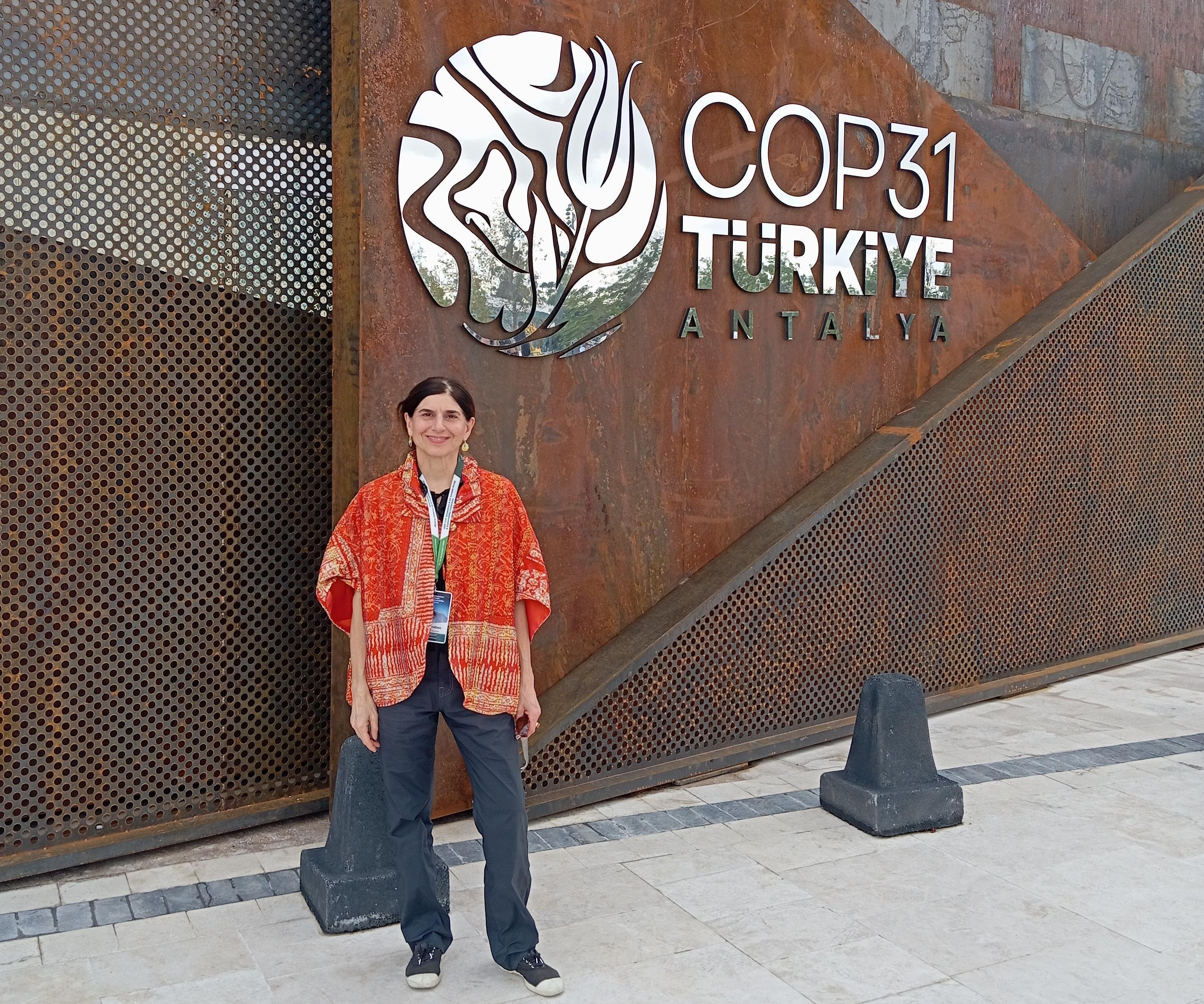
Professor Laura Marsiliani shares the research she presented at COP31's “Impact of Turbulent Times on Energy and Climate Change” conference and explains what the study means for climate policy implementation.
From commitments to implementation
COP31, currently underway in Antalya, has been framed by the Turkish Presidency as an “Implementation COP”. Its COP31 Action Agenda prioritises the clean energy transition, climate-resilient cities and buildings, and the just transition.
Residential heating lies at the intersection of these themes. In 2024, buildings accounted for 22% of UK greenhouse gas emissions, two-thirds of them from homes, largely through the use of natural gas for heating (DESNZ 2026). In England, 86% of households still use a gas-fired main heating system and only 1% of dwellings a heat pump (MHCLG 2025).
The just transition in a former coalfield
Former coalfields illustrate the distributional dimension of the just transition. In the North East of England, mine closures left persistent deprivation, constraining households’ capacity to invest in low-carbon heating. Yet abandoned, flooded mines offer a source of geothermal district heating, and mining heritage still shapes local identity (Beynon and Hudson 2021), which may in turn shape economic choices. Indeed, in their seminal work on Identity Economics, Akerlof and Kranton (2000) argue that identity is the most important economic decision people make.
Evidence presented in Antalya
These issues were discussed at the International Association for Energy Economics, IAEE COP Symposium and the 5th Eurasian Energy & Sustainability Conference on “Impact of Turbulent Times on Energy and Climate Change”, held in Antalya on 11–14 November 2026 alongside COP31. I had the privilege to chair the session on renewable deployment and presented Coal Legacies and Geothermal Futures, reporting results from the GEMS project (Geothermal Energy from Mines and Solar-Geothermal Heat) at Durham University.
In a discrete choice experiment, one thousand households in the North East of England expressed their preferences for adoption of four renewable heating systems (geothermal district heating from mine water, a hydrogen boiler, a solar electric boiler and an air source heat pump) characterized by different technological and economic attributes derived from the engineering and economic literature and market information. Integrated Choice Latent Variable (ICLV) models captured environmental attitudes, energy-saving attitudes and coal mining identity.
Among the results of our analysis, geothermal district heating is the most preferred alternative. Marginal willingness to pay for emission reductions is £27–£41 per tonne of CO₂, less than half the 2023 UK ETS price of £83.05, not enough to internalise the climate externality and indicating low climate concern, while aggregate willingness to pay for local jobs (£72,070 per job across 1,000 households) is close to the Institute for Fiscal Studies-IFS (2023) estimate of the cost of job creation.
Preferences are heterogeneous. Pro-environmental attitudes raise willingness to pay for lower CO₂ emissions; energy-saving attitudes increase sensitivity to CO₂ but also to cost; coal mining identity raises the probability of choosing geothermal heating from mines and the sensitivity to job creation, but greater cost aversion offsets this.
Implications for policy implementation
We used the models to predict how household choices would change under a carbon tax set at the 2023 UK ETS price and under subsidies of 10%, 50% and 75% on the investment cost of each technology. In every case, geothermal district heating remained the most preferred option. The results suggest four implications for policy.
- Investment in infrastructure. Household demand does not appear to be the main obstacle to geothermal heating from abandoned mines. Public finance may therefore be more effective if it is directed at supply side e.g. building district heating networks and connecting homes to mine water, and at keeping connection and running costs low (as households are highly sensitive to cost).
- The limited effect of subsidies. Subsidies on the investment cost impact household choices only modestly: even a 75% subsidy raises adoption of the subsidised technology by 5 to 8 percentage points. Additionality, that is reducing carbon emissions more than what would happen without the policy, is also questionable, as subsidising geothermal heating would largely benefit households that would have chosen it anyway.
- The role of a carbon tax. A carbon tax strengthens the preference for geothermal district heating and reduces demand for the relatively highest carbon-intensive option, in our case the hydrogen boiler. Because households are willing to pay less than half the UK ETS carbon price for lower emissions, a carbon tax can close part of this gap.
- Identity and affordability. Presenting new schemes as a continuation of the region’s mining heritage, and as a source of local jobs, may increase public acceptance. However, it cannot replace measures that make low-carbon heating affordable for households in deprived communities.
Directions for future research
The study has several limitations, each of which suggests direction for future research.
- Stated and actual behaviour. The survey asked households to make hypothetical choices, and stated intentions do not always match actual behaviour. As the first mine-water heat networks begin operating, it will be possible to observe which households connect. Comparing these decisions with survey responses would show how reliable stated preferences are in this setting.
- The choice to switch from gas. Respondents chose among four renewable systems, whereas most households in practice are deciding whether to replace a gas boiler at all. Including the gas boiler, or the option to keep the current system, in future surveys would measure what it takes for households to switch, and how effective a carbon tax or investment subsidies would be in encouraging this.
- Retrofitting of old building. We asked respondents to choose heating systems for a new building and therefore abstracted from retrofitting cost. In the UK old buildings constitute a substantial proportion of the overall house stock and retrofitting costs are expected to influence choices significantly. Support for retrofitting expenses should be part of an effective policy package.
- Measuring identity. Attachment to the region’s mining heritage appears to matter, but it is difficult to capture with a small number of survey questions. Collaboration with anthropologists, as in the GEMS project, and other social scientists could support better measures, and repeating the study in other former coalfields, in the UK and internationally, would test whether the findings apply more widely.
Further work could also link household preferences to the costs of building heat networks, giving policymakers a fuller picture of both demand and supply.
Concluding remarks
If COP31 is judged by implementation, former coalfields are an instructive test. Local resources and identity can foster receptiveness, but affordability determines adoption after all. A just transition in residential heat requires both investment that repurposes the legacy of coal and prices that low-income households can afford.
Co-authors: Lucy Naga, Jingyuan Di, Kalila Mackenzie, Thomas Renström and Riccardo Scarpa. Funded by UKRI EPSRC (EP/V042564/1) and Durham University Business School. For further information: laura.marsiliani@durham.ac.uk
References
Akerlof, George A., and Rachel E. Kranton. 2000. “Economics and Identity.” Quarterly Journal of Economics 115 (3): 715–53.
Beynon, Huw, and Ray Hudson. 2021. The Shadow of the Mine. London: Verso.
DESNZ. 2026. 2024 UK Greenhouse Gas Emissions, Final Figures. London: DESNZ.
IFS. 2023. “Spring Budget 2023.” London: Institute for Fiscal Studies.
MHCLG. 2025. English Housing Survey 2023 to 2024: Low Carbon Technologies in English Homes. London: MHCLG.
Find out more
- Learn more about Durham University's COP31 delegation and how they are participating in COP31.
- Read more about Professor Laura Marsiliani's work.
- Sign up for the Durham University COP31 Debrief event.