

/filters:quality(70)/prod01/prodbucket01/media/durham-university/departments-/history/77231.jpg)
This page highlights our research environment including our current and past projects, collaborations and resources
Current Projects
Infrastructures of Courtesanship: Material Histories of Performing Women in South Asia, 1700–1900
Dr Radha Kapuria (Principal Investigator)
- Main objectives of the project are to: Reconstruct the material, architectural, and visual worlds of courtesans in South Asia (c.1700–2000); Analyse how built environments shaped performance, patronage, and sociability; Develop interdisciplinary methods combining archival, visual, and digital approaches
- The project asks: How did performing women inhabit and transform urban infrastructures and architectural spaces? Beyond the frame of performance, what can material and visual approaches reveal about their everyday lives and labour? How did infrastructures of performance intersect with gender and colonial modernity?
- The project will advance spatial and material histories of gender and performance in South Asia; move beyond text-based archives to centre architecture and visual culture; contributes to global histories of urbanism, performance, and gender; develop innovative interdisciplinary and digital humanities methods
Supported by the Durham University Seedcorn Fund (2026)
Elephant Memory: More-than-human histories and heritage in South Sudan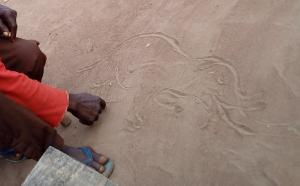
Cherry Leonardi (Principal Investigator, Durham), Isaac Waanzi Hillary (PhD, Durham), Ashley Coutu (Co-I, Pitt Rivers Museum, Oxford)
- The global extinction crisis both endangers and makes vital our memories of other species and how to live with them. This project asks how the memory of elephants can be recovered in a context of their near-extinction amid human conflicts in South Sudan.
- By piloting the first-ever biomolecular analysis of South Sudanese ivory and other elephant remains in UK museums, the project will trace the footsteps of historic elephants to and through their areas of origin, where they can be discussed with contemporary communities and used as a subject of oral history interviews and documentary research.
- This interdisciplinary methodology will reveal and restore the memory of elephants to a history which has rendered them invisible. It will reorientate our understanding of elephants’ significance from their ivory and Western representations to their massive impacts on African histories, cultures and environments, and from external conservation to indigenous interspecies knowledge.
Supported by the Leverhulme Trust, Research Project Grant (2025-29). Additional support from the British Academy, Small Research Grant (2026-27) for the project ‘Elephants are stories now: oral histories of interspecies relations in South Sudan’ with the Likikiri Collective, Juba, South Sudan.
Green Corridors North East
Giles Gasper (Co-I)
-
The groundbreaking £3m project is being led by a team from Durham, Newcastle, and Teesside universities, the National Trust, local authorities and community organizations.
-
Its aim is to connect the region’s history, nature, and culture to city, village, and town inhabitants both human and non-human. Three routes will contribute to improving the well-being of communities, will nurture new forms of environmental and cultural stewardship, and contribute to increasing biodiversity across Durham, South Teesside, and Gateshead.
-
The project is one of the first of its kind in the country in its creation of sustainable, accessible, and connected spaces where human and non-human communities can flourish together.
Supported by the Arts and Humanities Research Council’s Mission Awards (2025-2028)
Celebrating the legacy of Tom McLeish: The Centre for Creation and Natural Philosophy
Giles Gasper (Co-I)
- The Centre for Creation, Natural Philosophy, and Science (CCNPS) explores interdisciplinary visions for the fuller integration of Natural Science and the Humanities within a broadly theological framework. The embedding of the expertise and experience of research science into a broader penumbra of humanities approaches, and into a world-leading theological research community in particular, is a key element in developing this vision.
- The heart of the Centre’s activities will be a flagship series of 18 interdisciplinary workshops, offered in hybrid format to maximise potential participants. Each workshop will explore a different thematic area and bring global participants together. Workshops will include practice-based fields and colleagues in creative industries as well as academic.
- Alongside the workshop series the Centre will fund two visiting fellows (one ECR one more senior in career terms) for a term each, on the model established by the Institute of Advanced Study. Each fellow will help to curate workshops that take place within their term of residence, as well as offering more sustained participation in the Centre and framing the wider encounter of science and humanities with notions of creation.
Supported by the John Templeton foundation (2025-2028)
When Categories Constrain Care: Investigating Social Categories in Health Norms through Disability History 1909-1958
Coreen McGuire (PI)
-
This historical research project explores how data has been used to obscure health inequalities related to society and the environment.
-
Technologies define categories of ability and disability. Historically, the categorisation of disability also defined and reified the categories we now think of as critical to health assessment – categories like height, weight, sex, race, and class. My project examines how this happened. Why these categories? And why did these become so important in the early twentieth-century?
- The project aims to show that that the data points used to establish ‘normal’ health were validated in early twentieth-century Britain in two main ways. First, through classical genetic statistical calculations used in the Eugenics Laboratory to establish inherited disability and second, through the moderation of compensation systems for acquired disablement. Both systems organized data to differentiate biological from cultural predictors of health. This sorting process was used to construct a paradigm of individual health that depended on a concomitant reconceptualization of disability.
Supported by Wellcome Trust University Award (2023-2028)
Repast: Scientific and Historical Approaches to Food, Ecology, and Environment
Amanda Herbert (PI), Giles Gasper (Co-PI)
- The workshop invites bioscientists, historians, and curators to think about how humans fed themselves in the past. But historic data are often written in archaic or regional languages, held in specialized libraries, and tricky to interpret.
- The project is about recovering data, but it is also about building interpretive frameworks that make this data usable across disciplines. The workshop focuses on the early modern period, when global food systems were being shaped by colonialism, transatlantic trade, and the forced movement of people, plants, and animals. This era marked the first large-scale globalization of foodways: a turning point that laid the foundations of today’s industrial food systems.
Supported by the Institute for Advanced Study, IMEMS, and Faculty Seedcorn (2025-2026)
Forging Social Solidarities during Religious Wars
Professor Tom Hamilton (Principal Investigator), Dr Lenny Hodges (Career Development Fellow), Joost Oosterhuis (Postgraduate Researcher)
- Forging Social Solidarities during Religious Wars asks how far a society can hold together when civil war breaks out because of religious differences. It focuses on Europe and the wider world in the age of the Dutch Revolt, French Wars of Religion, and Thirty Years War.
- These wars are known as some of the most violent conflicts in European history. Confessional division pushed social solidarities to the limit. How effectively did people respond to the problem of living with religious difference? And how have their responses been understood and reworked all over the world in societies torn apart by religious and civil strife?
- This project suggests that interpreting religious wars in their social context helps to understand emerging conflicts in the future, and to challenge the myth that religious wars can be resolved only by secular policies imposed by the modern state.
Supported by Joanna and Graham Barker as part of the Inventing Futures Programme at the Institute of Medieval and Early Modern Studies (2025-29) and additional funding from a BA Mid-Career Fellowship (2026–27).
Modelling the Black Death and Social Connectivity in Medieval England
Dr Alex Brown (Principal Investigator), Dr Grace Owen (Postdoctoral Research Associate)
- Modelling Black Death uses the latest computer modelling developed in response to the COVID-19 outbreak to simulate the spread of the Black Death in England.
- Uses our best knowledge of late medieval society to project plausible pathological pasts and determine the most likely way the disease spread and how people likely interacted with one another during one of the worst pandemics in global history.
- Interdisciplinary collaboration between History, Archaeology and Physics with Professors Frank Kraus, Chris Gerrard and Becky Gowland, and Drs Grace Owen, Tudor Skinner and Gavin Woolman.
Supported by the Leverhulme Trust, Research Project Grant (2024-27)
Making History Months Count: Embedding Gypsy Roma Traveller History Month (GRTHM) in the Public History Calendar
Dr Alex Barber, Professor Becky Taylor (Principal investigator, University of East Anglia)
- What does the history of history months tell us about the relationship between public history and diversity?
- Why are some public history celebrations more popular than others?
- The project aims to work with GRT communities to identify the extent, strengths and limitations of GRTHM strategies and resources.
Supported by the Arts and Humanities Research Council (2025-27)
Global Governance, Trust and Democratic Engagement in Past and Present (GLO)
Richard Huzzey (Co-Investigator)
- Global Governance, Trust and Democratic Engagement in Past and Present addresses current concerns about international institutions from a historical perspective: it traces popular engagement with and resistance to bodies that sought to regulate or resolve global matters, from the aftermath of the First World War to the early 2000s.
- The project is operating within the framework of the Trans-Atlantic Platform for the Social Sciences and Humanities (T-AP), which is a collaborative venture for research funders from different countries. The project involves research teams based in Canada, Switzerland, the UK and the US, with Waterloo University, the Geneva Graduate Institute (IHEID), the University of Chicago and Northumbria University.
- GLO pursues two major lines of enquiry. First, it examines campaigns that sought to create, reform, transform or abolish international organizations. In doing so, it highlights the democratic potentials and lacunae of international organizations while tracing broader efforts to democratize international relations. Second, the project investigates attempts by non-governmental organizations (NGOs) and social movements to enlist the support of international bodies, partly in response to the obstacles they encountered domestically. Such endeavours implied a degree of trust in the ability of international organizations to become tools for positive change. By recovering the past relationship between political participation, democracy and international institutions, the project enables us to better understand how we might reimagine global cooperative mechanisms in the present.
Supported by the Economic and Social Research Council (2024-2026)
Past Projects
Jewish Collectors and Donors at the National Gallery (c.1830-1930)
Dr Thomas Stammers (Principal Investigator)
- Explores the role of Jewish collectors in shaping the collection and administration of the National Gallery, London.
- Asks how a Jewish minority, whether as collectors, donors, dealers or trustees, intervened in metropolitan institutions and helped to construct Britain's artistic heritage.
- Brings the National Gallery into alliance with the major AHRC project (2019-23) on 'The Jewish Country House: Objects, Networks, People'.
Supported by The National Gallery, Studentship (2020-24)
Love in the Time of Capitalism: Emotion & Making the British Working Class
Professor Julie-Marie Strange (Principal Investigator)
- Integrates the history of emotion with the history of class to advance a new understanding of what it meant to be working class, and know it, in the late nineteenth century.
- Offers an expanded, more inclusive, conception of the working class as a politically conscious body capable of advancing sophisticated critiques of capitalism from heterodox standpoints.
- Develops new methods to analyses class consciousness, identifying emotion as a form of capital, and populating the study of emotions with a broader, more diverse, range of emotional agents.
Supported by Leverhulme Trust, Major Research Fellowship (2020-23)
Meeting the challenge of mass politics in Britain: the Liberal caucus, 1875-1914
Dr Naomi Lloyd-Jones (Leverhulme Fellow)
- Asks whether internal democracy within political parties good for democracy, focusing on how the organisation of mass parties affected the development of mass politics.
- Looks at the ‘caucus’ innovations of the British Liberal party in the 19th and early 20th centuries.
- Uses a ‘four nations’ approach and digital methods.
Supported by Leverhulme Trust, Early Career Fellowship (2021-24)
Cultural Heritage 360
Professor Stephen Taylor (Principal Investigator), Professor Giles Gasper (Co-Investigator) Professor Ivana Evans (Co-Investigator) Alan Fentiman (Partner), Animmersion UK Ltd (Partner), The Projection Studio Ltd (Partner)
- Scopes the potential for Arts and Humanities-led interdisciplinary research into cultural heritage and its record – that is, artefacts, widely conceived, from manuscripts to ceramics and textiles to sculpture.
Supported by Arts and Humanities Research Council, Research Grant (2020-21)
Augustine and the Making of Christian Practice (400-1000)
Dr Matthieu Pignot (Leverhulme Early Career Fellow)
- Offers a thorough and innovative examination of the surviving manuscripts produced before 1000 of a set of Augustine’s lesser-known works
- Shows how, on the basis of these material remains, Augustine’s works were used and adapted over time and in different geographical and historical contexts
- Sheds light on the concrete impact of inherited written traditions from North Africa in the development of religious practices in Europe and beyond
- Contributes to the study of late antique and early medieval manuscripts, reading and writing practices and material culture
Supported by the Leverhulme Trust, Early Career Fellowship (2020-2023)
Petitioning and People Power in Twentieth-Century Britain
Professor Richard Huzzey (Principal Investigator) Dr Henry Miller (Co-Investigator)
- Explores how the practice of harvesting contact details and personal data on petitions for future mobilisation developed alongside the professionalisation of political parties and pressure groups, as well as how they evaded successive data protection laws.
- Using quantitative social survey data, it investigates the shift to digital activism, connecting the history of petitioning to contemporary research on e-petitioning.
- Reveals the dynamics of representation, voluntary association, and popular sovereignty over a century of reinvention and change in British citizenship.
Supported by Arts and Humanities Research Council, Research Grant (2020-23). For more information please visit the project website here
Collaborations with other Disciplines and Institutions
Ordered Universe, led by Professor Giles Gasper, combines the approaches of medieval specialists and modern scientists. Focused on the scientific works of the 13th-century English polymath Robert Grosseteste, ‘Ordered Universe’ to date has involved over 165 scholars in disciplines from medieval history to computational cosmology, education to classics, Arabic studies to computer engineering.
Medieval Pigments is led by Professor Richard Gameson in conjunction with experts from Chemistry at Northumbria and Durham and from Cambridge University’s Fitzwilliam Museum, to study and conserve medieval manuscripts. Funded by an interdisciplinary AHRC grant (2018-21), the project uses a mobile Raman Spectroscopy unit.
The impact of elections in sub-Saharan Africa, led by Professor Justin Willis with political scientists from University of Birmingham and University of Warwick, researches the impact of elections in Kenya, Uganda, and Ghana, and the effectiveness of international interventions intended to improve governance through enhanced electoral integrity.
Dr Kevin Waite and Professor Stephen Taylor have established a Faculty-wide partnership with the Huntington Library (California), which consists of an annual exchange for researchers. The Department of History is committed to building on the Durham-Huntington Library collaboration to forge new international partnerships with research institutions in North America.
Dr Alex Barber is the academic lead on an international public project, run in conjunction with the Folger Shakespeare Library (Washington DC), to investigate and translate the Newdigate manuscript letters.
The AHRC project on Jewish Country Houses with Dr Thomas Stammers, in collaboration with Oxford University, has led to further collaboration with the National Trust, and the Centre des Monuments Nationaux. Dr Cherry Leonardi is collaborating with the Pitt Rivers Museum in Oxford and with other museums across the UK and continental Europe to present and interpret collections from South Sudan.
An annual postgraduate workshop for postgraduates in the Department of History held jointly with the University of Münster, forms part of a deeper international collaboration between the two institutions. The Durham-Münster Conference runs over a three-day period and grants students from both institutions the opportunity to present and discuss their research within an international network.
History staff are also co-investigators on projects based in other departments and institutions, including:
- Professor Philip Williamson with the School of Government and International Affairs for an AHRC project on The journals of Hensley Henson, 1900-1939.
- Dr Cherry Leonardi with Anthropology for ‘Energy on the Move’.
- Dr Helen Foxhall Forbes with the Institute of Advanced Study for Science, society and environmental change in the first millennium.
- Dr Chris Courtney with Earth Sciences on natural disaster management in 19th- and 20th-century China.
- Professor Stephen Taylor with History, Chemistry, Physics, Experimental Psychology, and Architecture for Cultural Heritage 360.