

/filters:quality(70)/prod01/prodbucket01/media/durham-university/departments-/history/77231.jpg)
PhD candidate Lucy Jameson wins the Singer Prize from the British Society for the History of Science
Congratulations to Lucy Jameson, who has won the Singer Prize from the British Society for the History of Science for her paper ‘Pass the Parcel: Disabled Expertise, Prosthetics of Productivity, and Scientific Management in the British Post Office, 1918–1921’.
Lucy is a PhD candidate in History, supervised by Coreen McGuire, Richard Huzzey, and Joseph Martin. She previously graduated from Durham University with a first-class BA and completed her MSc with Distinction at the University of Manchester.
The Singer Prize is a biennial essay prize, awarded to the best essay by an early career scholar. Here is the abstract of her essay, which is based on a chapter of her thesis:
As the First World War drew to a close, the British government began to consider how to return the war’s wounded to work. From 1918, the General Post Office (GPO), became a distinct site of disabled innovation and technological collaboration. This essay traces the design of occupational prosthetics in the GPO and demonstrates that, contrary to prevailing observations by disability historians, disabled people in Britain did desire and create prosthetics for functional, not just cosmetic use. At first glance, the ground-up roots of disabled innovation and the top-down ethos of industrial efficiency appear entirely incompatible. However, this essay interlaces these two concepts to reveal that disabled designers were inspired by and applied the principles of scientific management to their occupational prosthetics. I show that disabled designers actively engaged with the semantics of industrial efficiency. Disabled people produced prosthetics of productivity, designed to prevent fatigue and strain, and make each bodily movement seamless for maximal output. I emphasise the agency and creativity of disabled innovation and illustrate that these occupational prosthetics were a material form of scientific knowledge.
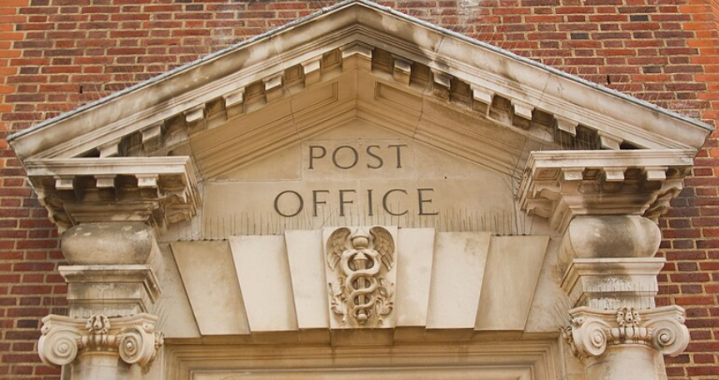
The image shows Bexhill Post Office from Wikimedia Commons.